2026 Best Track Welding Lathe for Global Buyers Guide?
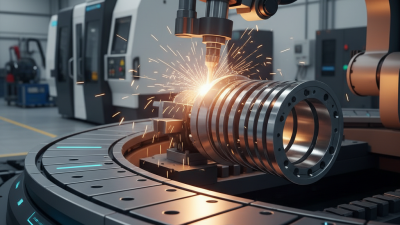
In the world of manufacturing, the "Track Welding Lathe" stands out as a vital tool for precision work. This guide explores the best options for global buyers in 2026. Track welding lathes play a crucial role in various industries, especially in producing welded components. Their efficiency influences productivity and product quality significantly.
Choosing the right track welding lathe can be daunting. Numerous brands promise superior performance and reliability. However, not all lathes deliver on those promises. Buyers must consider factors such as durability, ease of use, and maintenance needs. It's essential to gather insights from experts who have hands-on experience with these machines.
Moreover, the market is competitive, and prices can vary widely. Understanding features, specifications, and user reviews can lead to better purchasing decisions. Potential buyers should also contemplate their unique requirements. These machines come with varying functionalities; not every lathe may be suitable for specific tasks. Thorough research and reflective thinking will help in making an informed choice.

Overview of Track Welding Lathe Types and Applications in 2026
The track welding lathe is an essential tool in various industries, known for its precision and versatility. In 2026, there are several types of track welding lathes, each tailored for specific applications. Manual and CNC options dominate the market. CNC lathes are favored for their automation, while manual ones allow for more hands-on control.
These machines are widely used for welding pipes and large components. Some manufacturers employ them in shipbuilding, where accuracy is paramount. The ability to set precise travel speeds and welding parameters helps reduce defects. Despite these advantages, some users report challenges, such as maintenance difficulties. Keeping the lathe in top shape can sometimes feel overwhelming.
Moreover, selecting the right type of lathe can be confusing. Each project may have unique requirements. For example, the complexity of a job could dictate whether a simpler manual lathe is suitable or if a high-tech CNC model is needed. It's crucial for buyers to assess their specific needs carefully. The wrong choice can lead to inefficiencies and increased costs, emphasizing the importance of informed decision-making.
Key Features to Look for in a Track Welding Lathe for Optimal Performance
When selecting a track welding lathe, several key features can enhance its performance. Power output is crucial. Aim for a lathe with sufficient horsepower for your specific welding tasks. Robust motors ensure smoother operation and better efficiency. The welding speed should also be adjustable, allowing for adaptability to various materials. This flexibility contributes to precision in your projects.
Consider the build quality of the lathe. A solid frame minimizes vibrations, resulting in cleaner welds. Look for heavy-duty construction with high-quality materials. This might influence the initial investment but offers long-term reliability. Accessories can enhance a lathe’s performance as well. Tool holders, clamps, and welding fixtures play vital roles in achieving optimal results. Quality attachments reduce setup time and improve accuracy.
Tips: Maintenance is essential for long-term use. Regularly check for wear and tear. Keep the lathe clean and well-lubricated. Test different settings to identify the best configurations for your work. Evaluate your needs frequently. Adjustments in your projects can mean significant changes in your equipment requirements. Stay informed about new technologies to ensure you are using the best tools available.
2026 Best Track Welding Lathe for Global Buyers Guide
| Feature |
Specification |
Importance |
| Welding Type |
MIG, TIG, Stick |
Determines the versatility of the lathe. |
| Track Length |
Up to 6 meters |
Affects the size of components that can be welded. |
| Power Output |
150A to 600A |
Higher power allows welding of thicker materials. |
| Weight |
50 kg to 150 kg |
Portability vs stability in use. |
| Speed Control |
Variable Speed |
Allows adjustments based on material and thickness. |
| Cooling System |
Air or Water-Cooled |
Essential for maintaining performance during extended usage. |
| Control Panel |
Digital or Analog |
Affects ease of use and precision in settings. |
| Safety Features |
Overload Protection, Emergency Stop |
Ensures user safety during operation. |
| Warranty |
1 to 3 years |
Indicates reliability of equipment. |
Top Manufacturers and Their Innovations in Track Welding Lathe Technology
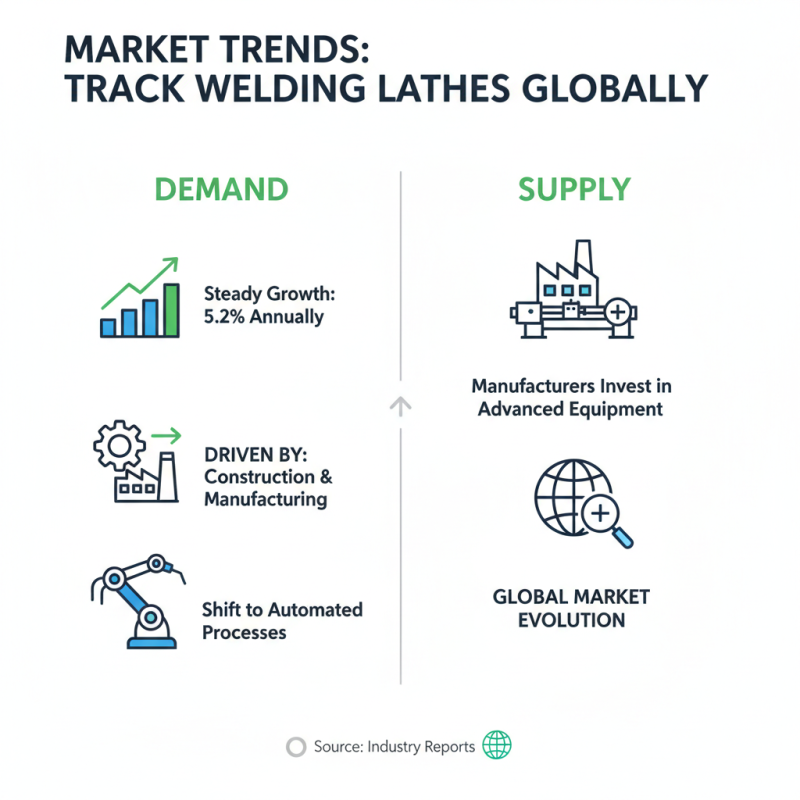
The track welding lathe technology is advancing rapidly. Manufacturers are investing in innovative features to meet global standards. Recent data shows that the market for welding lathes is expected to grow by 5.2% annually through 2026. This growth indicates a robust demand for efficient, high-precision equipment.
One important trend in track welding lathes is automation. Many companies are incorporating robotic systems to enhance speed and precision. These automated systems can reduce human error, allowing for cleaner welds and fewer reworks. Additionally, advanced control systems improve the consistency of weld quality, making it easier to meet stringent industry specifications.
Tips: Look for lathes with adaptive technology. These systems can adjust parameters in real-time, responding to material variations. Regular maintenance is also crucial. It prevents downtime and ensures optimal performance. Remember, technology is only as reliable as its upkeep.
Moreover, sustainability is becoming key. Manufacturers are focusing on energy-efficient designs and materials to reduce environmental impact. However, some innovations may increase costs. Buyers must weigh the benefits against their budgets. While cutting-edge technology can drive productivity, understanding the return on investment is essential for informed purchasing decisions.
Track Welding Lathe Technology Innovations
This chart represents the technological advancements made in track welding lathes over the past few years, focusing on key performance metrics such as speed, precision, and energy efficiency.
Comparative Analysis of Track Welding Lathe Models by Performance Metrics
When assessing track welding lathes, performance metrics play a crucial role in choosing the right model. Key factors include speed, precision, and usability. An optimal lathe should offer adjustable speed settings, allowing versatility for various projects. Precision remains vital; slight misalignments can lead to significant issues in welding quality. Users often overlook how ease of use affects productivity. A cumbersome interface can slow down operations dramatically.
Another essential factor is durability. Welding lathes operate under harsh conditions, so materials and build quality are pivotal. Poorly constructed machines may require frequent servicing. Additionally, the availability of replacement parts influences long-term reliability. Some models may excel initially but deteriorate quickly, highlighting the importance of thorough research.
Some users may find their preferred model doesn’t meet all expectations. Testing different designs in practical settings can reveal hidden flaws. Comprehensive comparisons based on real-world performance provide valuable insights. Ultimately, a model’s true value is not just in specifications, but also in its ability to perform under pressure and adapt to user needs.