2026 Best Welding And Machine Strategies For Global Buyers?
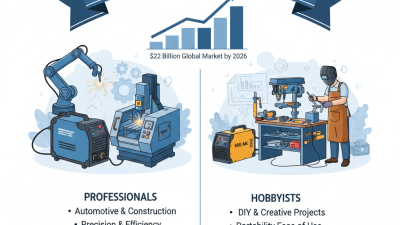
The global landscape of the "Welding and Machine" industry is evolving rapidly. As technology advances, strategies must adapt to remain competitive. According to a recent report by the International Institute of Welding, the global welding market is expected to grow at a CAGR of 5.6% from 2021 to 2026. This growth highlights the increasing demand for skilled professionals and innovative techniques.
Dr. Sarah Thompson, a renowned expert in welding technology, states, "Innovation in welding and machine processes is no longer optional; it is essential for survival in this industry." Buyers around the world will need to explore the latest methodologies and equipment. They will face challenges in sourcing reliable suppliers and integrating new technologies. It is crucial for industry players to reflect on their current strategies and consider emerging trends.
As manufacturers navigate this complex landscape, they must engage with evolving practices and materials. With a focus on both efficiency and sustainability, the future of welding and machine strategies will require thoughtful implementation. This demand will bring about opportunities but also necessitate careful evaluation of existing methods and capabilities.

2026 Global Welding Market Trends: An Overview of Demand and Supply
The global welding market is poised for significant growth by 2026. Reports indicate a considerable increase in demand driven by construction, automotive, and aerospace sectors. A recent industry analysis predicts a CAGR of approximately 5.4% during this period. As new technologies emerge, traditional methods may need reevaluation for efficiency.
Stats show that North America and Asia-Pacific will be the leading regions. The rising infrastructure projects in Asia-Pacific, combined with the automotive boom in North America, highlight a stark regional disparity. Buyers must adapt to these trends to stay competitive.
Tip: Stay updated on innovations in welding technologies. Investing in automation can enhance productivity and reduce costs.
Moreover, the market faces challenges, such as skilled labor shortages and fluctuating raw material prices. Addressing these issues is crucial for maintaining a steady supply chain. Innovation in training programs could alleviate the skills gap.
Tip: Collaborate with educational institutions. Creating training partnerships can develop the workforce needed for future demands.
2026 Global Welding Market Trends: Demand and Supply Overview
This chart illustrates the projected growth in demand and supply in the global welding market from 2023 to 2026. The data reflects the increasing need for advanced welding technologies in various industries including automotive, construction, and manufacturing.
Key Technologies Shaping Welding Strategies for International Buyers
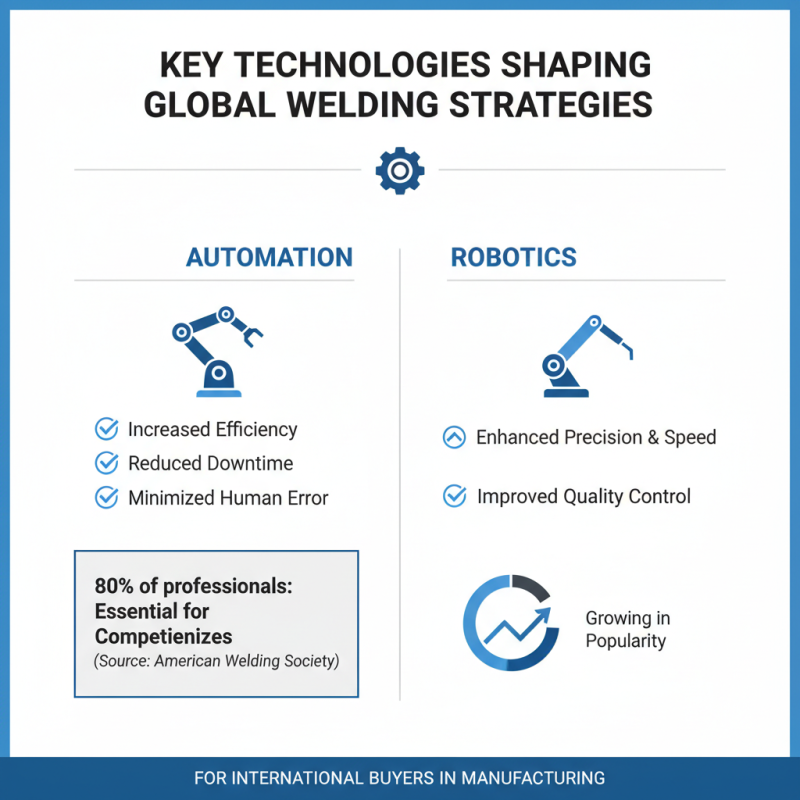
In recent years, advanced welding technologies have increasingly shaped global strategies for buyers in the manufacturing sector. According to a report from the American Welding Society, nearly 80% of industry professionals believe that adopting automation is essential for staying competitive. Automation enhances efficiency, reduces downtime, and minimizes human error. Robotics in welding has gained popularity, showing an increase in precision and speed, leading to better quality control.
Another pivotal technology is additive manufacturing, or 3D printing. This approach allows for complex geometries that traditional welding cannot achieve. A recent study by MarketsandMarkets estimates that the market for additive manufacturing in welding could reach $3 billion by 2026. However, not all buyers feel equipped to integrate these technologies. A survey indicated that 35% of companies struggle with the training required for new systems.
Data analytics also play a crucial role in optimizing welding processes. By analyzing performance trends, manufacturers can reduce waste and improve productivity. Yet, many organizations overlook data utilization, missing opportunities for advancements. This presents a gap that could hinder growth. As international buyers adapt to these technologies, continuous learning and adaptation become fundamental in an ever-evolving market landscape.
Cost-Effectiveness in Welding Operations: Strategies for Global Competitiveness
Cost-effectiveness remains crucial for welding operations, especially in a competitive global market. Recent reports indicate that companies can reduce operational costs by up to 30% through optimized processes. This involves investing in advanced welding technologies and training staff to enhance their skills. Employing techniques such as automated welding can yield significant efficiency gains. Automation not only reduces labor costs but also minimizes error rates, which often lead to rework.
Many organizations are now focusing on sustainability as a way to improve their cost structure. Data shows that over 50% of industries are prioritizing green practices in welding. This shift not only addresses environmental concerns but also cuts down energy consumption. Companies adopting eco-friendly measures often find they can attract eco-conscious clients, widening their market reach. However, transitioning to these practices requires reflection on existing operations. Not all companies successfully implement new strategies; many struggle with initial costs and logistics.
Furthermore, exploring partnerships can enhance competitiveness. Collaborative efforts in research and development can lead to innovative solutions. However, it is essential to assess potential risks and benefits carefully. Not every partnership yields results. Data indicates that about 40% of joint ventures fail within the first three years. Evaluating the right collaborations is vital for sustainable growth in the welding industry.
Sustainability and Innovation in Welding: Addressing Environmental Impact
Welding processes greatly impact the environment. Traditional methods often lead to harmful emissions and waste. As a result, sustainability has become a priority in the industry. Increasingly, companies are exploring innovative techniques that reduce their carbon footprint. These practices promote cleaner production cycles and less pollution.
One emerging strategy involves the use of alternative energy sources. Solar-powered welding equipment shows promise. It can significantly reduce reliance on fossil fuels. Additionally, recycling materials is gaining traction. Reusing metals lowers waste and minimizes resource extraction. However, challenges remain. Not every welding shop has access to these technologies.
Training and education are essential in this approach. Workers must understand sustainable practices. Yet, many still lack knowledge about these innovations. The industry must address this gap. Fostering a culture of sustainability takes time and investment. Each step forward is crucial, but setbacks may arise. Acknowledging imperfections allows for better strategies in welding's future.
Training and Skill Development: Essential Strategies for Global Workforce Preparedness
In the rapidly evolving landscape of welding and machinery, training and skill development are crucial for a competent global workforce. Today's industry demands not just proficiency but also adaptability. Workers must remain informed about emerging technologies and innovative practices. Fostering a culture of continuous learning can bridge the skills gap that many companies face.
To enhance workforce preparedness, organizations should implement hands-on training programs. These should focus on real-world applications and problem-solving. Moreover, pairing experienced mentors with trainees can accelerate the learning process. Tips for effective mentoring include regular feedback sessions and open communication. This approach nurtures not only technical skills but also confidence in their abilities.
Investing in digital resources is also key. Online courses and virtual simulations can offer flexibility for learners. They can engage with complex materials at their own pace. Yet, the challenge lies in ensuring such resources are accessible and user-friendly. Companies may need to adjust their training strategies based on employee feedback to address any shortcomings in the programs. Adapting and refining these methods will ultimately prepare a resilient workforce ready for future challenges.
2026 Best Welding And Machine Strategies For Global Buyers
| Strategy |
Description |
Target Skill Level |
Regional Focus |
| Advanced Robotics Integration |
Utilizing robotics to enhance precision and speed in welding processes. |
Intermediate to Expert |
North America, Europe |
| Virtual Reality Training |
Employing VR simulations for realistic welding experience without the risks. |
Beginner to Intermediate |
Asia, Oceania |
| Lean Manufacturing Principles |
Streamlining processes to reduce waste and improve efficiency in production. |
All Levels |
Global |
| On-the-job Continuous Training |
Integrating training into daily work routines to reinforce skills effectively. |
All Levels |
Europe, Africa |
| Collaborative Learning Programs |
Facilitating knowledge-sharing sessions among peers and experts. |
Intermediate to Expert |
Americas, Asia |