Shandong Popweld Automatic Equipment Co., Ltd.
Leave Your Message

China Top Chaff Cutter Machine Supplier for Global Buyers

China has become a major manufacturing base for agricultural processing equipment, including the Chaff Cutter Machine. Global buyers now expect more than low prices. They require stable output, safe operation, replaceable blades, and reliable after-sales support.

The OECD-FAO Agricultural Outlook 2024–2033 projects global milk production to grow by about 1.6% annually. This trend increases demand for consistent forage preparation on dairy and livestock farms. FAO also reports that livestock supports the livelihoods of approximately 1.3 billion people worldwide. Feed efficiency matters.

Every cutting detail matters.

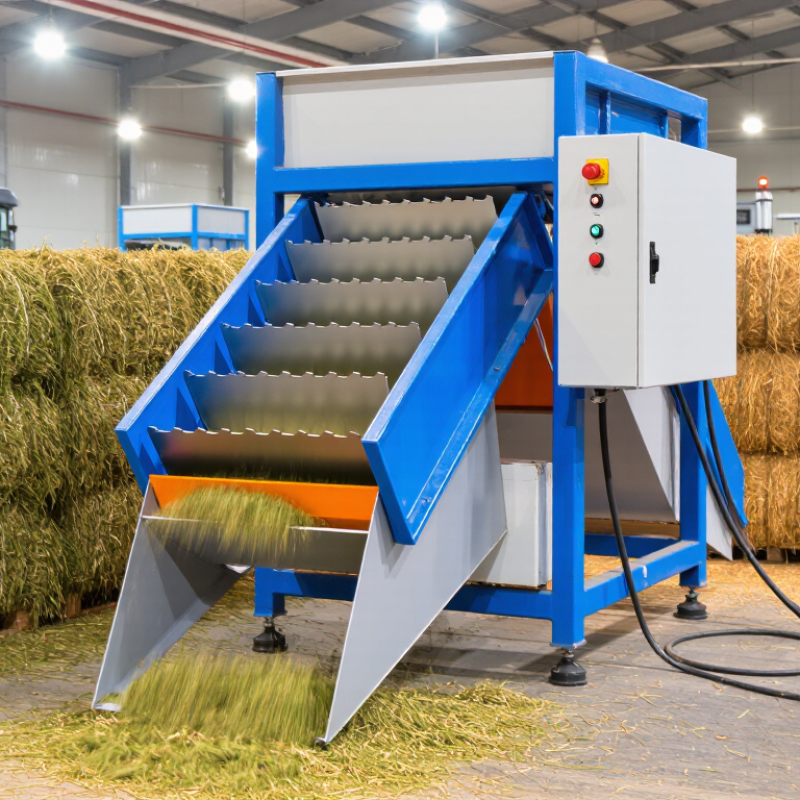
A suitable Chaff Cutter Machine can process maize stalks, pasture grass, rice straw, and other forage into manageable lengths. This improves feeding consistency and may reduce avoidable waste. However, performance depends on moisture, crop variety, blade design, motor power, and operator maintenance. One machine cannot suit every farm.

Agricultural policy expert Qu Dongyu, Director-General of the Food and Agriculture Organization, has stated, “There is no food security without animal health.” His point also applies to feed preparation. Clean, properly sized forage supports better feeding management, although machinery alone cannot guarantee animal health.

For global buyers, a dependable Chinese supplier should provide practical specifications, factory inspection evidence, electrical compatibility, spare parts, and clear warranty terms. Production experience should be verified through test videos, sample output, and customer references. Certifications are useful, but they do not replace field performance.

That assumption deserves caution.

The strongest supplier is not always the largest factory. It is the partner that understands local crops, farm capacity, maintenance skills, and shipping requirements. This guide examines how international buyers can evaluate China’s leading Chaff Cutter Machine suppliers with greater confidence.

China Top Chaff Cutter Machine Supplier for Global Buyers

Chaff Cutter Types and Output Ranges: 0.5–5 t/h for Global Farms

China Top Chaff Cutter Machine Supplier for Global Buyers

Chaff Cutter Types and Output Ranges: 0.5–5 t/h for Global Farms

Chaff cutters for global farms usually fall into three practical groups: small drum cutters, rotary knife models, and heavy-duty combined machines. Small units often produce 0.5–1 t/h, making them suitable for family farms, goats, and limited daily feeding. Their compact frames fit beside a storage shed, while adjustable knives create shorter pieces from dry grass, straw, or fresh forage.

Medium rotary models commonly reach 1–3 t/h. They suit dairy farms and livestock cooperatives that need steady preparation throughout the day. A wider feeding inlet reduces repeated loading, but operators still need to control bundle size. Wet grass may cling inside the cutting chamber. That issue is easy to overlook.

Heavy-duty machines can process approximately 3–5 t/h under favorable conditions. They often combine chopping and crushing functions, producing material for cattle, sheep, or silage preparation. Actual output depends on crop moisture, cutting length, screen design, motor power, and feeding rhythm. Rated capacity is not a guaranteed field result.

From practical equipment checks, a clear discharge path matters as much as engine power. Loose bolts, blunt knives, and uneven feeding reduce performance quickly. Buyers should compare tested output using their own crop type, not only brochure figures. A simple trial with weighed material can reveal whether a 2 t/h machine truly matches the farm’s workload.

Core Specifications: 3–15 kW Motors and 3–20 mm Cutting Lengths

China Top Chaff Cutter Machine Supplier for Global Buyers

A chaff cutter is not judged by motor power alone. Its working result depends on crop moisture, feeding speed, blade condition, and operator habits. The FAO reports global cereal production above 3 billion tonnes in recent years, creating steady demand for practical residue-processing equipment. For buyers handling straw, hay, or maize stalks, a 3–15 kW motor range offers useful flexibility. Smaller motors suit light farm workloads. Higher ratings support longer operating periods and denser materials.

Cutting length matters just as much. Adjustable settings from 3–20 mm can produce fine feed for mixing or longer pieces for bedding and roughage handling. The 2024 Alltech Agri-Food Outlook recorded global feed production at 1.126 billion metric tonnes in 2023, showing why consistent particle size remains important in livestock operations. Still, specifications can mislead. A 15 kW motor will not solve poor feeding control. It may even waste electricity when the crop is dry and light.

From equipment evaluation experience, buyers should request motor efficiency data, blade material details, rated throughput, and test conditions. Ask whether output was measured with fresh grass or dry straw. These figures differ sharply. A claimed capacity without moisture data is incomplete. Small details matter. Global users should also verify voltage, safety guarding, spare blades, and service documentation before ordering.

China Supplier Verification: ISO 9001, CE Certification, and Warranty Terms

For a chaff cutter supplier, ISO 9001 verification should begin with the certificate number, scope, and issuing body. The ISO Survey 2022 recorded 1,265,216 ISO 9001 certificates worldwide, showing its broad adoption. However, ISO 9001 confirms a quality management system, not perfect machine performance. Ask for production records, inspection plans, and corrective-action evidence. A factory visit is useful. Look for labeled parts, clean wiring, and traceable batch records.

CE verification requires more than a printed logo. The supplier should provide an EU Declaration of Conformity, technical documentation, risk assessment, and relevant test records. Check whether the declaration identifies the exact chaff cutter model. Guards, emergency stops, electrical protection, and instructions should match the delivered machine. CE is generally a conformity declaration, not an independent quality medal. That difference matters.

Warranty terms need practical detail. Confirm coverage length, excluded parts, response time, spare-parts availability, and shipping responsibility. Request a written procedure for bearing failure or blade damage. ISO 9001 cannot guarantee zero defects. Neither can a CE document. I would also request a recorded factory test using real dry grass, because laboratory demonstrations may hide feeding problems. This step is sometimes missed. My own verification checklist is not flawless, and supplier documents can become outdated, so buyers should recheck certificates before payment and retain all inspection records.

China Top Chaff Cutter Machine Supplier for Global Buyers - China Supplier Verification: ISO 9001, CE Certification, and Warranty Terms
Supplier due-diligence and purchasing reference table for agricultural chaff cutter machines
Verification Dimension Requirement or Data Point Evidence to Request Buyer Verification Checkpoint
Quality Management and Supplier Verification
Quality management system ISO 9001:2015 quality management system certification Unredacted certificate showing the legal entity, certification scope, certificate number, issue date, expiry date, and certification body Confirm that the certificate is valid and that its scope covers manufacturing, assembly, or supply of agricultural machinery. Verify the certificate through the issuing certification body whenever possible.
Certificate validity Valid certificate with a clearly stated surveillance or expiry status Certificate copy and an online or written validity confirmation from the certification body Check that the certificate holder is the same legal entity shown on the quotation, contract, commercial invoice, and packing list.
Production capability Documented process for cutting chamber assembly, rotor or blade installation, electrical wiring, inspection, and final testing Process flow chart, inspection plan, factory photographs or video, and sample quality records Confirm that quality control is performed before shipment rather than relying only on incoming component inspection.
Traceability Machine identification and component traceability Serial number, nameplate, motor information, production date, inspection record, and packing list Ensure that the machine identification on the nameplate matches the sales contract and test documentation.
CE Compliance and Export Documentation
CE marking applicability CE marking where applicable for machinery placed on the European Economic Area market Photograph of the CE marking and machine nameplate, EU Declaration of Conformity, user manual, and safety information CE marking is a manufacturer’s declaration of conformity; it is not an ISO quality certificate. Confirm that the documentation relates to the exact machine model and configuration.
Applicable machinery legislation Relevant EU machinery and product-safety legislation in force for the shipment date Declaration listing the applicable legislation and standards, together with the technical documentation index For current products, request confirmation of the legislation applicable at the time of placing the machine on the market. EU Machinery Regulation (EU) 2023/1230 generally becomes applicable on 20 January 2027, subject to its transitional provisions.
Risk assessment Documented assessment of mechanical, electrical, noise, guarding, and operational hazards Risk-assessment summary, safety design checklist, and photographs of guards and emergency controls Check that rotating blades, belts, pulleys, feed openings, and discharge areas have suitable guards and warnings.
Electrical safety Correct voltage, frequency, phase, earthing, overload protection, and isolation arrangement Wiring diagram, electrical component list, rated voltage label, test record, and user manual Match the electrical configuration to the destination country. Do not assume that a standard motor configuration is suitable for every market.
Technical file support Technical documentation retained by the manufacturer for conformity assessment Declaration of Conformity, technical file index, drawings, risk assessment, test records, and instructions for use For a pre-shipment review, request the documents relevant to safety and operation. The complete technical file may not be supplied publicly but should be available to authorities when legally required.
Machine Specification and Acceptance Data
Material compatibility Suitable crop materials may include grass, straw, hay, maize stalks, and other specified forage materials Manufacturer’s operating range, recommended moisture range, and prohibited-material list Confirm suitability using the buyer’s actual crop type, moisture condition, fiber length, and required cut length.
Cutting length Adjustable or fixed cutting length, normally expressed in millimetres Technical datasheet, blade or screen configuration, and sample output specification Specify the required cut length in the purchase contract and include it in the factory acceptance test.
Processing capacity Rated throughput expressed in kilograms per hour or tonnes per hour Capacity test report stating material type, moisture content, feed method, cutting length, and operating conditions Capacity is material- and condition-dependent. Do not compare figures unless test conditions are substantially identical.
Power configuration Electric motor, diesel engine, petrol engine, tractor PTO, or another specified drive system Power rating in kilowatts or horsepower, speed, voltage, phase, frequency, fuel requirements, and coupling details Confirm that the drive system is compatible with the buyer’s local power supply, farm equipment, and maintenance capability.
Factory acceptance test Operational test before shipment Video or signed test report showing start-up, feeding, cutting, discharge, emergency stop, and no-load/load operation Define the test material, acceptance criteria, test duration, and remedy for failure before production begins.
Warranty and After-Sales Terms
Warranty duration Contract term to define
Common commercial proposals may use 12 months from commissioning or 18 months from shipment, whichever occurs first; this is not a universal legal standard.
Signed warranty clause in the sales contract or pro forma invoice State the exact starting date, coverage period, geographical scope, and whether commissioning or delayed installation affects the warranty.
Warranty coverage Manufacturing defects in materials or workmanship under normal operation Written list of covered parts, exclusions, operating requirements, and claim procedure Clarify treatment of motors, bearings, blades, screens, belts, electrical controls, wear parts, consumables, and damage caused by misuse or overload.
Replacement or repair responsibility Supplier’s responsibility for approved warranty claims Clause covering replacement parts, repair instructions, labour, freight, customs charges, and return requirements Specify who pays transportation and customs costs for defective parts and whether the supplier must provide remote technical support.
Spare-parts support Availability of blades, screens, belts, bearings, switches, fuses, and other wear or service parts Spare-parts list with part numbers, prices, lead times, and recommended stock quantities Purchase critical wear parts with the machine when downtime would be costly. Confirm compatibility by part number rather than appearance alone.
Technical support Operating, maintenance, troubleshooting, and safety assistance English user manual, exploded parts diagram, maintenance schedule, wiring diagram, and support contact procedure Require digital copies before shipment and confirm the communication method and expected response process in the contract.
Commercial and Shipping Verification
Legal supplier identity Consistent registered legal entity across all transaction documents Business registration information, quotation, contract, invoice, bank details, and export documents Do not make payment to an unrelated personal account or an entity that does not match the contracting party without documented justification.
Incoterms Clearly stated delivery term under Incoterms® 2020, such as EXW, FOB, CIF, or DAP Quotation and contract showing the named place or port and the applicable Incoterms version Confirm which party handles inland transport, export clearance, ocean freight, insurance, import clearance, duties, and final delivery.
Pre-shipment inspection Independent or buyer-authorized inspection before final payment Inspection checklist covering dimensions, nameplate, accessories, safety guards, operation, packaging, and documents Link the final payment milestone to inspection approval where commercially possible.
Packaging and moisture protection Export-suitable packaging with internal fixation and protection against moisture and impact Packing photos, packaging specification, gross and net weights, dimensions, and shipping marks Check that loose blades, screens, tools, manuals, and accessories are separately protected and listed on the packing list.
Important purchasing note: ISO 9001 certification, CE documentation, machine performance, and warranty coverage are separate matters. A valid ISO 9001 certificate does not by itself prove CE conformity or guaranteed machine capacity. All model-specific values, acceptance criteria, warranty obligations, and delivery responsibilities should be confirmed in a signed contract before payment.

Export Compatibility: 220/380 V, 50/60 Hz, and Container Requirements

China Top Chaff Cutter Machine Supplier for Global Buyers

Export compatibility starts with the buyer’s power grid, not the machine catalogue. IEC 60038 provides the reference framework for standard supply voltages. However, 220/380 V systems remain common in many agricultural markets. Frequency also matters. A 50 Hz motor may run differently on a 60 Hz supply. Buyers should confirm phase, voltage tolerance, motor rating, plug type, and protection devices before ordering. Dual-frequency configurations can reduce installation problems, but they need proper testing.

Export inspections often reveal small mistakes. A missing terminal label can delay commissioning. An unclear wiring diagram can create unnecessary service calls. Each machine should carry a readable nameplate, wiring diagram, spare fuse list, and English operating instructions. Factory testing should record current, no-load operation, cutting performance, and emergency-stop response. These records support reliable purchasing decisions. Still, test conditions may not match a dusty farm environment. That limitation deserves attention.

Container planning is equally practical. ISO 668:2020 defines common freight-container dimensions, while actual payload depends on the carrier and route. A standard 20-foot container usually provides about 33 cubic meters of internal space. Machine height, folded conveyors, and wooden cases must be measured before booking. UNCTAD’s Review of Maritime Transport 2023 notes that maritime shipping carries over 80% of global trade by volume. Therefore, moisture barriers, corner protection, and clear lifting marks are essential. A compact package helps. It does not replace accurate loading plans.

China Chaff Cutter Machine Export Compatibility for Global Buyers

Common electrical configurations include 220 V single-phase and 380 V three-phase supplies at 50/60 Hz. The chart also provides approximate reference capacities for standard dry shipping containers.

Container volume and payload are approximate reference values for standard dry containers; final loading plans should be confirmed against the container specification and CSC plate.

Buyer Evaluation: Energy Use, Spare Parts, Capacity, and Total Cost

China Top Chaff Cutter Machine Supplier for Global Buyers

Buyer Evaluation: Energy Use, Spare Parts, Capacity, and Total Cost

Energy use should be checked under real working conditions, not only catalog claims. The IEA’s Motor Systems report estimates that electric motor systems consume about 53% of global electricity. This makes motor efficiency important, even for small farm equipment. Ask suppliers for input power, actual throughput, and energy use per tonne. Crop moisture changes results sharply. A dry maize stalk and fresh grass will not produce the same capacity. FAO agricultural engineering guidance also links feeding consistency with practical machine output. Request a recorded test using similar material.

Spare parts can decide whether a low-price machine remains economical. Check blade steel, belt dimensions, bearing models, and delivery times before payment. A simple part number list is more useful than attractive packaging. Total cost should include electricity, labor, sharpening, transport, installation, and downtime. USDA farm machinery cost guidance treats repair and maintenance as recurring ownership costs, not unusual events. My experience is less comfortable here: buyers often compare purchase prices, then ignore two years of minor repairs. That comparison is incomplete.

Tips: Ask for a 12-month parts plan. Calculate cost per tonne. Confirm the rated capacity with wet material. Keep one spare blade set and belt. A supplier should explain test conditions clearly. If the figures look perfect, question them.