How to Choose the Best Swing Welding Dolly for Your Needs?
Choosing the right Swing Welding Dolly can significantly impact your welding projects. These innovative tools enhance efficiency and precision, making them essential for welders at all levels. However, selecting the best option requires careful consideration of several factors.
When evaluating a Swing Welding Dolly, think about your specific welding needs. The weight capacity and design should fit your projects. Additionally, look for features like adjustability and portability. Each welder's preferences differ, which can complicate the decision-making process.
Don't overlook the importance of quality. A reliable Swing Welding Dolly can save you time and effort in the long run. Researching various products and reading reviews can provide valuable insights. Remember, the best choice is not always the most expensive one. Prioritize what works for you, and be mindful of potential shortcomings in your selected model.
Key Features to Consider When Choosing a Swing Welding Dolly
When choosing a swing welding dolly, several key features deserve your attention. Firstly, consider the dolly's weight capacity. Many models can support anywhere from 1,000 to 3,000 pounds. Ensure it meets your project requirements. Build quality is also crucial. A dolly made from high-strength steel offers better durability. According to recent industry reports, durable equipment reduces long-term costs by up to 20%.
Another important feature is the dolly's mobility. Look for models with rubber wheels. They provide better grip and can navigate uneven surfaces effectively. This is essential when working in varied environments. Additionally, the size of the dolly should suit your workspace. A compact design may increase maneuverability in tight spaces. However, too small a dolly might not support heavier materials safely.
Choosing the right swing welding dolly involves careful evaluation. Test the dolly's stability with loads similar to what you typically work with. Verify the specifications from the manufacturers to avoid discrepancies. Lastly, read user reviews. They often highlight issues that specifications do not cover. This helps in making a more informed decision. Your projects deserve the best tools for optimal results.
Different Types of Swing Welding Dollies and Their Applications
When selecting a swing welding dolly, it’s essential to understand the different types available and their specific applications. The most common types include standard dollies, adjustable dollies, and heavy-duty dollies, each serving unique purposes in various welding scenarios. According to a 2022 industry report, standard dollies are widely used for lighter welding jobs, capable of supporting up to 1,000 pounds. They are ideal for projects requiring mobility and maneuverability.
Adjustable dollies provide versatility. They allow users to modify the height and angle, catering to diverse welding positions. This adaptability is crucial when dealing with intricate tasks, as noted in a recent survey of welders, which found that 70% prefer adjustable models for their flexibility. Heavy-duty dollies, on the other hand, are engineered for demanding applications. These can typically handle loads beyond 2,000 pounds, making them suitable for industrial environments. However, they are often bulkier, which can be a drawback in tight spaces.
Choosing the right dolly requires careful consideration. Misjudging the weight capacity or the necessary adjustability can lead to inefficient work. Many professionals have expressed frustration over choosing a dolly that didn't meet their specific needs. Notably, it's crucial to prioritize not just the weight limits but also how the dolly fits into the overall workflow and layout of the workspace.
Comparison of Different Types of Swing Welding Dollies
Materials and Durability: What to Look for in a Swing Welding Dolly
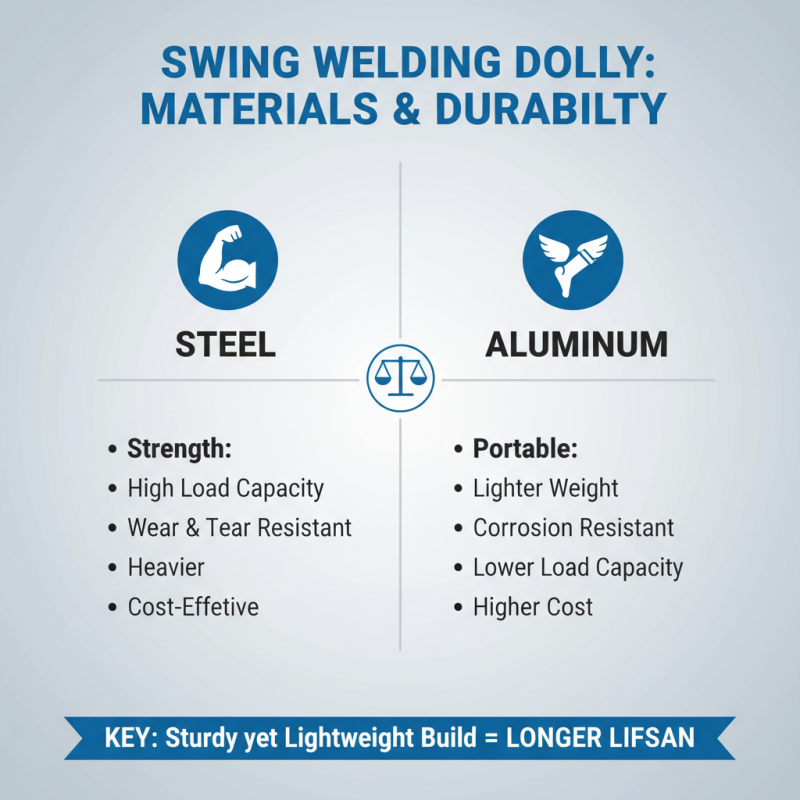
When selecting a swing welding dolly, considering materials and durability is vital. A well-made dolly should be sturdy yet lightweight. Look for options constructed from high-quality steel or aluminum. Steel offers excellent strength and is resistant to wear and tear. Aluminum is more portable but may not withstand heavy loads as effectively. Both materials can have trade-offs, and understanding these nuances is essential.
Durability extends beyond just material. Check the dolly’s finish to see if it resists rust and corrosion. A powder-coated surface can enhance longevity, especially in challenging environments. Pay attention to the wheels as well. Rubber wheels can provide better traction and maneuverability compared to plastic wheels. However, they may wear out faster with intense use. Reflect on your specific needs and the environments in which you’ll be working.
In addition, consider the design and ergonomics of the dolly. A well-designed grip can make handling easier but may not be present in all models. Some users overlook these factors, resulting in discomfort during use. Assessing the weight capacity is crucial too, as an underpowered dolly might not meet your needs. Finding the right balance between weight, material, and design will improve your swing welding experience significantly.
Evaluating Size and Weight Capacity for Your Welding Projects
When choosing a swing welding dolly, size and weight capacity are crucial factors. Different projects require different levels of handling. A dolly should fit your workspace and the materials you often work with. Consider the dimensions of the dolly. A larger dolly can manage bigger pieces but may be cumbersome for tight areas.
Weight capacity is just as important. If the dolly cannot support your materials, it can lead to accidents. Evaluate the heaviest items you typically handle. Choose a dolly that exceeds this weight for safety. Think about the joined components, too. Sometimes the welding project might not go as planned, leading to unexpected weight distributions.
Users often overlook the balance of the dolly. A well-balanced dolly prevents tipping, even under heavy loads. Reflect on how past projects went. Did you struggle to maneuver your equipment? Learning from these experiences ensures you select the best fit for your needs. Make informed choices that enhance your workflow and safety.
Price Range and Budget Considerations for Swing Welding Dollies
When selecting a swing welding dolly, price is a key factor. The cost of these tools varies widely. A basic model might start around $50, while high-end options can exceed $300. According to industry reports, the average price for quality swing welding dollies falls between $100 and $200. This range accommodates various needs and budgets.
While it’s tempting to choose the most affordable option, consider the long-term value. A lower-priced dolly may lack durability, leading to higher replacement costs. Statistics show that 25% of low-cost tools fail within a year. Investing in a reliable dolly can save you money and time in the long run. Think about the features you need, such as weight capacity and adjustability.
Moreover, be cautious of overspending. Understanding your specific requirements helps avoid unnecessary expenses. A tool that fits your workflow can enhance productivity. Look for consistent user reviews and testimonials. This can offer valuable insights into performance and durability. Balancing quality and cost is crucial for making an informed decision.