Why Choose a Prefab Container House for Your Next Home?
Why choose a Prefab Container House for your next home? This question resonates with many in today's fast-changing world. Experts like Sarah Johnson, a leading architect in sustainable housing, emphasize the advantages of prefab designs. She once stated, "Prefab container homes are revolutionizing modern living."
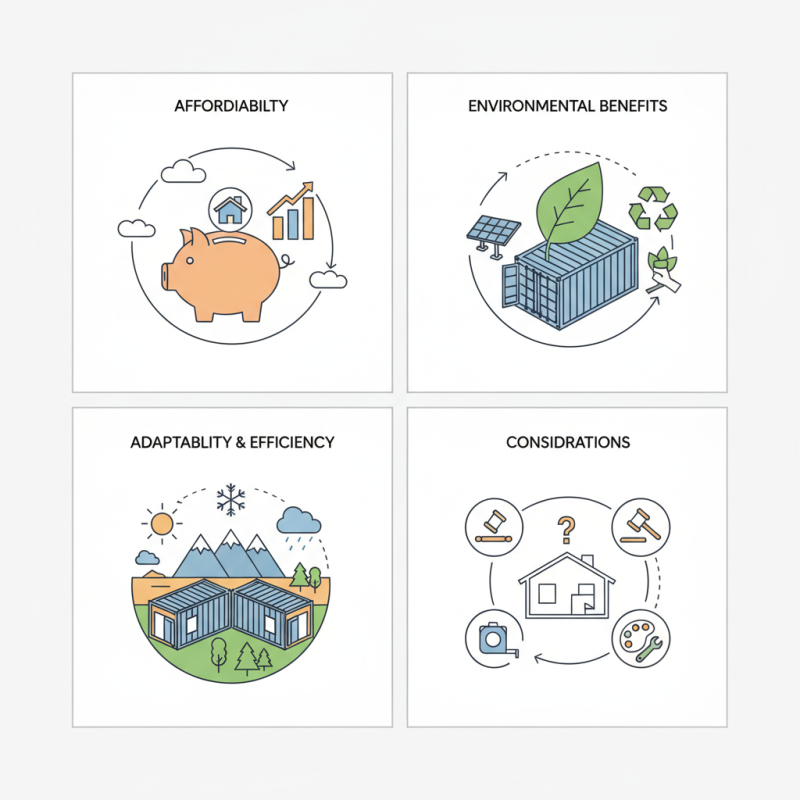
Prefab Container Houses are not just trendy. They offer affordability and environmental benefits. Constructed from shipping containers, these homes are efficient and adaptable. They can fit into various climates and landscapes. However, navigating zoning laws and space limitations is crucial.
Not all designs are perfect. Some may lack customization options or feel too industrial. Potential homeowners must balance aesthetic preferences with practical needs. A Prefab Container House can be a unique living solution, but self-reflection on personal preferences is necessary. Only then can you truly appreciate the value of prefabricated living.
Benefits of Prefab Container Houses Over Traditional Homes
When considering a new home, prefab container houses offer unique benefits over traditional ones. They are cost-effective and quick to assemble. Building with shipping containers can significantly reduce construction time. You can set up your house in a matter of weeks. This efficiency leads to housing solutions for those in urgent need.
Tips: Selecting the right container is crucial. Look for a container with minimal damage. Inspect for rust or structural issues before purchasing. These details matter to maintain a durable home.
Sustainability is another appealing aspect of prefab container houses. Repurposing containers reduces waste and helps the environment. The homes can be outfitted with energy-efficient systems. Minimalist living helps many people rethink their needs. While it’s a great concept, some may find it cramped. Reflecting on personal space is important before deciding.
Implementing design features can enhance comfort and aesthetics. Large windows and open spaces can make a container house feel more inviting. However, it can be challenging to achieve this with limited space. Finding a balance between comfort and functionality takes careful planning. Be prepared to experiment with layouts and decorations.
Cost-Effectiveness of Building with Container Homes
The cost-effectiveness of prefab container homes is a major attraction for many buyers. According to a report by the Container Home Institute, building a container home can save up to 30% compared to traditional construction methods. The lower costs come from reduced labor and faster assembly, which significantly cuts down on expenses. Additionally, container homes are often more environmentally friendly, as they utilize recycled materials.
When considering a prefab container home, it's essential to factor in long-term savings. Because they are durable and require less maintenance, homeowners can save on repair expenses. Energy-efficient designs can also lead to reduced utility bills. Studies have shown that container homes can cut energy consumption by 50% compared to conventional homes.
Tip: Research local building codes before starting your project. Regulations can greatly influence both timing and costs.
Another reflection is on potential challenges. Container homes can have unique insulation issues, especially in extreme climates. Ensure that your design accounts for these factors to avoid higher heating or cooling costs later.
Tip: Consider hiring an architect with experience in container designs. Their expertise can help navigate these challenges effectively.
Sustainability and Environmental Impact of Container Housing
Container houses are gaining attention for their sustainability. Made from repurposed shipping containers, they reduce waste and utilize less new material. This approach minimizes the environmental footprint. Each container can be transformed into a livable space, which has a lower impact compared to traditional building methods.
Choosing a prefab container house can be eco-friendly. These homes often require less energy for heating and cooling. Their design promotes insulation, making them energy-efficient. Many also incorporate solar panels or other green technologies, which further reduces their environmental impact.
Tips: Consider local regulations when building. Some areas have restrictions on container homes. Do research into sustainable materials for interiors. Utilizing reclaimed wood or recycled fixtures can enhance eco-friendliness. Embrace imperfections in design; unique flaws can add character and charm. Repurposing containers is not just about efficiency; it's about making a home personal and meaningful.
Customization Options Available for Prefab Container Houses
Prefab container houses offer remarkable customization options. You can design the layout to suit your needs. Want an open-concept living area? You can have it. Prefer separate spaces? That’s possible too. Many choose large windows for natural light. You might even include a rooftop deck for fresh air.
Materials and finishes can vary. From modern sleek metal to rustic wood, there are many choices. Color schemes can reflect your taste—bold or muted. Each house becomes a personal statement. It’s exciting to create something unique. However, it’s easy to feel overwhelmed with options. Balancing functionality with style can be challenging.
Ensuring sustainability is another consideration. Many opt for energy-efficient systems. Think about solar panels or rainwater collection. These features are not just trendy; they also help the environment. But they may require extra planning and investment. It's crucial to weigh the long-term benefits against initial costs. Building a prefab container house is a journey filled with choices and decisions.
Speed and Efficiency of Construction Using Container Homes
Container homes have gained popularity due to their speed and efficiency in construction. The average time to build a traditional house can take several months. However, a prefab container home can be completed in just weeks. According to industry reports, a container house can be constructed in about 12 weeks, significantly reducing the waiting time for new homeowners.
One of the key advantages is the modular nature of container homes. They can be prefabricated off-site and transported to the desired location. This method minimizes delays associated with weather or labor shortages. A report by a leading construction association found that prefabricated buildings can save up to 30% on construction time. This is particularly beneficial in urban areas where speed matters.
Yet, it's essential to address some challenges. Not all designs maximize space efficiently. Many container homes require innovative layouts to avoid cramped conditions. Additionally, insulation and energy efficiency can sometimes be overlooked in the rush to build. As the market grows, refining these elements will be crucial for long-term success.
Why Choose a Prefab Container House for Your Next Home? - Speed and Efficiency of Construction Using Container Homes
| Aspect | Prefab Container House | Traditional Construction |
| Construction Time | 2-3 months | 6-12 months |
| Cost Efficiency | 20-30% cheaper | Higher initial costs |
| Sustainability | Recyclable materials | Varies, often less eco-friendly |
| Mobility | Easily transportable | Site-specific, not easily relocated |
| Design Flexibility | Modular designs available | Custom builds possible, but time-consuming |
| Construction Method | Factory-built, on-site assembly | On-site construction |