How to Choose the Right Welding Gas for Cutting?
Choosing the right welding gas for cutting is crucial. It impacts both the quality of the cut and the efficiency of the process. Different gases interact uniquely with various materials. Understanding these differences helps you make informed decisions.
Welding gas cutting involves a delicate balance. Acetylene is often favored for its high flame temperature. However, oxygen plays a key role in enhancing combustion. This duality can create confusion for beginners. Not all gases perform equally well with every material. For example, nitrogen can reduce oxidation on stainless steel, while argon is suited for aluminum.
Selecting the optimal gas goes beyond simply reading a guide. Experience and testing might lead to unexpected insights. Sometimes, a gas that seems ideal may not deliver the required results. It's vital to reflect on past outcomes. Adjustments may be necessary as you gain more experience. Understanding the nuances of welding gas cutting translates into better results.
Understanding the Different Types of Welding Gases Available for Cutting
When selecting a welding gas for cutting, understanding the available options is crucial. Typically, the most common gases are acetylene, oxygen, and argon. Acetylene offers high flame temperature, reaching approximately 3,500 degrees Celsius. This makes it ideal for cutting metals like steel and aluminum. However, safety precautions are necessary due to its flammability.
Oxygen is essential in combining with other gases. It enhances the flame intensity, allowing for cleaner cuts. According to industry data, using pure oxygen can increase cutting speeds by up to 50%. Argon is another option, especially for non-ferrous metals. With a lower ionization potential, it helps in reducing oxidation.
Nevertheless, choosing the wrong gas can lead to inefficiencies. Issues like excessive slag and poor penetration are common when gas mixtures aren’t matched to the materials. Some professionals still underestimate the importance of gas flow rates. Proper settings can improve cut quality significantly. It's a reminder that knowledge and precision matter greatly in welding.
Factors to Consider When Choosing a Welding Gas for Cutting Applications
Choosing the right welding gas for cutting can greatly affect results. Different gases produce varied heat levels. Oxygen, for instance, is often preferred for its efficiency. Acetylene gas is also common, delivering high temperatures. But it comes with some risks, as it is more volatile.
Consider the material you are cutting. Steel requires a different approach than aluminum. The thickness of the material matters, too. Thicker materials may need a more powerful gas combination. Also, think about the environment where you will work. Some gases produce harmful fumes. Safety is key here.
It's important to evaluate your own skill level with gas mixtures. Not everyone is comfortable using complex combinations. Mistakes can lead to poor cuts or even accidents. Testing different gases can be insightful. Keep records of what worked well and what did not. A thoughtful selection of gas will lead to more successful cutting tasks.
Comparing the Performance of Common Welding Gases for Metal Cutting
When it comes to metal cutting, the choice of welding gas plays a crucial role. Each gas has unique properties that affect the cutting process. For example, oxygen is commonly used due to its compatibility with various metals. It burns hotter and provides a clean cut. However, too much oxygen can lead to oxidation, which is undesirable.
Another popular choice is acetylene. It offers a high flame temperature. Many professionals prefer it for cutting thick metals. Yet, acetylene requires careful handling. It can be hazardous if not used properly. Some individuals may find it challenging to control the flame effectively.
Nitrogen is another option, typically used for cutting stainless steel. It produces a less reactive cut. Still, nitrogen may not provide the same level of performance as other gases in thicker materials. Each gas has its merits and drawbacks. It’s essential to consider specific project needs before making a selection. Evaluating the application can help refine your choice and ensure optimal results. Experimenting with different gases could lead to better insights.
How to Choose the Right Welding Gas for Cutting?
| Welding Gas |
Cutting Speed (in inches/min) |
Gas Efficiency (%) |
Best For (Materials) |
Notes |
| Oxygen-Acetylene |
30 |
90 |
Steel, Iron |
High heat, versatile |
| Plasma Gas (Nitrogen) |
80 |
80 |
Stainless Steel, Aluminum |
Excellent for thin materials |
| Carbon Dioxide (CO2) |
25 |
70 |
Mild Steel |
Cost-effective, common choice |
| Argon |
20 |
85 |
Aluminum, Stainless Steel |
Produces a clean cut |
| Hydrogen |
35 |
75 |
High alloys, Cast Iron |
Good for high temperature cutting |
Safety Considerations for Using Welding Gases in Cutting Processes
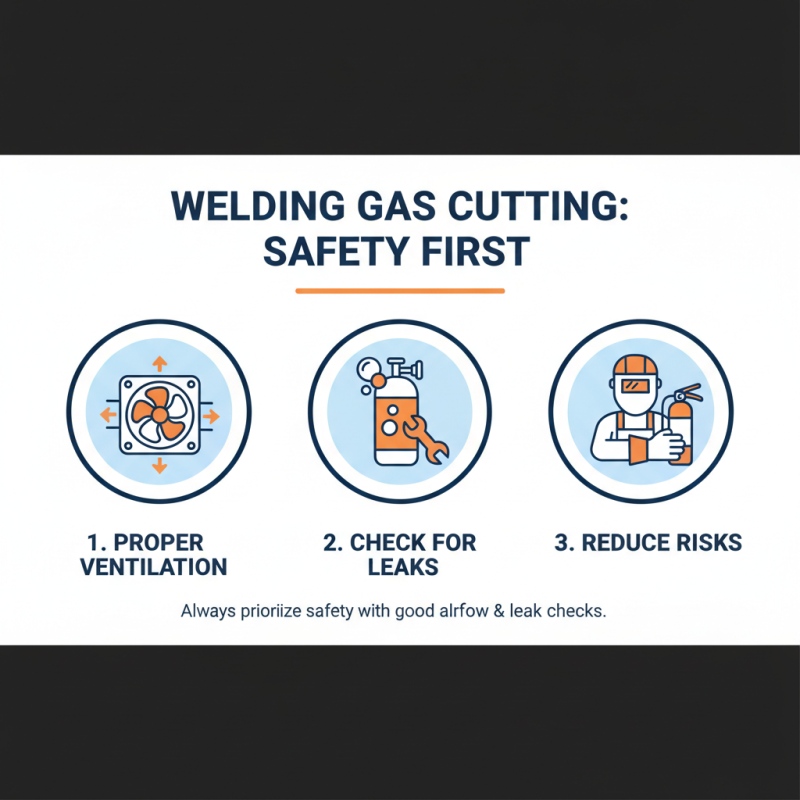
When using welding gases for cutting, safety should always be a top priority. Proper ventilation is crucial. Good airflow reduces the risk of gas buildup, which can lead to dangerous situations. Always check for leaks. A simple soapy water test can help identify leaks. If bubbles form, fix the issue immediately.
Personal protective equipment (PPE) is essential. Always wear goggles to protect your eyes. Heavy gloves are also important. They shield your hands from heat and sparks. A well-fitting welding jacket can protect your skin. Remember, loose clothing can catch fire easily.
Be aware of flammable materials around your workspace. Clear the area of any combustible items. This seems basic, but many overlook it. Regularly inspect your workspace for hazards. The routine checks can prevent accidents. Finally, keep a fire extinguisher nearby. It’s a small step that could save lives. Safety always requires reflection and diligence. Take these precautions seriously.
Best Practices for Storing and Handling Welding Gases Effectively
When working with welding gases, proper storage and handling are crucial. Safety should always come first. Store gas cylinders in an upright position. Secure them to prevent tipping or falling. Keep them in a cool, dry location, away from direct sunlight. Temperature can affect gas pressure; extreme heat can cause dangerous situations.
Tip: Regularly inspect your cylinders for leaks. A small leak can lead to a big hazard. Use soapy water; it bubbles when there’s a leak. Make sure your workspace is well-ventilated. Poor air quality can be harmful. Always have proper personal protective equipment (PPE) on hand.
Handling gas cylinders requires care. Always check the cylinder’s label for proper identification. Mixing incompatible gases can lead to serious accidents. Transporting cylinders also requires attention. Use a hand truck, and keep them secured. Remember, safety practices are vital, but they must be updated. Reflect on your methods regularly. What can you improve?