How to Choose the Best Fiber Welder Machine for Your Needs?
In recent years, the demand for high-precision welding has surged, making the Fiber Welder Machine a crucial tool for various industries. According to a report by MarketsandMarkets, the fiber laser market is projected to reach $4.4 billion by 2026, highlighting its growing significance. Choosing the best Fiber Welder Machine can greatly enhance productivity and reduce operational costs.
However, evaluating different machines can be challenging. Factors like power output, beam quality, and material compatibility must be considered. A survey from the Fabricators & Manufacturers Association indicates that 42% of businesses struggle to find machines that meet their specific needs. This underscores the importance of assessing individual requirements and industry standards before making a purchase.
Investing in the right Fiber Welder Machine is essential for achieving optimal results. While many options are available, not all machines will fit every application. Careful consideration of technical specifications and user experiences can guide better decisions. Failing to do so may lead to operational inefficiencies and increased costs in the long run.

Understanding Fiber Welder Machines: Types and Applications
Fiber welder machines have become essential in various industries. They provide high precision and efficient welding solutions. Understanding the types and applications of these machines helps businesses choose the right one.
There are primarily two types of fiber welders: continuous wave and pulsed wave models. Continuous wave fiber welders are ideal for high-speed production. They offer a steady output, making them suitable for large-scale projects. On the other hand, pulsed wave fiber welders are great for smaller, more intricate tasks. They deliver bursts of energy, which can reduce thermal damage to sensitive materials. According to industry reports, continuous wave models have gained over 55% market share due to their efficiency.
Applications of fiber welders are diverse. They are widely used in automotive, aerospace, and electronics industries. A study indicates that about 40% of welding is now done using fiber laser technology. This shift highlights the growing preference for fiber welding due to its precision. However, limitations exist. Operators must be well-trained to use these machines effectively. Without proper training, the risk of defects increases significantly.
Key Factors to Consider When Selecting a Fiber Welder Machine
When selecting a fiber welder machine, several key factors play a critical role. Understanding these factors can significantly enhance your decision-making. First, consider the power and performance of the machine. Higher wattage generally leads to better welding capabilities. However, don't confuse wattage with overall quality. Some lower-watt machines perform efficiently depending on the task requirements.
Another essential factor is the machine's design and usability. Look for models with user-friendly interfaces and robust safety features. The ease of setting up and operating the machine can save you time and frustration. Additionally, consider the portability of the machine if you plan to move it frequently.
Tips: Examine the machine's durability. A well-constructed machine lasts longer and withstands wear and tear better. On the other hand, if a machine feels flimsy, question its reliability. It's vital to assess customer reviews for insights on real-world performance. Finally, ensure the availability of aftermarket support. A lack of technical support can lead to problems if issues arise.
Comparing Key Specifications: Power, Speed, and Precision
Choosing the right fiber welder machine involves analyzing key specifications: power, speed, and precision. Power is essential. Most industry standards suggest that a minimum output of 1000 watts is required for effective welding. According to a report by the International Journal of Advanced Manufacturing Technology, machines with higher wattage ensure better penetration and cleaner finishes.
Speed is another critical factor. Fiber welders generally operate at speeds between 1 m/min and 10 m/min. The right speed varies based on material thickness and type. However, faster is not always better; it can compromise quality. A study from the Welding Institute emphasizes maintaining optimal speed for achieving the desired weld characteristics.
Tips: Always consider your specific application needs. For thin materials, lower power settings may suffice. However, thicker metals require higher wattage for effective results. Don’t rush into decisions; take time to compare specifications thoroughly. Remember that precision is equally important. High precision can minimize rework and waste, which is beneficial for both time and cost.
Comparison of Fiber Welder Machines Based on Key Specifications
Assessing Brand Reputation and Customer Reviews for Fiber Welders
When considering a fiber welder machine, brand reputation and customer reviews are critical. According to a recent industry report, over 70% of users prioritize trusted brands. Reliability influences their purchasing decisions significantly. Positive customer reviews often reflect real-world performance and service quality. Therefore, examining feedback from industry forums can be invaluable.
Many customers highlight specific features they value—such as speed, precision, and ease of use. Some reviews reveal dissatisfaction due to inadequate technical support or unclear instructions. These insights can help you identify potential pitfalls. Look for consistent feedback about common issues across various platforms.
An analysis of online reviews shows that buyers often weigh pros and cons. A well-rounded perspective is vital, as not all experiences are the same. Some users report excellent outcomes, while others faced challenges that should not be overlooked. Understanding these nuances can aid in making a more informed decision.
How to Choose the Best Fiber Welder Machine for Your Needs?
| Feature |
Description |
Customer Rating (out of 5) |
Price Range ($) |
| Welding Speed |
Fast welding processes suited for various materials |
4.5 |
2000 - 5000 |
| Portability |
Compact design for easy transport |
4.2 |
1500 - 3500 |
| Durability |
Built with high-quality materials for long-lasting use |
4.7 |
2500 - 6000 |
| Ease of Use |
User-friendly controls for easy operation |
4.6 |
1800 - 4500 |
| Customer Support |
Reliable support options for troubleshooting |
4.8 |
1700 - 4200 |
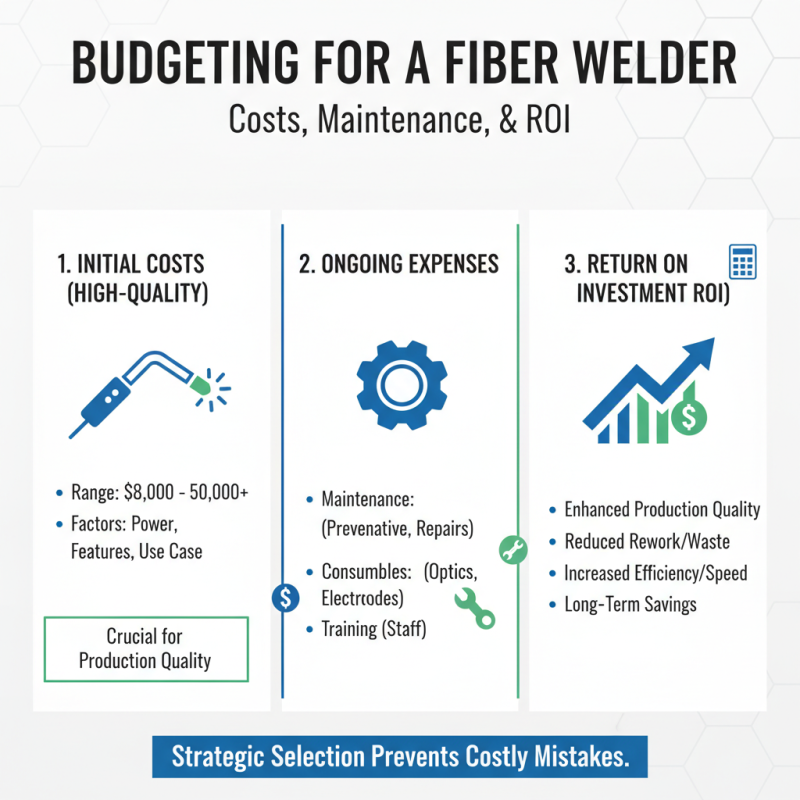
Budgeting for a Fiber Welder: Costs, Maintenance, and Return on Investment
Investing in a fiber welder can enhance your production quality, but financial planning is crucial. The cost of a high-quality fiber welder typically ranges from $8,000 to over $50,000. Factors include power output, features, and intended use. Businesses need to assess their specific welding requirements and choose accordingly. This careful selection can prevent costly mistakes.
Maintenance costs should not be overlooked. Regular upkeep is essential for optimal performance, averaging around $1,000 annually. Neglecting maintenance can lead to costly repairs or downtime. According to a survey by the Fabricators & Manufacturers Association, nearly 40% of companies reported that improper maintenance led to significant production losses in the last year. This emphasizes the importance of factoring in these ongoing expenses when budgeting.
Return on investment (ROI) is another critical aspect. Studies suggest that a well-chosen fiber welder can increase production efficiency by 25% to 30%. If you spend $20,000 on a unit, the returns could be substantial. However, the real question is how long it will take to recoup that initial investment. Many manufacturers report an average payback period of 12 to 18 months when they implement fiber welding technology effectively. Assessing these factors is vital in making an informed decision.