Top 10 Swing Welding Dolly Manufacturers Worldwide
Choosing the right Swing Welding Dolly can influence weld quality, production speed, and workplace reliability. This guide examines ten respected manufacturers serving workshops, fabrication plants, and heavy industrial environments worldwide. It focuses on practical performance rather than attractive brochures.
Each manufacturer is considered through clear, experience-based criteria. These include load capacity, travel stability, welding compatibility, control precision, maintenance access, and operator safety. A dependable dolly should move smoothly across rails or prepared surfaces. It should also hold large workpieces without sudden vibration or unwanted drift. Details matter, such as accessible emergency controls, durable wheels, and readable operating instructions.
Real workshop conditions can be unforgiving. Dust collects around drive systems. Heat tests electrical components. Uneven loading exposes weak designs quickly. Therefore, this overview considers technical documentation, customer support, customization options, and the manufacturer’s industry reputation. Where available, product specifications and user feedback support the discussion. However, no ranking is completely final. Brochures may present ideal conditions, while daily production reveals different weaknesses. That deserves attention.
A strong Swing Welding Dolly is not always the most expensive model. The better choice depends on workpiece weight, movement frequency, floor conditions, and welding process. Buyers should verify specifications directly with manufacturers before purchasing. This article offers a structured starting point, not a substitute for engineering review. It aims to help professionals compare credible suppliers with greater confidence and fewer costly surprises.
Definition and Core Functions of Swing Welding Dollies
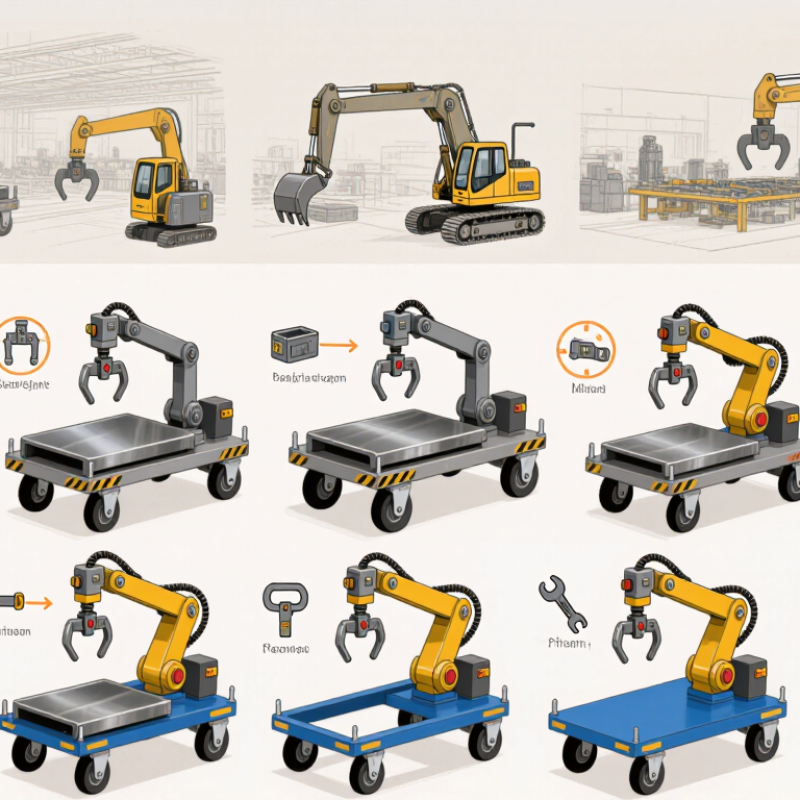
A swing welding dolly is a powered carriage that guides a welding torch along a joint while adding controlled side-to-side movement. It may travel on rails, magnetic tracks, or prepared surfaces, depending on the workpiece. The swing mechanism adjusts oscillation width, speed, and dwell time. These settings help distribute heat across wider grooves and improve bead coverage.
Its core function is repeatable torch movement. The dolly can maintain travel speed, torch angle, and stand-off distance more consistently than manual handling. This matters on long seams, large tanks, structural frames, and curved sections. Many systems include adjustable wheels, remote controls, limit switches, and emergency stops. Operators still need to check alignment, cable routing, grounding, and load capacity before welding begins.
Small errors remain important. A poorly fitted joint can defeat an accurate dolly. Excessive swing may create uneven penetration, while slow travel can overheat thin material. Experienced welders usually run a short test bead and inspect the profile before production work. They also recalibrate after changing plate thickness, wire size, or welding position. Automation improves consistency, but it does not replace sound procedure control, surface preparation, or trained judgment. The cleanest movement can still produce a weak weld when the setup is wrong.
Key Design Features and Performance Criteria
Top 10 Swing Welding Dolly Manufacturers Worldwide
Key Design Features and Performance Criteria
When comparing the top ten swing welding dolly manufacturers worldwide, design quality matters more than catalog claims. A reliable dolly should move smoothly across uneven workshop floors. Large, sealed casters reduce vibration and protect bearings from dust. Adjustable swing arms must hold steady under changing workpiece loads.
I examine frame welds, balance, and control response during practical trials. A rigid steel frame prevents twisting near maximum capacity. However, excessive weight can make positioning slow and tiring. That trade-off is often overlooked. Operators also need clear load markings, reachable controls, and handles that remain cool during extended use. Emergency stopping should be simple, visible, and easy to test.
Performance depends on more than motor power. A suitable drive system provides gradual starts and consistent low-speed movement. This helps align joints without sudden rotation. Speed stability matters. I also check duty-cycle data, gearbox noise, cable protection, and access to service points. Weld quality should show clean penetration and consistent bead profiles, not only attractive surfaces. Test records, material traceability, and repeatable inspection methods strengthen a manufacturer’s credibility. Still, no machine is perfect. Some published ratings assume ideal floors, balanced loads, and trained operators. Real workshops are less forgiving. A careful buyer should verify performance with representative workpieces before making a final decision.
Top 10 Swing Welding Dolly Manufacturers Worldwide: Key Design Features and Performance Criteria
The chart presents an industry-oriented selection benchmark for swing welding dollies. The percentages represent the relative importance of commonly evaluated design and performance criteria, rather than ratings for individual manufacturers or brands.
Evaluation criteria reflect widely used engineering considerations for welding automation, including load stability, variable-speed control, repeatable positioning, duty-cycle capability, operator safety, and resistance to workshop dust and moisture. Reference considerations include ISO 14732, ISO 17662, EN 60204-1, and IEC 60529.
How to Evaluate Global Swing Welding Dolly Manufacturers
Top 10 Swing Welding Dolly Manufacturers Worldwide
How to Evaluate Global Swing Welding Dolly Manufacturers
A strong manufacturer should prove performance, not merely publish attractive specifications. The IFR World Robotics 2024 report recorded 541,302 industrial robot installations in 2023. This growth reflects rising demand for repeatable welding operations. However, a swing welding dolly still requires practical evaluation.
Check rated load, rotation accuracy, travel speed, duty cycle, and floor tolerance. Ask for test records using a workpiece similar to yours. A 10-ton rating means little if the frame twists during eccentric loading. Review welding procedures, material traceability, inspection certificates, and quality systems. ISO 9001 certification helps, but it does not replace production evidence.
MarketsandMarkets estimates that the welding equipment market will grow strongly through 2028, increasing supplier competition. More choices can hide uneven engineering. Request dimensional drawings, motor data, emergency-stop details, and spare-parts lead times. Confirm whether controls support your voltage, language, and factory safety requirements. Service response should be measured in hours or days, not vague promises.
Do not ignore the operator’s view. Can a gloved worker reach the controls? Does the dolly stop smoothly on a dusty floor? A common mistake is comparing only price and maximum capacity. I would also question impressive laboratory results without customer references from heavy fabrication. No checklist is perfect. Workshop noise, heat, and maintenance habits can change the final decision.
Top 10 Swing Welding Dolly Manufacturers Worldwide
Top 10 Swing Welding Dolly Manufacturers Worldwide
The top 10 swing welding dolly manufacturers worldwide are usually judged by engineering quality, field experience, and service reliability. A capable manufacturer designs the dolly around stable movement, controlled swing angles, and consistent welding access. Buyers should inspect frame thickness, wheel alignment, braking systems, and rated load capacity. A polished brochure is not enough.
Experienced manufacturers often provide adjustable clamps, reinforced platforms, and sealed bearings for demanding workshop conditions. Some focus on compact dollies for narrow fabrication bays. Others build heavy-duty units for large steel sections and pressure equipment. During evaluation, I would ask for test records, maintenance instructions, spare-part availability, and operator training details. These small documents reveal more than marketing language.
In practical use, a good dolly should move smoothly across uneven floors without sudden drift. Controls must remain reachable while gloves are worn. Emergency stopping should feel immediate and predictable. Noise also matters during long shifts. I have found that oversized wheels do not always improve handling; poor weight distribution can make turning harder. That point is easy to miss.
The strongest global manufacturers combine tested fabrication methods with responsive technical support. They also explain limitations instead of promising unlimited performance. Buyers should compare the ten suppliers by operating environment, material weight, swing range, warranty terms, and local service capability. Independent inspection remains sensible, especially when equipment will support expensive assemblies.
Applications, Industry Standards, and Purchasing Considerations
Top 10 Swing Welding Dolly Manufacturers Worldwide
Swing welding dollies support circumferential welding on tanks, pipes, pressure vessels, and large fabricated frames. Their value depends on stable travel, accurate positioning, and consistent torch control. In practical workshop use, operators notice poor alignment quickly. Uneven wheels can create visible weld variation.
When comparing ten leading manufacturers, examine compliance before appearance. The machine should reflect ISO 12100 risk assessment principles and suitable electrical safety requirements. IEC 60204-1 can guide control panel evaluation, while welding equipment should match relevant IEC 60974 requirements. Guarding, emergency stops, grounding, and documented testing deserve direct attention. Some suppliers provide certificates, but the paperwork may not explain field performance.
Purchasing teams should confirm load capacity, track width, swing range, travel speed, duty cycle, and torch adjustment. Ask whether the dolly handles curved surfaces or only prepared rails. Check wheel materials, gear protection, remote controls, and access in narrow fabrication areas. Service response matters when production stops. Spare motors, control modules, and wheels should have clear availability. A factory trial with the actual workpiece is more useful than a polished brochure. I have seen buyers choose a lower price and later pay for alignment repairs. That mistake is avoidable, although no shortlist is perfect. Test noise, vibration, cable movement, and operator visibility before approval.