Shandong Popweld Automatic Equipment Co., Ltd.

Leave Your Message

What Are the Top Types of MIG Welding Machines?

Choosing a MIG welding machine is less about buying the largest box and more about matching the process to the work. A thin automotive panel needs different control from a thick steel frame. Wire-feed speed, output range, duty cycle, and available power all shape the result. Small differences matter.

Grand View Research estimated the global welding equipment market at USD 15.1 billion in 2023 and forecast a 5.4% compound annual growth rate from 2024 to 2030. That figure covers welding equipment broadly, not MIG machines alone, so it should be read as market context—not a MIG-specific sales forecast. The American Welding Society’s technical guidance and welding-metallurgy research by John C. Lippold also underline a practical point: process and material selection must suit the application. I can’t verify a direct quotation from Lippold on machine types, so I won’t attribute invented words to him.

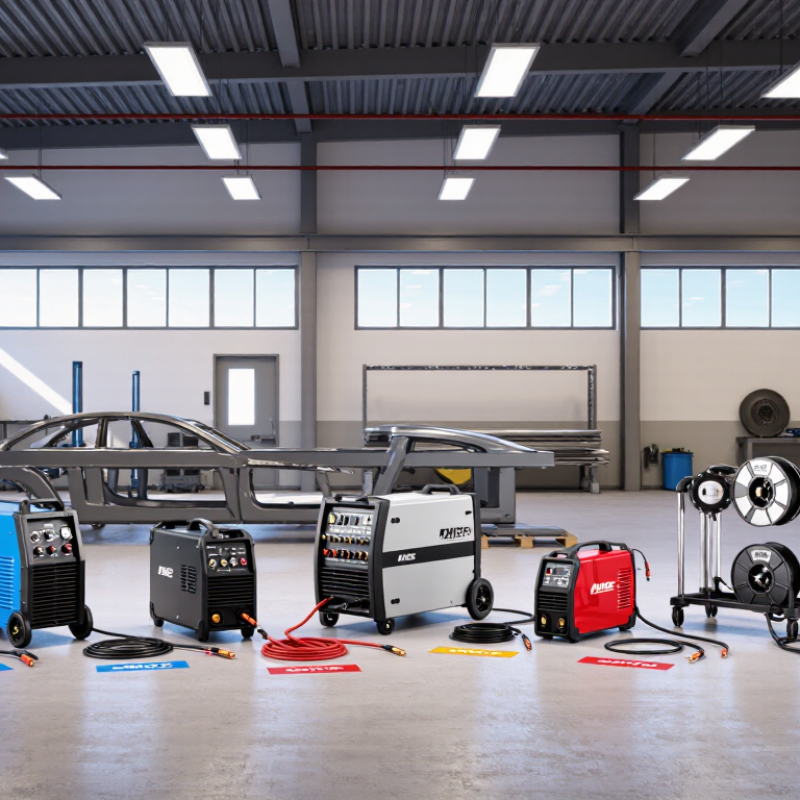
This guide compares the main options: transformer-based models, inverter machines, multiprocess units, portable machines, and systems configured for aluminum wire feeding. Some categories overlap. A compact inverter, for example, may also offer multiprocess capability. The right Mig Welding Machine depends on what you weld, where you weld it, and how often. Check the specifications against real jobs, not just the feature list. Even a useful buying guide has limits; manufacturer ratings and shop conditions can differ.
What Are the Top Types of MIG Welding Machines?

Constant-Voltage MIG Machines: The Core Power-Source Category

Constant-voltage (CV) machines form the core power-source category for MIG welding. They keep voltage relatively steady as wire feeds into the weld. Wire-feed speed largely controls current: faster feed generally increases amperage. This relationship helps operators adjust bead shape and penetration. It is not automatic.

At the bench, start with settings suited to the material thickness and wire diameter. Then make a test bead on matching scrap. Listen for a steady crackle and inspect the bead for consistent width, fusion, and spatter. Gas flow, wire stickout, joint fit-up, and torch angle still matter. A stable display cannot correct poor technique.

When comparing CV machines, check output range, wire-feed control, polarity options, and duty cycle. Duty cycle matters during extended welding; some machines need cooling breaks. Preset or synergic settings can save setup time, but verify them on actual material. Numbers are starting points. Thin sheet can burn through quickly when travel speed is slow or settings are too high. A slightly uneven test bead is useful evidence: adjust one setting, then test again.

Constant-voltage (CV) power sources are the standard power-source category for MIG welding. These approximate voltage bands overlap and vary with wire diameter, shielding gas, and material; voltage mainly adjusts arc length, while wire-feed speed primarily affects welding current.

Transformer-Based MIG Welders: Traditional, Heavy-Duty Power Sources

Transformer-based MIG welders use a laminated iron-core transformer to convert incoming power into welding output. Their design is familiar, sturdy, and often suited to fixed workshop use. A thick steel chassis and straightforward controls can feel reassuring beside a fabrication bench. These machines provide constant-voltage output for common MIG applications, including steel repairs and fabrication. Setup still matters. Correct voltage, wire speed, polarity, and gas flow affect whether a bead wets in cleanly or spits and stubs.

Transformer machines are often heavier and less convenient to move than inverter models. A unit that sits happily in one bay may become awkward on a crowded jobsite. Some offer fewer fine adjustments, so thin sheet may require patience and test coupons.

That is not a deal-breaker.

A transformer source can suit repeated work on gates, frames, and thicker sections, particularly when reliable input power is available. Check the rated duty cycle, supply requirements, and consumable compatibility before buying. A large transformer is no guarantee of good welds; technique and maintenance still show in every bead. Even dependable machines have limits.

Inverter MIG Welders: Compact Machines with Electronic Power Conversion

Inverter MIG welders convert incoming AC power through electronic switching, then regulate the output for the welding arc. This replaces the bulky, heavy transformer used in older designs. The smaller case is easier to carry between a bench and a job site. Electronic control can also help keep arc output steadier as settings change. That matters. Still, an inverter’s compact size does not guarantee smooth feeding or an easy start; the torch, wire, and settings must work together.

Compare rated output and duty cycle, not just weight. IEC 60974-1 expresses duty cycle over a ten-minute period: a 60% rating means six minutes welding at rated conditions, followed by four minutes without load. That figure is useful for judging whether a machine suits short repairs or repeated longer welds. Check the rating at the current you expect to use, since duty cycle can drop at higher output. I would also inspect the wire-feed drive and the power-input requirements before buying. A light machine is convenient, but a poor match for the shop supply can become frustrating. The trade-off is real.

Synergic and Pulsed MIG Welders: Coordinated Wire-Feed and Voltage Control

Synergic MIG welders link wire-feed speed with a recommended voltage, so changing feed speed adjusts the arc settings together. The operator can still fine-tune voltage or arc length. This coordination helps maintain a steady bead when moving between material thicknesses or wire sizes. On a workshop floor, that can mean fewer test beads and less time chasing an unstable arc. It is not automatic perfection. Joint fit-up and torch angle still matter.

Pulsed MIG adds a controlled cycle: a high-current peak detaches a droplet, then a lower background current sustains the arc. The AWS Welding Handbook, Volume 2, identifies pulsed-spray as a distinct GMAW metal-transfer mode; TWI’s technical guidance describes pulsing as a way to achieve spray-like transfer at lower average current. This can help limit heat on thin sheet and reduce spatter, but results depend on the selected wire, gas, and settings. A short practice run is still worthwhile. The waveform can look tidy while a poor torch angle leaves uneven penetration. That detail is easy to miss.

What Are the Top Types of MIG Welding Machines? - Synergic and Pulsed MIG Welders: Coordinated Wire-Feed and Voltage Control

Machine Type How the Controls Work Typical Metal Transfer Common Applications Key Considerations
Conventional CV MIG The operator sets wire-feed speed and voltage separately. On a constant-voltage power source, wire-feed speed largely determines welding current. Short-circuit, globular, or spray transfer, depending on settings, wire, shielding gas, and material. General fabrication, repair, and production work where the operator wants direct control of settings. Offers broad manual adjustability, but setup usually requires more operator knowledge and trial adjustments.
Synergic MIG The operator selects a program, typically based on material, wire type, wire diameter, and shielding gas, then adjusts a main setting such as wire-feed speed. The machine automatically coordinates related parameters, including voltage. Transfer mode depends on the selected program and welding conditions; synergic control alone does not define the transfer mode. Production and fabrication work requiring repeatable setups, quicker adjustments, or simplified operator controls. Programs and available adjustments vary by machine. Fine-tuning, often called arc-length or voltage trim, may still be needed.
Pulsed MIG A pulse-capable power source alternates higher peak current with lower background current. Many systems coordinate pulse parameters with wire-feed speed through a program. Pulsed spray transfer can detach droplets in a controlled manner, often allowing spray-like transfer at a lower average current than conventional spray transfer. Welding aluminum, stainless steel, and other applications where controlled transfer, reduced spatter, or management of heat input is useful. Requires a pulse-capable machine and an appropriate wire-and-gas program. Results depend on material thickness, joint design, and technique.
Double-Pulse MIG Alternates between two pulse conditions to vary heat input and deposition over time. Many machines provide coordinated settings for the selected material program. Pulsed transfer with a periodically changing pulse level; the resulting bead can show a regular ripple pattern. Some aluminum and stainless-steel work where bead appearance and control of the weld pool are priorities. It is a specialized pulsed process, not a requirement for all MIG work. Correct setup and travel technique remain important.

Note: Synergic describes coordinated parameter control, while pulsed describes a current waveform and transfer approach. A machine may offer synergic control, pulsed operation, both, or neither.

Multi-Process MIG Systems: IEC 60974-1 Duty Cycle Rated Over 10 Minutes at 40°C

MIG machines generally fall into transformer, inverter, synergic, and multi-process types. Multi-process systems add flexibility, but their duty-cycle rating deserves close attention. IEC 60974-1, the welding-power-source standard, rates duty cycle over a 10-minute period at a specified current and 40°C.

At 60%, the machine can weld for six minutes, then needs four minutes of cooling under the stated test conditions.

Four minutes off. That matters during long bead runs or repeated tack-and-weld work.

The 40°C figure is a test condition, not a promise of identical performance in every workshop. Hot air, blocked vents, and a dusty fan can make thermal limits arrive sooner.

That number can mislead.

A multi-process unit may carry different ratings for MIG, stick, and TIG modes, so check the rating for the process and output you will actually use. For example, a 200-amp rating at 30% duty cycle allows three minutes of welding in each 10-minute interval at that rated output.

Lowering current may extend operating time, but confirm the machine’s chart rather than guessing. IEC 60974-1 provides the relevant test framework; the nameplate and manual show the machine-specific figures.

Even a capable system can pause mid-job. Plan around the rating.