Why Choose Track Welding Lathe for Your Manufacturing Needs?
In today's competitive manufacturing landscape, the choice of machinery is crucial. One expert in the industry, Dr. Alex McDonald, emphasizes, "A Track Welding Lathe can significantly improve production efficiency and precision." This statement resonates deeply with manufacturers striving for excellence.
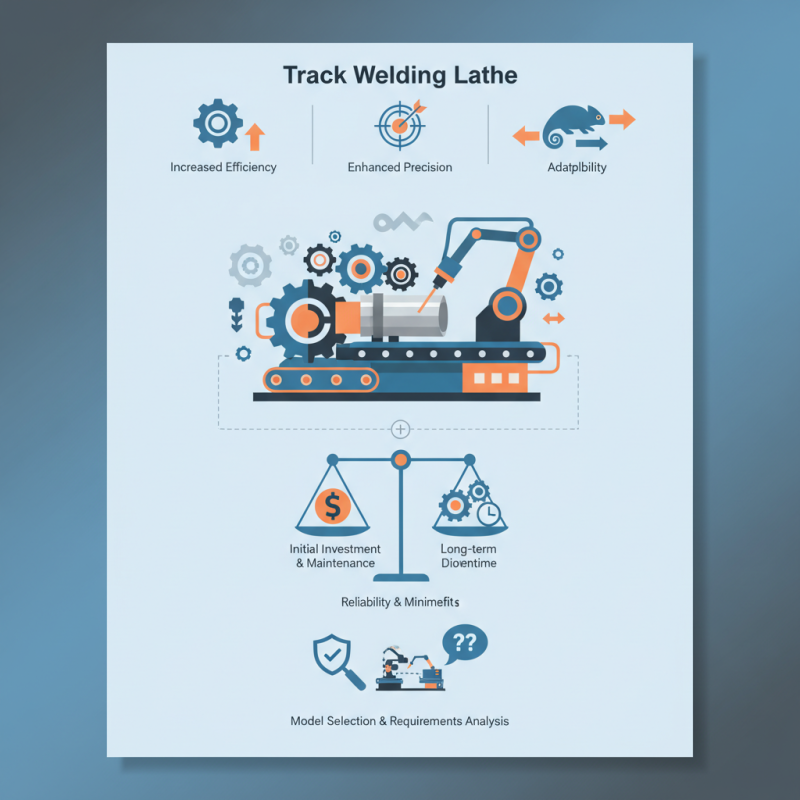
Track Welding Lathes offer unique advantages. They provide consistent weld quality and are adaptable to various projects. This adaptability can be a game changer for manufacturers facing diverse demands. However, one must consider the initial investment and maintenance costs. Are these offset by the long-term benefits?
The reliability of a Track Welding Lathe cannot be overstated. It delivers robust performance that minimizes downtime. Yet, the challenge lies in selecting the right model for specific tasks. It requires a thorough understanding of your production requirements and potential limitations. Such reflections are vital for making an informed decision.
Benefits of Using Track Welding Lathes in Manufacturing Processes
Track welding lathes are gaining traction in manufacturing sectors for several compelling reasons.
One key benefit stems from their precision. According to a recent industry report, manufacturers utilizing track welding lathes have reported a
30% increase in welding accuracy. This precision reduces material waste and increases overall production efficiency.
It significantly translates into cost savings over time.
Another important aspect is their versatility. Track welding lathes can handle a wide variety of materials and shapes.
They support various welding techniques, making them adaptable to different projects. This flexibility is crucial, especially in
industries where customization is vital. A survey indicated that 65% of manufacturers find track welding lathes enhance their product offerings due to this adaptability.
However, challenges exist. Track welding lathes may require specialized training for operators.
This need can slow down initial implementation. Moreover, while they offer long-term savings,
the upfront costs can be a hurdle. Companies must weigh these factors carefully.
Balancing the costs and benefits of integrating track welding lathes into their operations is essential for sustainable growth.
Key Features of Track Welding Lathes for Enhanced Precision
Track welding lathes have become essential in modern manufacturing. Their key features significantly enhance precision and efficiency. These machines allow for optimal control in welding processes. Recent industry reports show that precision manufacturing can improve productivity by up to 40%. This increase is attributed to the accuracy provided by track welding technology.
Track welding lathes offer advanced automation capabilities. According to a survey by the American Welding Society, 70% of manufacturers now prioritize automation to meet rising demand. This technology ensures consistent welding quality, minimizing defects. Features like programmable settings and real-time monitoring empower operators. However, relying solely on technology may lead to overconfidence and potential skill degradation among workers.
Flexibility is another critical aspect of these machines. They can adapt to various materials and sizes, making them suitable for diverse projects. Yet, one must acknowledge that not all operators fully exploit these capabilities. Continuous training is essential to maximize the benefits of track welding lathes. Investing in education and skills development can mitigate this risk.
Why Choose Track Welding Lathe for Your Manufacturing Needs? - Key Features of Track Welding Lathes for Enhanced Precision
| Feature |
Description |
Benefits |
| Enhanced Precision |
Offers tight tolerances and high accuracy in welding processes. |
Improved quality of welds and reduction in rework costs. |
| Versatility |
Can be used for various materials and complex shapes. |
Increases manufacturing capabilities without significant investment in multiple machines. |
| Automated Controls |
Equipped with advanced CNC technology for ease of operation. |
Reduces human error and streamlines the production process. |
| Durability |
Constructed with high-quality materials for long-lasting performance. |
Decreases the need for frequent maintenance and upgrades. |
| Cost-Effectiveness |
Lower operational costs due to efficiency and waste reduction. |
Increased profit margins through optimized resource use. |
Applications of Track Welding Lathes in Various Industries
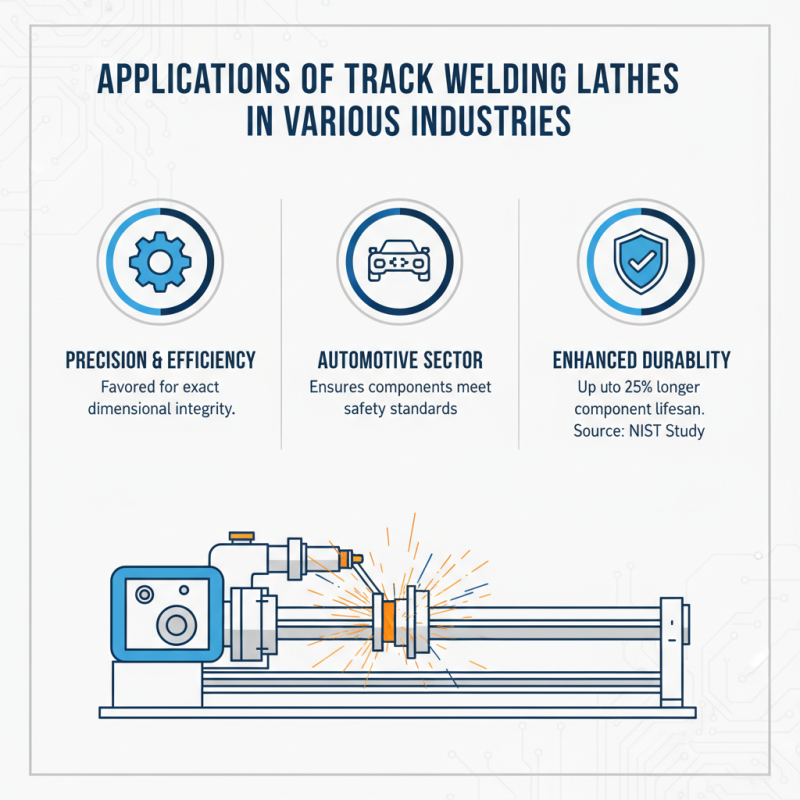
Track welding lathes are increasingly favored in various industries due to their precision and efficiency. In the automotive sector, these lathes ensure that components are welded with exact dimensional integrity. A study from the National Institute for Standards and Technology highlights that high-precision welding can enhance component lifespan by up to 25%. This durability is crucial for meeting safety standards in vehicle production.
The aerospace industry also benefits significantly from track welding lathes. Utilizing advanced welding techniques, manufacturers can create lightweight yet strong components, which are essential for fuel efficiency. According to Aerospace Manufacturing and Design, reducing weight by just 10% can lead to a 5-8% fuel savings over a plane's lifetime. However, the high initial investment in track welding technology can deter some smaller manufacturers. They may face challenges in justifying the costs versus the benefits, indicating a gap in understanding the value proposition.
In construction, track welding lathes are used for fabrication of structural components. This application allows for quicker production times and greater accuracy. Reports show that construction projects utilizing robotic welding can see a lead time reduction of 20-30%. Nonetheless, integration into existing workflows poses obstacles, such as the need for skilled operators and training, which some companies overlook. Addressing these hurdles is essential for maximizing the benefits of track welding technology.
Comparative Analysis: Track Welding Lathes vs. Other Welding Methods
Track welding lathes provide distinct advantages in manufacturing processes. They excel in precision and efficiency compared to traditional welding methods. For projects requiring detailed work, these machines deliver consistent results. The stability of the track allows for better control, minimizing errors during production.
When comparing track welding lathes to other welding techniques, speed is a significant factor. Track welding lathes can complete joins faster due to their mobility and automation capabilities. Manual methods often involve setbacks. Operators may struggle with alignment and stability, leading to delays and inconsistencies.
However, not every project benefits from track welding lathes. Some applications may require the flexibility of manual techniques. This can be crucial for complex designs or repairs. Not all technicians are familiar with track welding, which could lead to a steep learning curve. Balancing technology and skill is vital in modern manufacturing. Addressing these challenges is essential to choose the right method for each situation.
Comparison of Welding Methods
Cost Efficiency and Productivity Gains from Track Welding Lathes
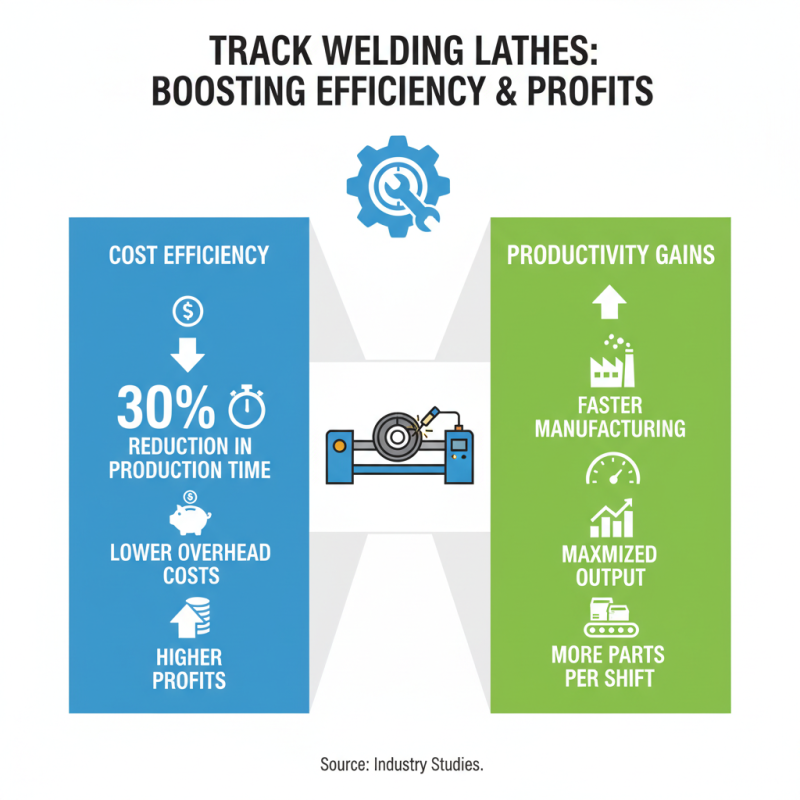
When considering manufacturing needs, the choice of equipment can significantly impact costs and productivity. Track welding lathes offer impressive efficiency gains, with industry studies indicating a potential 30% reduction in production time compared to traditional welding methods. This is crucial for manufacturers seeking to maximize output while minimizing overhead costs. Each saved minute translates directly into higher profits.
Many experts suggest that the automation features of track welding lathes can further enhance productivity. Automated systems can reduce error rates and increase precision, leading to fewer defective parts. According to a report by the Welding Institute, companies adopting automated track welding systems saw an average of 25% improvement in operational efficiency. This boosts overall production capabilities and allows for more consistent quality in finished products.
Tips for maximizing your track welding lathe: Regularly calibrate the machine for optimal performance. Maintenance is essential to keep the system running smoothly. Also, consider training staff on best practices to maximize the benefits of automation. While costs for initial setup may seem daunting, the long-term savings and productivity can outweigh the investment. Remember, every piece of equipment has its quirks; understanding these can lead to better usage and fewer issues in production.