2026 Top Trackless Weld Lathe Insights for Global Buyers?
In the evolving landscape of manufacturing, the "Trackless Weld Lathe" sector is gaining significant attention. Experts like Dr. Henry Lawson, a leading authority in welding technology, emphasize its importance: “Trackless Weld Lathes redefine efficiency in metal fabrication.” As industries strive for enhanced productivity, global buyers increasingly seek insights into these innovative machines.
The year 2026 presents unique opportunities and challenges for Trackless Weld Lathe buyers. Emerging technologies are transforming traditional methods. These lathes offer precision and flexibility that many factories desire. However, not every buyer fully recognizes the benefits and intricacies involved in selecting the right model.
Understanding the specific needs of production environments is crucial. Buyers must assess factors such as material compatibility and operational speed. Each decision impacts production quality and cost efficiency. However, navigating the options can feel overwhelming. A thoughtful approach may lead to optimal results, even in the face of uncertainty.
2026 Market Overview of Trackless Weld Lathes Globally
The market for trackless weld lathes is experiencing notable changes in 2026. This technology provides innovative solutions in metalworking industries. Global buyers are increasingly interested in these machines due to their efficiency. Industries are aiming to reduce production time and costs. Trackless weld lathes offer precise welding, enhancing product quality.
As more manufacturers adopt these machines, the competition intensifies. Buyers need to evaluate the performance and durability of different models. However, some users report challenges in maintenance and operation. Training staff on new technologies can also be demanding. These factors should influence purchasing decisions.
Market trends indicate a shift towards automation and smart manufacturing. Buyers must remain informed about technological advancements. Staying updated can help identify the best options for their production needs. Understanding the long-term benefits versus initial investment is crucial. This careful consideration will help buyers make informed choices in the evolving market landscape.
2026 Market Overview of Trackless Weld Lathes Globally
This chart illustrates the projected market size of trackless weld lathes across various regions for the year 2026. The data indicates that the Asia-Pacific region is expected to lead the market significantly, followed by North America and Europe.
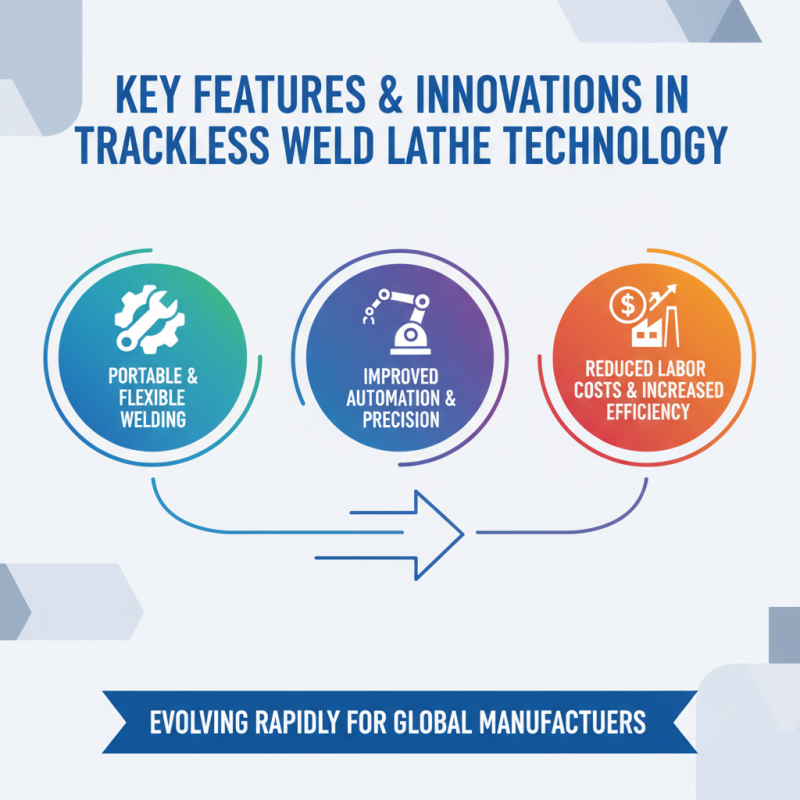
Key Features and Innovations in Trackless Weld Lathe Technology
The trackless weld lathe technology is evolving rapidly, offering critical advancements for manufacturers worldwide. This innovation eliminates the need for traditional track systems, allowing for a portable and flexible welding solution. Key features include improved automation and enhanced precision. These developments significantly reduce labor costs while increasing production efficiency.
For buyers, understanding the various options available is essential. Look for machines with user-friendly interfaces and adjustable parameters. Increased adjustability can lead to better outcomes.
Consider the material compatibility of the equipment. Some machines may perform better with certain materials. Understanding this will ensure optimal usage.
When investing, prioritize equipment that has undergone rigorous testing. Reliability is crucial for production environments. Always seek out user reviews and case studies to verify performance claims. Trackless weld lathes have promising innovations; however, the experience can vary. Ensure any investment aligns with your operational goals for the best return.
Major Manufacturers and Their Contributions to the Industry
The trackless weld lathe market is evolving rapidly. Major manufacturers are redefining industry standards. Their contributions highlight significant advancements in technology and production efficiency. Data from recent market reports indicate that the global demand for advanced welding solutions is increasing. By 2026, the market for trackless weld lathes is projected to grow by over 15%.
Leading manufacturers focus heavily on automation and precision. Innovations such as real-time monitoring and adaptive controls are crucial. These features boost productivity and reduce human error. A recent survey showed that 67% of manufacturers are prioritizing next-generation automation technologies. However, the challenge lies in integrating these new systems with existing infrastructure.
Additionally, collaborations between industry leaders and technology firms are vital. They drive research and development for new materials and techniques. Companies must address skills gaps in their workforce to fully leverage these advancements. Reports suggest that training and continuous education are key areas needing attention. The industry's growth is promising, yet it requires a strategic approach to overcome existing obstacles.
Regional Market Analysis: Trends and Demand for Trackless Weld Lathes
The trackless weld lathe market is evolving significantly. Various regions are experiencing unique trends and demands. Countries with advanced manufacturing sectors show an increasing preference for these machines. They appreciate efficiency and flexibility, which trackless weld lathes provide.
In North America, industries are investing heavily in automation. Manufacturers seek solutions to reduce labor costs and enhance productivity. Meanwhile, Europe is focused on precision and technology integration. Manufacturers are exploring innovative designs for improved performance. This regional distinction highlights the diverse needs of global buyers. However, challenges remain. Not every manufacturer is equipped to adapt quickly to these changes. Some may struggle with the transition to modern technology.
In Asia, demand is surging due to rapid industrial growth. Companies are prioritizing cost-effective solutions. Yet, local manufacturers sometimes lack the expertise to compete internationally. Addressing these gaps will be crucial for maintaining market relevance. Trackless weld lathes represent a promise of innovation, but the path to adoption is not straightforward. Each region's journey reflects their unique economic landscape and manufacturing philosophy.
2026 Top Trackless Weld Lathe Insights for Global Buyers
| Region |
Market Size (USD Million) |
Growth Rate (%) |
Key Trends |
Demand Drivers |
| North America |
250 |
5.5 |
Automation Advancements |
Rising Manufacturing Demand |
| Europe |
230 |
4.8 |
Energy Efficiency Focus |
Sustainability Initiatives |
| Asia-Pacific |
400 |
6.2 |
Technological Innovations |
Growing Industrial Base |
| Latin America |
90 |
3.5 |
Market Modernization |
Infrastructure Development |
| Middle East & Africa |
70 |
2.9 |
Emerging Markets |
Oil & Gas Industry Growth |
Best Practices for Selecting and Implementing Trackless Weld Lathes
Choosing the right trackless weld lathe is critical for manufacturing efficiency. Companies must evaluate their unique needs before investing. According to industry reports, 75% of organizations experience production delays due to improper machine selection. This highlights the importance of understanding machine specifications.
One should consider factors like speed, precision, and adaptability. Trackless weld lathes can vary significantly in performance. Data suggests that machines with higher RPM ratings can enhance productivity by as much as 40%. However, investing in faster equipment without understanding processes can lead to pitfalls. Many operators find themselves overwhelmed by speed, resulting in inconsistent welds.
Training is crucial when implementing new machinery. Inadequate operator training can negate advanced technology's benefits. Industrial surveys indicate that 60% of operators feel underprepared for new equipment. This gap can lead to costly mistakes. Detailed manuals and hands-on workshops are beneficial. Continuous education can ensure that the workforce can maximize equipment capabilities while minimizing errors.