Shandong Popweld Automatic Equipment Co., Ltd.

Leave Your Message

How to Choose a Fiber Welder Machine?

Choosing a Fiber Welder Machine is less about buying the highest wattage and more about matching the system to real production work. A welder suited to thin stainless panels may not perform equally well on aluminum brackets or long production runs. Fit matters. Material, thickness, joint design, and travel speed all influence the result. Small details count.

Start by defining the parts you plan to weld and the finish they require. Thin sheet can demand careful heat control to limit burn-through and distortion. Thicker sections may need more power, a different welding head, or multiple passes. But power alone does not guarantee a sound joint. Beam settings, wire-feeding options, shielding gas, and operator technique also matter. Review the machine’s rated output and duty cycle, then ask how its controls support repeatable settings. Check cooling requirements, service access, and available technical support. Safety features and suitable fume extraction should be part of the evaluation, not an afterthought.

Test first. Ask the supplier to weld samples made from your actual materials, thicknesses, and joint shapes. Inspect the bead for consistency, spatter, penetration, and visible distortion; where quality requirements demand it, use an appropriate inspection method. A polished demonstration piece can be misleading. Bring a challenging part, too. Compare results, setup time, and ease of adjustment across candidates. The right Fiber Welder Machine is the one that meets your production needs reliably, with support and operating costs you can realistically manage. No checklist replaces a careful trial, and that is worth remembering.
How to Choose a Fiber Welder Machine?

Understand How a Fiber Welder Works and Where It Is Used

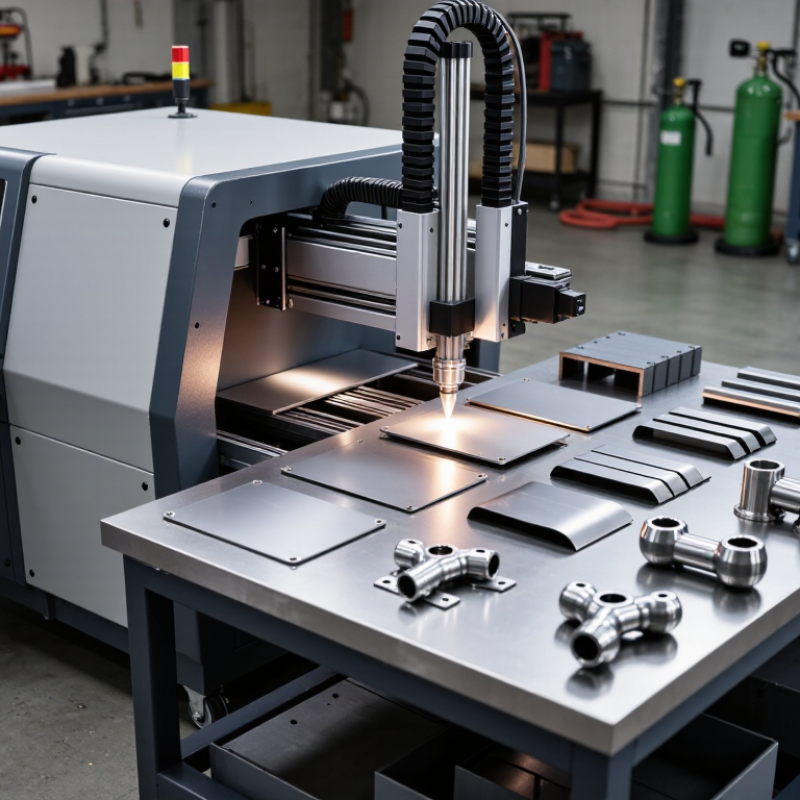
A fiber welder sends laser energy through an optical fiber to a focused welding head. The concentrated beam heats the joint, melting the edges into a seam. Depending on the material and setup, shielding gas may help limit oxidation. Small gaps matter. A laser’s narrow heat zone can reduce distortion, but it does not fix poor fit-up.

These machines are used in sheet-metal fabrication, appliance enclosures, automotive components, and precision metalwork. Stainless-steel panels and thin steel parts are common examples. Aluminum can also be welded, though reflectivity, joint design, and settings need careful attention. In practice, a sample weld is more useful than relying on a brochure. Fit-up is everything. Or nearly.

When choosing a machine, match its power and process controls to the metals, thicknesses, and joint types you expect to weld. Check the duty cycle, cooling arrangement, available welding heads, and whether the machine supports the required wire feed. Also consider operator training, fume extraction, protective enclosures, and access to maintenance. A higher power rating is not automatically better; excessive heat can burn through thin stock. The right setup depends on the actual parts, and production trials may reveal details that specifications miss.
Identify the Materials and Welding Tasks You Need to Handle

How to Choose a Fiber Welder Machine?
Identify the Materials and Welding Tasks You Need to Handle

Start with a clear list of the metals, grades, thicknesses, and joint types you plan to weld. Thin stainless-steel sheets need different settings from thick carbon-steel brackets. Aluminum and copper also reflect laser energy strongly, so confirm that the machine is designed for your materials. Check its stated thickness range, power adjustment, wire-feeding options, and shielding-gas requirements. A machine that handles one sample well may struggle with a different alloy or joint.

Think about the real work, not just the best-case demonstration. Are you joining long seams, repairing small parts, or welding corners in tight spaces? Consider daily production volume, operator skill, and how consistently parts can be positioned. The American Welding Society’s 2023 Welding Workforce Data projected that U.S. employers would need 360,000 welding professionals by 2027. That workforce pressure makes ease of setup and repeatable results worth evaluating, though the right choice still depends on your shop. A neat sample weld is not proof of reliable production performance.

Tip: Bring samples of your actual materials to a machine trial. Test the thinnest and thickest pieces, inspect the back of each weld, and record settings. Ask about safety features and training, too. It is easy to overlook these details when a quick demonstration looks convincing.

How to Choose a Fiber Welder Machine? - Identify the Materials and Welding Tasks You Need to Handle

Material or Task Typical Applications Welding Considerations Machine and Process Features to Consider
Stainless steel Enclosures, kitchen equipment, tanks, brackets, and sheet-metal assemblies Usually welds well with fiber lasers. Appearance, corrosion resistance, and distortion control may be important, especially on visible or thin parts. A handheld or automated system may suit the job. Consider stable power control, adjustable travel speed, suitable shielding gas, and wire feeding if the joint gap requires filler.
Carbon and mild steel Frames, cabinets, machinery parts, and general metal fabrication Often suitable for laser welding. Joint preparation and fit-up affect weld consistency; thicker sections may require more power, slower travel, multiple passes, or a different joint design. Match laser power and operating mode to the material thickness, joint type, and production rate. For repeat production, consider fixturing and robotic or automated movement.
Aluminum and aluminum alloys Battery housings, vehicle components, heat exchangers, and lightweight structures High reflectivity and thermal conductivity can make the process more demanding than welding many steels. Alloy and surface condition influence cracking and porosity risk. Choose a system and process proven for the specific alloy and thickness. Evaluate beam control, shielding, joint design, and, where needed, filler wire. Test representative parts before production.
Copper Electrical conductors, busbars, terminals, and heat-management components Copper reflects near-infrared laser energy and conducts heat rapidly, so coupling and process stability can be challenging, particularly on thicker parts. Confirm that the machine and process are suitable for the copper grade and joint. Power, beam characteristics, clamping, and weld sequence should be validated on sample parts.
Brass and coated metals Fittings, connectors, hardware, and galvanized sheet assemblies Brass can produce zinc vapor; galvanized coatings can also release zinc fumes during welding. These conditions can contribute to spatter, porosity, and weld defects. Provide effective local fume extraction and follow material-specific safety procedures. Consider coating removal or a qualified process and joint design where appropriate.
Thin sheet and small components Precision enclosures, instrument parts, appliance panels, and small assemblies Thin material can burn through or distort if heat input is excessive. Consistent fit-up and a controlled welding sequence are important. Look for fine power adjustment and a process mode suited to the part. A pulsed or carefully controlled continuous-wave process may be appropriate depending on the material and joint.
Long seams or high-volume production Repeated seams on housings, frames, tubing, and production assemblies Consistency, cycle time, part positioning, and repeatable joint fit-up are often as important as maximum laser power. Compare handheld, fixture-based, and robotic systems. Assess automation, seam access, part handling, shielding-gas delivery, and the ability to maintain repeatable parameters.
Dissimilar-metal joints Assemblies combining different metals for electrical, thermal, or structural reasons Compatibility depends on the specific metal pair, alloy grades, joint geometry, and service conditions. Some combinations can form brittle phases or have markedly different melting behavior. Do not select a machine based on power alone. Confirm the material combination with a qualified welding procedure and test the finished joint for the required strength and performance.

Selection note: No single power rating guarantees a particular weld thickness or result. Final capability depends on the exact alloy, thickness, joint design, fit-up, weld quality requirements, travel speed, shielding, and process settings. Confirm machine suitability with representative material samples and appropriate safety controls.

Compare Machine Types, Power Levels, and Essential Features

A fiber welder can be handheld, mounted on a bench, or integrated into a robotic cell. Choose by part size and production rhythm, not by power rating alone. A handheld unit suits short seams and varied repair work; a fixed or robotic setup supports repeatable, higher-volume jobs. The International Federation of Robotics reported 541,302 industrial robot installations worldwide in 2023 in World Robotics 2024. That figure signals broad automation growth, but it does not mean every shop needs a robot. Integration costs and programming time matter.

Match power to material, thickness, joint fit, and travel speed. A 1 kW source may work for thin sheet, while thicker sections may need more power or multiple passes; test sample joints before buying. There is no neat cutoff. Rated power alone cannot predict weld quality. Check whether the machine offers adjustable beam settings, a stable wire feeder, suitable cooling, and easy-to-clean optics. For a real trial, weld a coupon with the same material and joint gap as your parts, then inspect penetration and consistency. Also verify enclosure, interlocks, fume extraction, and operator training needs. Small details count. A powerful machine with awkward controls can slow a skilled operator down.

Assess Safety, Automation, Service, and Operating Costs

How to Choose a Fiber Welder Machine?

Assess Safety, Automation, Service, and Operating Costs

Safety deserves more than a quick check of the machine’s enclosure. Look for functioning interlocks, clear operating instructions, and suitable fume extraction for the materials being welded. Confirm that operators can access appropriate training and protective equipment. Small details matter. Ask to see the machine operating, and observe how the work area is controlled during setup and maintenance. A tidy demonstration is useful, but real production conditions may be less predictable.

Choose automation that fits your actual workload. For frequent, repeatable welds, fixtures and programmable settings can reduce variation and operator fatigue. For short runs or changing parts, complex automation may add setup time without enough benefit. Service matters, too: ask how quickly common spare parts can be supplied, what support is available remotely, and whether maintenance instructions are practical. Do not assume every supplier’s response-time estimate reflects a busy production week.

Compare total operating costs, not just the purchase price. Include electricity, cooling, extraction filters, consumables, training, scheduled maintenance, and possible downtime. Request a sample weld on your material and inspect the result under consistent conditions. Record the settings and cycle time; otherwise, quotes can be hard to compare fairly. Cost estimates are still estimates, and I would leave room for surprises.

Verify Performance with Sample Welds and Supplier Checks

A fiber welder should be judged on finished joints, not a polished specification sheet. Ask the supplier to weld your actual material, thickness, and joint design. Use production-like fixtures and record power, travel speed, focus position, and shielding gas. Keep the settings with each sample. Small changes can affect penetration and distortion.

Request at least three samples for each critical setup. Inspect the weld face and root, then section one sample to check penetration and porosity. ISO 13919-1:2019 defines three quality levels—B, C, and D—for imperfections in laser-beam and electron-beam welds. Agree on the required level before testing. ISO 15614-11:2022 also provides a test-based framework for qualifying laser-beam welding procedures. One failed sample is useful. It may reveal a narrow process window.

Check the supplier’s test equipment, calibration records, and written acceptance criteria. Ask who performs the inspection and whether you can review raw measurements, not just selected photos. Have the supplier repeat a weld after a short pause or setup change; stable results matter more than one perfect bead. A sample test cannot reproduce every production condition. I would still treat it as evidence, not a guarantee. Request traceable material details and a clear record of any parameter changes.

How to Choose a Fiber Welder Machine: Verify Performance with Sample Welds

Compare repeatable test welds made with the same material, joint design, and settings. The example measurements below are illustrative—not a universal performance benchmark.

Example test: tensile strength for five 1.0 mm 304 stainless steel butt-joint coupons. The 500 MPa line is an example project target only; set acceptance criteria for your material and application. Ask suppliers to document the material, joint preparation, welding parameters, test method, and calibration status, and verify results with repeat samples.