Shandong Popweld Automatic Equipment Co., Ltd.

Leave Your Message

Best MIG Welding Machine Supplier in China?

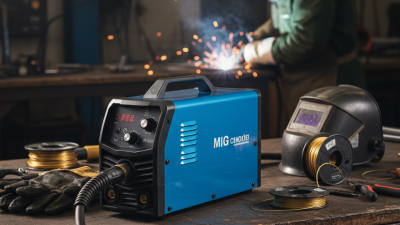
Choosing the Best MIG Welding Machine Supplier in China requires more than comparing prices or reading polished product catalogs. A reliable supplier must prove technical competence through stable arc performance, accurate wire feeding, thermal protection, and repeatable factory testing. These details matter when welding mild steel frames, stainless brackets, or aluminum panels under real workshop pressure.

Jody Collier, a respected welding educator and author, often emphasizes this practical truth: “The machine is only as good as the setup and the operator.” That principle should guide every supplier evaluation. Ask for duty-cycle data, voltage ranges, compatible wire sizes, test videos, and clear warranty terms. Request photos of production lines and inspection records. A serious manufacturer should explain calibration, spare parts, training, and response times without avoiding difficult questions.

Look closely at certification claims.

A logo proves little alone.

The best Mig Welding Machine supplier combines engineering experience with dependable communication. Factory audits, sample testing, and documented quality procedures can reveal more than a low quotation. Check whether the supplier understands your material thickness, power supply, workshop temperature, and expected welding cycle. Those factors influence machine selection.

There is also room for honest doubt. No supplier is perfect, and an attractive machine may still have weak after-sales support. A rushed decision can create downtime, inconsistent welds, and unexpected maintenance costs. Therefore, this guide compares Chinese suppliers through practical evidence, not promises. It focuses on performance, safety, transparency, and long-term service, helping buyers make a careful and defensible purchasing decision.
Best MIG Welding Machine Supplier in China?

MIG Welding Fundamentals: GMAW, 0.6–1.6 mm Wire, and 25–500 A Output

Best MIG Welding Machine Supplier in China?

MIG welding, formally GMAW, feeds a continuously supplied wire through a torch while shielding gas protects the molten pool. ISO 4063 identifies GMAW as process 135. This matters when comparing technical documents from Chinese suppliers. A machine supporting 0.6–1.6 mm wire should offer stable feeding, adjustable inductance, burnback control, and clear voltage settings.

A 25–500 A range covers thin sheet work and heavier fabrication, but the numbers need context. A low 25 A setting can suit delicate steel, although arc stability may suffer with poor setup. At the other end, 500 A is useful for thick sections, yet only when the duty cycle supports sustained production. Check rated output at 40°C, not only peak current. Test it cold. Then test it continuously.

The American Welding Society’s Welding Handbook places typical GMAW deposition rates roughly between 1 and 8 kg per hour, depending on wire size, current, shielding gas, and transfer mode. Fortune Business Insights valued the global welding equipment market at about USD 15.37 billion in 2023, showing strong industrial demand. These figures do not guarantee a good machine. A practical supplier should provide weld samples, calibration records, thermal protection details, and feeder performance data. Ask for tests using both 0.6 mm and 1.6 mm wire. The smaller wire may expose feeding problems quickly. That distinction matters.
Core Supplier Metrics: IEC 60974-1, 60% Duty Cycle, and Thermal Control

When comparing a MIG welding machine supplier in China, I start with documents, not catalog photos. The core question is simple: does the machine meet IEC 60974-1? This standard covers arc-welding power sources, including output, temperature rise, protection, and marking requirements. Ask for the edition, test laboratory, certificate number, and complete test report. Paperwork matters.

IEC 60974-1 IEC 60974-1 defines duty cycle over a ten-minute period, commonly at a 40°C ambient temperature. A 60% rating means six minutes welding, followed by four minutes cooling, at the stated current. It does not mean continuous welding. Supplier data should show tested amperage and voltage, not only “60%” in large print. Independent testing remains useful. The ISO Survey 2023 recorded 1,265,216 ISO 9001 certificates worldwide, yet certification alone does not prove welding performance.

Thermal control is where factory claims meet workshop reality. Look for temperature sensors, fan control, over-temperature shutdown, and reliable restart behavior. IEC 60974-1 addresses thermal protection, but buyers should verify sensor placement and recovery time. I have seen machines pass short demonstrations and struggle near rated load. That is an uncomfortable gap. Request a 40°C load-test video, serial-linked records, and clear spare-part support terms. Do not accept vague promises.

Evaluating Chinese Factories: ISO 9001, CE Certification, and Traceability

Best MIG Welding Machine Supplier in China?

A reliable factory is not proved by a polished website. During supplier audits, I examine certificate scope, production records, and controlled changes. ISO 9001 matters only when it operates on the shop floor. The ISO Survey 2023 reported over 1.2 million ISO 9001 certificates worldwide. Therefore, the logo alone proves little. Request the certificate number, issuer, expiry date, and manufacturing site. Confirm that welding machines fall within its scope.

CE marking needs sharper scrutiny. It is not a quality award or one central agency’s certificate. The European Commission’s Blue Guide 2022 requires manufacturers to assess applicable requirements. They must also prepare technical documents and sign an EU Declaration of Conformity. Ask for that declaration, risk assessment, test reports, and exact model references. Check ratings across labels, manuals, and test documents. Missing serial ranges are warning signs.

Traceability should connect copper, control boards, and power modules to each finished unit. Request serial-number records, incoming inspections, calibration status, firmware versions, and final-load tests. ISO 3834 provides a useful welding-quality framework, but it does not replace product safety compliance. Factory interviews can expose weak habits. Operators may remember a repair but record nothing. That is not necessarily fraud. It is a reliability gap. I would value corrective-action evidence above confident promises. Some factories still use spreadsheets. They can work, imperfectly. One unchecked revision can affect an entire shipment.

Machine Performance Checks: 85% Efficiency, IP21S Protection, and Arc Stability

Best MIG Welding Machine Supplier in China?

Choosing a reliable MIG welding machine supplier requires more than comparing prices. In workshop trials, 85% efficiency can reduce energy waste and heat buildup during continuous welding. However, this figure depends on voltage, wire size, duty cycle, and operating temperature. Ask for test conditions, not only a printed specification.

Efficiency Check
85% efficiency can reduce energy waste and heat buildup during continuous welding.

IP21S protection helps guard the machine against vertical water drops and basic contact risks. It is useful indoors, but it is not waterproof. Keep the unit away from rain, grinding dust, and standing moisture.

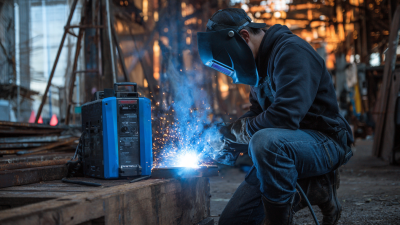
Arc stability deserves equal attention. A steady arc should start quickly, maintain a consistent sound, and produce an even bead across changing work positions. Check wire feeding, voltage response, and spatter during actual welding. A supplier with traceable inspection records appears more dependable. Still, records can miss field problems. I would test several units before making a large purchase.

Tips:

Request a live welding demonstration using your preferred wire and material. Measure input power with a meter, then compare it with the claimed 85% efficiency. Inspect the cooling fan, cable connections, display response, and overload protection. Ask how IP21S performance is verified. Record arc behavior after thirty minutes of operation. Small details matter. A clean bead is not enough if the machine overheats.

Final Supplier Selection: Warranty, Lead Time, Spare Parts, and Total Cost per Weld

Best MIG Welding Machine Supplier in China?

Final supplier selection should begin with warranty evidence, not the lowest quotation. Ask whether coverage includes the wire feeder, control board, torch, and labor. A 24-month warranty sounds strong, but exclusions can make it weak. The American Welding Society projects a shortage of 330,000 welding professionals by 2028, so reliable equipment and responsive technical support matter more than ever.

Check the real lead time in writing. Request production days, inspection time, shipping terms, and a recovery plan for delays. The International Federation of Robotics reported 276,288 industrial robot installations in China during 2023. This shows manufacturing capacity, but it does not guarantee your order will ship on time. Confirm spare-part availability with a simple test: ask for prices and delivery dates for contact tips, liners, drive rolls, torches, and circuit boards. Fast answers reveal operational discipline.

Calculate total cost per weld, not machine price alone. Use this formula: equipment cost, consumables, electricity, labor, maintenance, downtime, and rejected welds, divided by accepted welds. A cheaper machine may become expensive after unstable wire feeding or repeated repairs. I have seen buyers ignore downtime because it is difficult to measure. That is a mistake worth revisiting. Record trial-weld results, arc-on time, defect rates, and service response before signing. A supplier that supplies transparent test data is easier to trust.