How to Choose the Right Weld Roller Carrier for Your Needs?
Choosing the right Weld Roller Carrier can significantly impact your welding projects. It's essential to understand your unique needs before making a decision. Various factors influence this choice, such as material type, weight capacity, and operational efficiency. A well-chosen carrier enhances productivity and safety in the workspace.
Many users overlook specific requirements when selecting a Weld Roller Carrier. The right fit should offer reliable support and maneuverability. It's not just about function; aesthetics also matter. A visually appealing carrier can contribute to a better working environment.
Consider the terrain where the carrier will operate. Is it smooth or uneven? This will affect your choice. Always reflect on your operational habits. Are you often changing setups? When the right carrier is chosen, it simplifies your process. Yet, ensure that the selected model truly meets your expectations.
Understanding Weld Roller Carriers: Types and Functions
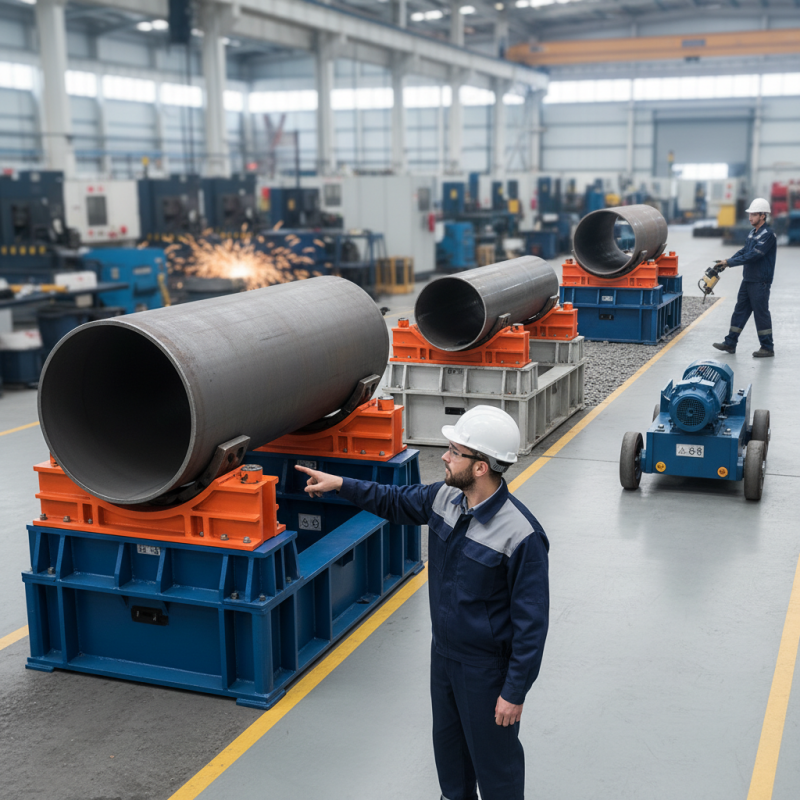
Weld roller carriers play a crucial role in various applications. Understanding the different types and functions can help you make an informed choice. There are several designs, including adjustable, fixed, and powered carriers. Each type serves specific purposes and environments.
Adjustable weld roller carriers are versatile. They can accommodate different sizes of cylindrical materials. Fixed carriers provide stability for standard-sized materials. Powered roller carriers are ideal for automating processes, enhancing efficiency. Each type comes with its advantages and limitations. Knowing these can guide your selection.
Tips: Consider the weight capacity of the carrier. Ensure it fits your materials securely. Look into the ease of adjustments for flexibility in use.
When reflecting on your needs, assess the working conditions. Wet or humid environments may require specialized materials. Durability is essential for long-term performance. Evaluate your shop's layout to decide where to place your carriers. This can significantly impact overall workflow.
Assessing Your Project Requirements for Weld Roller Carriers
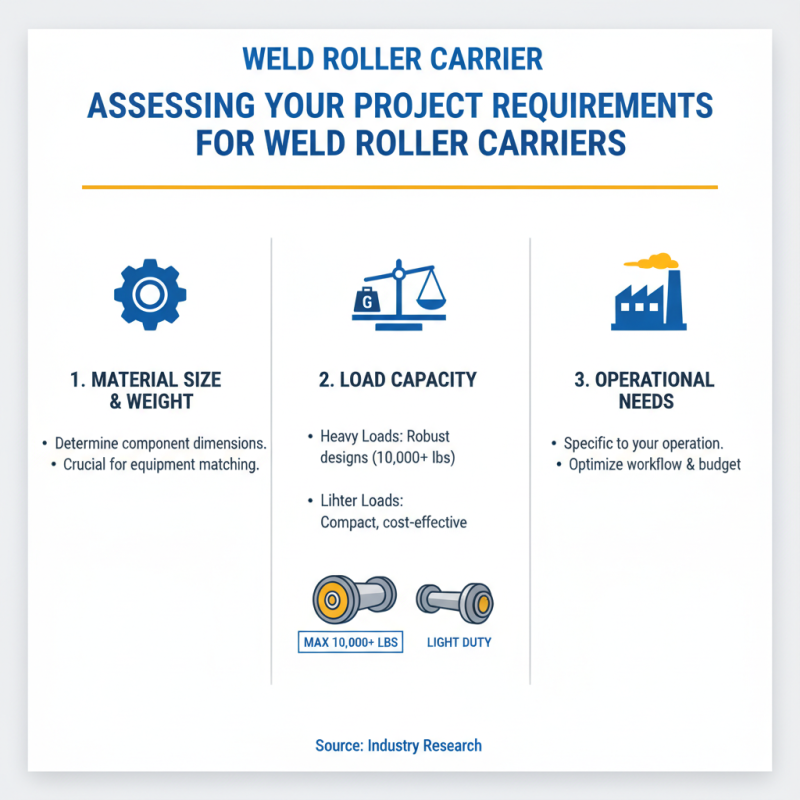
When assessing your project requirements for weld roller carriers, it's vital to consider the specific aspects of your operation. Identifying the size and weight of the materials being welded can help determine the right equipment. According to industry research, heavier loads often require more robust designs. Depending on the project, some carriers support loads reaching 10,000 pounds or more. For lighter applications, more compact and cost-effective solutions are available.
Tips: Always check the load capacity. It’s crucial to match the carrier with the weight of the materials. Overloading can lead to accidents and equipment failure.
Another factor is the type of welding process involved. Processes like TIG or MIG may need different setups. Your project’s environment also plays a role. Indoor projects often offer more stability and control, while outdoor sites may require additional features, like mobility. Keep in mind that weld roller carriers can vary significantly in terms of adaptability and ease of transport.
Tips: Consider adjustable features. These can enhance flexibility across various projects. Re-evaluating your needs as projects evolve can lead to better efficiency and safety.
Key Features to Consider in a Weld Roller Carrier
When selecting a weld roller carrier, several key features must be addressed. One of the top considerations is load capacity. A carrier that can support the weight of your materials is essential. According to industry reports, the average capacity should range from 1,500 to 2,500 pounds for most applications. Overestimating or underestimating this requirement can lead to safety hazards.
Another feature to evaluate is adjustability. A good weld roller carrier should have adjustable heights to accommodate various projects. This versatility enables precise alignment, which improves weld quality. Many professionals recommend carriers that offer at least 12 inches of height adjustment. Additionally, consider the wheels. Robust, durable wheels can enhance mobility on job sites.
Tip: Always check the weight rating of supports you plan to use. It’s crucial for preventing accidents.
Material construction also influences durability. Steel frames often provide better stability than lighter materials. Long-term projects require carriers that resist wear and corrosion. Regular inspections should be part of your maintenance routine, as wear can affect performance.
Tip: Evaluate user reviews and feedback. Real-world experiences give insights that specifications may not reveal.
Weld Roller Carrier: Key Features Comparison
Selecting the Right Material and Capacity for Your Needs
When selecting a weld roller carrier, material and capacity are crucial factors. Different projects require varying specifications. For instance, steel carriers provide superior durability. According to industry reports, steel can withstand heavy loads, making it ideal for rigorous applications. On the other hand, aluminum offers lightweight options, essential for mobility. Both materials have unique advantages that should match your project's specific demands.
Capacity is another important consideration. It defines the maximum weight the carrier can handle. Some reports indicate that choosing the right capacity can prevent failures during operations. Carriers with higher weight limits can support larger components. However, overestimating capacity can lead to inefficiencies. A mismatch between your needs and the carrier’s specifications can lead to significant delays and increased costs.
It’s also necessary to reflect on past choices. Many users have faced challenges with unsuitable materials or inadequate capacity. These missteps highlight the importance of thorough research and careful planning. Engaging with industry professionals can provide valuable insights. Taking these steps will lead to more reliable and efficient operations in the long run.
How to Choose the Right Weld Roller Carrier for Your Needs?
| Carrier Type |
Material |
Capacity (lbs) |
Wheel Type |
Adjustment Feature |
| Standard Weld Roller |
Steel |
1000 |
Polyurethane |
Manual |
| Heavy-Duty Roller |
Aluminum |
1500 |
Rubber |
Automatic |
| Portable Weld Roller |
Composite |
800 |
Plastic |
None |
| Precision Roller |
Stainless Steel |
1200 |
Metal |
Manual |
| Adjustable Weld Roller |
Mild Steel |
1300 |
Polyurethane |
Manual |
Maintenance Tips for Optimal Performance of Weld Roller Carriers
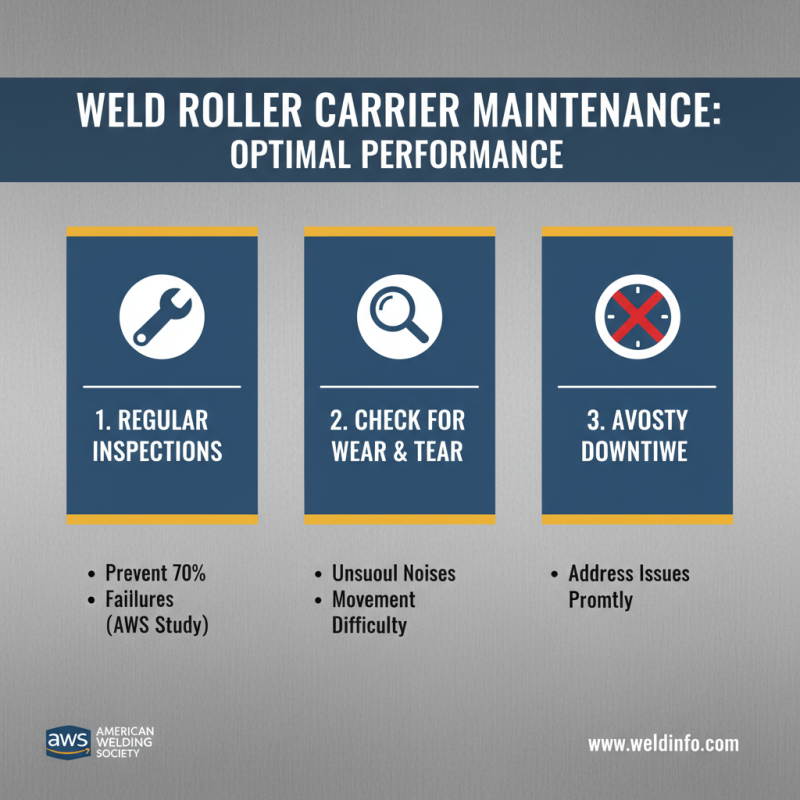
Maintaining weld roller carriers is crucial for ensuring optimal performance and longevity. Regular inspections are necessary. A study from the American Welding Society suggests that routine checks can prevent 70% of equipment failures. Operators should look for signs of wear and tear, such as unusual noises or difficulties in movement. Ignoring these issues can lead to costly downtime.
Lubrication is another key aspect. The right lubrication reduces friction and enables smooth operation. According to industry reports, systems with proper lubrication can last up to 50% longer. Ensure that the rollers and bearings are well-greased. However, avoid over-lubrication, as it can attract dirt and grime, leading to more significant problems.
Cleaning the weld roller carrier after use is also essential. Remove any weld spatter or debris using appropriate cleaning agents. Failure to do so can hinder operational efficiency. Studies indicate that clean equipment operates with up to 25% more efficiency. Creating a simple maintenance checklist can help operators stay on top of these tasks. Implementing regular maintenance routines will pay off in the long run.