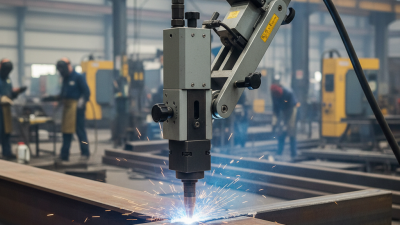
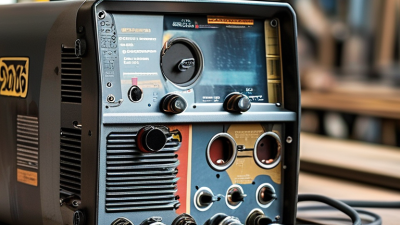
Choosing among the Top 10 Swing Weld Carriage Options for Buyers starts with the work, not the product label. A carriage that performs well on a short, straight seam may struggle with curved joints or uneven surfaces. Consider material thickness, welding position, travel speed, and how often operators must reposition the equipment. Small details matter.
A Swing Weld Carriage can help maintain steadier travel along a seam, but its value depends on fit. Check the carriage’s swing range, drive control, mounting method, and compatibility with the welding process. Look closely at cable routing and torch adjustment, too. A crowded setup can slow a job. So can controls that are hard to reach while wearing gloves.
Buyers should also compare load capacity, track requirements, portability, and available service support. Ask suppliers for clear specifications and, where possible, a demonstration on a representative workpiece. A polished brochure is useful, but it cannot show every shop-floor constraint. That is easy to overlook.
This guide reviews ten options through practical selection criteria, including operating flexibility, setup demands, and likely maintenance needs. Not every feature will matter equally to every buyer. A compact carriage may suit one workshop, while another needs more adjustment for varied seams. The best choice is the one that fits the job consistently—not simply the one with the longest feature list. Manufacturers’ specifications and application guidance should always be checked before purchase.
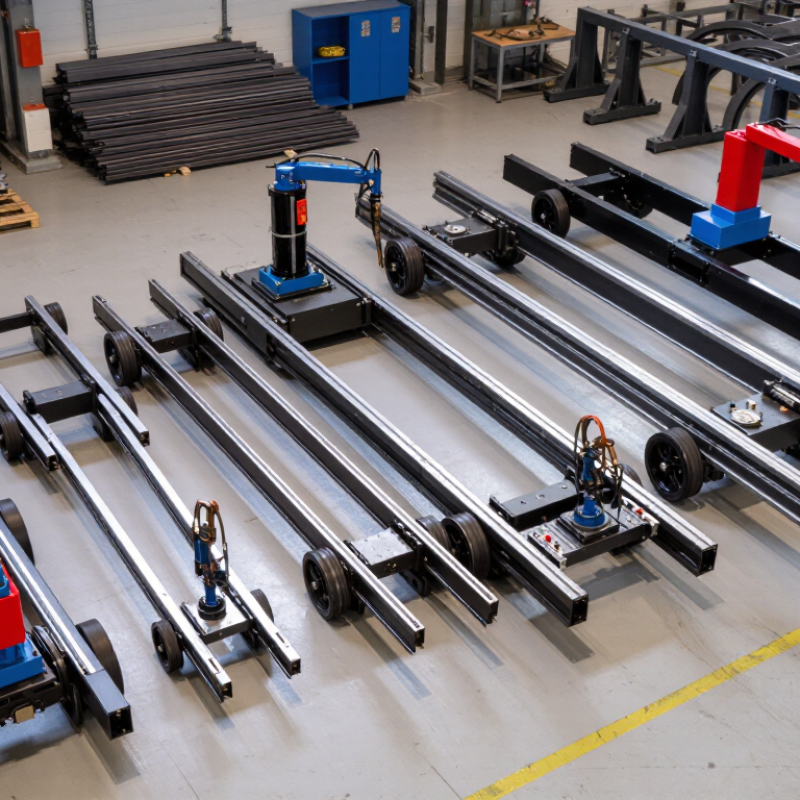
A swing weld carriage is a powered unit that moves a welding torch along a track beside a joint. While it travels, a small mechanism swings the torch from side to side across the seam. This motion can help distribute weld metal across a wider joint without requiring the operator to guide every movement by hand. The carriage typically combines a drive, torch holder, controls, and adjustable swing settings. Small details matter.
The operator aligns the track with the weld path, secures the torch, and sets travel speed and swing width. Some systems also allow adjustments to swing rate and dwell time at each edge. These settings affect bead shape and heat distribution, so a short test weld on similar material is a sensible check. Watch the torch’s position, arc stability, and bead edges as the carriage moves.
A carriage can make repeated passes more consistent, but it cannot correct poor fit-up or an unsuitable welding procedure. Gaps, track misalignment, and torch angle may still produce uneven results. Not magic. Setup takes judgment, and crowded joints can limit access. A useful reality check is to compare the finished bead with the required joint criteria, rather than assuming that smooth machine travel means sound weld quality.
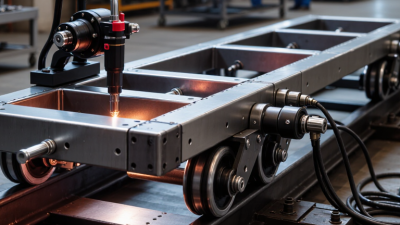
A swing weld carriage moves a welding torch along a seam while oscillating it side to side. The chart compares typical motion and guidance features across common carriage configurations. Feature availability varies by model, and some configurations overlap.
How it works: the carriage drive controls travel along the joint; a swing mechanism moves the torch across the weld path. Buyers should check the required travel path, oscillation controls, tracking method, and compatibility with their welding process.
A swing weld carriage is more than a powered torch holder. Its swing width, frequency, and dwell settings shape bead coverage and heat distribution. Check that these controls are adjustable while wearing welding gloves. Small knobs can be frustrating on a busy shop floor. Test the carriage on a sample joint, not just a flat plate. A narrow fillet and a wider groove reveal different limits.
Steady travel matters, too. Look for speed adjustment that stays consistent across the range you actually use. Torch angle and mounting flexibility help keep the arc aligned when access is awkward. Pay attention to rail or magnetic attachment, cable clearance, and how quickly the unit can be repositioned. Simple controls help. So does a clear display. Yet displays are not proof of repeatable welds. Run several passes and compare bead width, tie-in, and start-stop quality. Also check the duty rating against your expected cycle; a carriage that performs well for a short demonstration may need pauses during longer work. No single option fits every setup. I would give extra weight to easy adjustments and stable travel, even if that means accepting fewer advanced settings.
Buyers can compare ten swing weld carriage types by how they guide the torch and handle the workpiece. A compact oscillating carriage suits short welds and tight setups; check its swing width and adjustment range. A rigid-rail carriage follows a fixed path, while a flexible-track carriage can follow gradual curves. A trackless carriage needs less setup, but its travel may depend more on surface condition. Magnetic-wheel models can hold to suitable steel surfaces; confirm the required holding force and orientation. A magnetic crawler adds traction for longer passes. Small details matter.
The remaining options serve different jobs. A seam-following carriage can help maintain alignment, though joint variation still needs inspection. A narrow-profile carriage reaches restricted areas but may offer fewer adjustments. A heavy-duty model handles larger torches or longer shifts, at the cost of added weight. A dual-torch carriage can run two torches, but spacing and heat control need careful setup. A multi-process carriage supports different welding procedures when its controls and torch mounts are compatible. Not every label is standardized. Compare rated travel speed, oscillation frequency, load capacity, track requirements, and access to controls. A simple dry run beside the joint can reveal clearance problems that a specification sheet misses.
Match the carriage to the joint, not just the shop floor. A straight, repeatable seam may need steady travel and firm torch positioning, while a curved vessel joint can call for adjustable swing width and frequency. Check the workpiece diameter, access, and tack height before comparing options. Small obstructions matter. Check the fit.
Ten useful capabilities to compare include drive style, rail or track setup, travel-speed range, oscillation width, swing frequency, torch-angle adjustment, payload, controls, power supply, and seam-following ability. Choose according to the task. For thin plate, gentle motion and consistent speed can help limit heat buildup. Heavier sections may need a sturdier mount and longer duty cycle. Confirm that the rated capacity includes the torch, cables, and brackets.
Ask for a trial on a representative joint, using the actual torch and cable routing. Watch for cable drag, wheel slip, and bead variation at starts and stops. A specification can look reassuring, but it may not reflect awkward fit-up or limited access. That gap is easy to miss.
Top 10 Swing Weld Carriage Options for Buyers?
How to Evaluate Safety, Cost, and Ongoing Support
When comparing swing weld carriages, match the rated load to your torch, cables, and mounting hardware—not just the carriage alone. Check the swing range, travel speed, and adjustment controls against the shape of your workpieces. Safety details deserve a close look: stable mounting, protected moving parts, secure cable routing, and a clearly reachable stop control. Small details matter. A cable that snags during a test run may become a recurring hazard on a busy shift.
Tips: Ask for the load rating and setup instructions in writing. Test controls at the intended working height, and inspect how the carriage behaves near the swing limits. A short demonstration can reveal awkward adjustments that a specification sheet misses.
Compare the full cost, including installation, wear parts, maintenance time, and delivery of replacements. Ask what support is available after purchase, how quickly common parts can be supplied, and whether technical help covers setup and troubleshooting. A low initial price may not be a bargain if repairs stall production. Still, the most expensive option is not automatically the safest. Record your requirements, get comparable quotes, and leave room for uncertainty: real shop conditions may expose issues that a clean demo does not.
This comparison covers common carriage configurations rather than specific brands or products. Cost levels are relative estimates; actual costs depend on capacity, controls, accessories, and required safety equipment. Confirm all operating limits and safety features with the supplier before purchase.
| # | Carriage Option | Typical Use | Safety Evaluation | Relative Initial Cost | Ongoing Support to Check | Best Buyer Check |
|---|---|---|---|---|---|---|
| 1 | Manual swing carriage | Short, intermittent welds where the operator positions the carriage by hand. | Assess hand clearance, pinch points, stable footing, and how the carriage is restrained on the workpiece. | Low | Check availability of wheels, bearings, adjustment hardware, and service instructions. | Confirm that manual movement can maintain the required travel speed and weld consistency. |
| 2 | Powered fixed-speed swing carriage | Repeated straight or curved weld passes with a consistent travel-speed requirement. | Check emergency-stop access, restart behavior after power loss, cable routing, and guarding of moving parts. | Low to medium | Ask about motor, drive, control, and cable replacement, plus troubleshooting support. | Verify the usable speed range and whether speed can be set repeatably for the process. |
| 3 | Compact rail-mounted carriage | Straight seams where a guide rail can be securely mounted along the weld path. | Inspect rail attachment, end stops, trip hazards, and the risk of carriage run-off. | Low to medium | Check rail availability, joint alignment guidance, and replacement of wheels or guide components. | Confirm rail length, mounting method, and compatibility with the workpiece geometry. |
| 4 | Flexible-rail carriage | Curved or changing paths that are difficult to follow with a rigid straight rail. | Check that the rail is secured throughout the path and that tight curves do not cause binding or loss of guidance. | Medium | Ask about rail wear, repair methods, storage requirements, and replacement lead times. | Trial the rail on the tightest curve and most uneven surface expected in production. |
| 5 | Magnetic-base carriage | Suitable ferromagnetic steel surfaces where a mechanical rail is impractical. | Confirm surface material, cleanliness, orientation, rated holding conditions, and any required secondary restraint. Do not assume magnets prevent falls. | Medium | Check inspection guidance for the magnetic system and access to replacement or repair parts. | Verify suitability for the actual surface, including coatings, curvature, temperature, and weld spatter. |
| 6 | Pipe circumferential carriage | Travel around a pipe or cylindrical workpiece for circumferential welds. | Assess retention on the pipe, end-of-travel control, cable management, and safe access around the full circumference. | Medium to high | Ask about setup support, compatible pipe-size ranges, drive-component service, and spare-part availability. | Check fit and tracking on the smallest and largest planned workpiece diameters. |
| 7 | Vertical-travel carriage with rated guide system | Vertical seams when the carriage and guide arrangement are specifically designed for that orientation. | Require confirmation of approved orientation, load limits, retention method, and any fall-arrest or secondary restraint requirements. | Medium to high | Look for documented setup and inspection procedures and access to qualified technical support. | Do not use a standard horizontal-only carriage vertically unless the system is rated for that use. |
| 8 | Oscillation-enabled carriage | Applications that require controlled side-to-side torch movement across the joint. | Check moving-part guarding, adjustable travel limits, safe setup procedures, and emergency-stop function. | Medium to high | Ask about control support, oscillator wear parts, calibration guidance, and operator training. | Confirm that oscillation width, speed, and dwell settings suit the joint and welding procedure. |
| 9 | Seam-tracking carriage | Production work where seam position varies and a compatible tracking system can follow the joint. | Review sensor and cable protection, operator access, system limits, and what happens if tracking is lost. | High | Check sensor service, software or control support, spare availability, and training options. | Test on representative joint fit-up and surface conditions; tracking capability depends on the sensing method. |
| 10 | Modular carriage with adjustable swing arm | Shops handling varied joint positions that benefit from adjustable torch reach and mounting. | Check arm locking, load capacity, pinch points, clearances, and whether the chosen configuration is stable during travel. | Medium to high | Confirm module compatibility, replacement-part availability, and support for configuration changes. | Compare the full cost of required modules with a simpler dedicated setup for frequent jobs. |
Buyer note: Before comparing quotes, define the workpiece shape, welding position, required travel and oscillation ranges, duty cycle, mounting method, and applicable workplace safety requirements. Request written ratings, operating instructions, maintenance guidance, warranty terms, and expected spare-part support.