2026 Top Types of SAW Welding Machines for Buyers
A Saw Welding Machine is not a one-size-fits-all purchase. Submerged arc welding systems range from compact setups for straightforward seams to heavy-duty installations built for long, repetitive welds. The right choice depends on the workpiece, joint design, production rate, and available floor space. Start there. A machine’s maximum amperage looks impressive on a brochure, but it cannot tell you whether the system suits your actual welds.
For a practical buying principle, welding metallurgy expert Dr. Sindo Kou’s process-focused work can be paraphrased this way: “Choose the welding process and equipment around the joint, material, and required result.” This is a paraphrase, not a direct quotation. In the sections ahead, we compare single-wire and multiwire configurations, AC and DC power sources, and tractor-mounted or automated systems. We also consider controls, flux handling, duty cycle, service support, and operator requirements. Those details matter on the shop floor: a narrow bay, a long plate seam, and frequent changeovers can point to very different machines. Real trade-offs remain. Higher output may bring greater setup demands, and automation is not automatically the economical choice for every job. Use the comparisons as a shortlist, then confirm specifications with the manufacturer or a qualified welding engineer before buying.
What SAW Welding Machines Are and How They Work
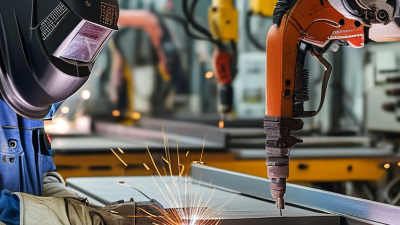
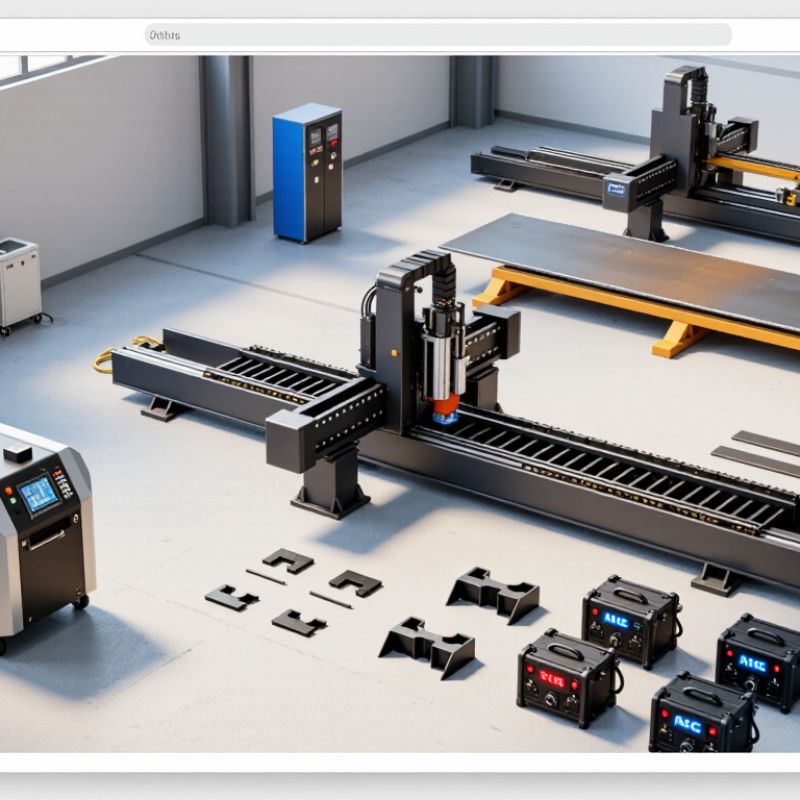
Submerged arc welding (SAW) is a process in which a continuously fed wire electrode creates an arc beneath a layer of granular flux. The flux covers the arc and molten weld pool, reducing exposure to the surrounding air. The machine typically combines a power source, wire-feed unit, welding head, travel carriage, and flux delivery system. The arc melts the wire and base metal; used flux forms a protective slag that is removed after cooling.
No visible arc. That detail matters when planning operator access and inspection.
SAW is commonly mechanized for long, steady welds on plate, pipe, and structural assemblies. A carriage moves the head along the joint while the feeder maintains wire delivery. Operators adjust current, voltage, travel speed, wire size, and flux to suit the material and joint.
The World Steel Association’s World Steel in Figures 2025 reports 1,882.6 million tonnes of crude steel production in 2024, illustrating the scale of the industry SAW can serve. That figure is not a measure of SAW usage.
Thick material can benefit from high deposition rates, but the process is less flexible on short, complex, or difficult-to-position joints.
Tips:
Check joint fit-up, flux condition, and travel speed with a trial weld before production. Watch the bead edges for undercut or uneven fusion. A larger machine is not automatically better; setup still decides weld quality. Even experienced crews can miss a basic alignment problem.
Key Components and Process Configurations
A SAW welding machine is a coordinated system, not just a power source and torch. Its core components include a constant-voltage or constant-current power supply, wire feeder, welding head, flux hopper, travel carriage, and control unit. The flux system matters: uneven delivery can expose the arc, while poor recovery leaves waste around the joint. Keep the contact tip close to the workpiece. Small detail. Big effect.
Machine configuration should match seam length, plate thickness, and required deposition rate. Single-wire systems suit many general-purpose seams; twin-wire and tandem setups can increase output but need careful control of heat input and bead shape. The Welding Institute’s submerged arc welding guidance reports deposition rates of up to about 45 kg per hour in high-output, multiwire arrangements. That is a capability, not a guaranteed production rate. The American Welding Society’s Welding Handbook also describes SAW equipment and process variations, reinforcing the need to assess the complete setup. A long straight seam may favor a gantry or column-and-boom machine; shorter jobs may benefit from a mobile tractor. Operators sometimes focus on wire speed and overlook flux handling. It is an easy omission. Compare test welds before selecting a configuration.
2026 Top Types of SAW Welding Machines for Buyers — Key Components and Process Configurations
SAW systems are commonly configured as single-wire, twin-wire, tandem, or multi-wire setups. The chart shows the number of wires in a representative configuration; multi-wire setups use three or more. Key system components typically include a power source, wire feeder and electrode, flux delivery and recovery equipment, and a travel or positioning system. Twin-wire setups feed two wires through a shared contact assembly, while tandem setups arrange separately fed wires in sequence.
Main Types of SAW Welding Machines in 2026
Main Types of SAW Welding Machines in 2026
Submerged arc welding machines are commonly classified by wire count, power arrangement, and mobility. Single-wire systems remain practical for long, straight seams on thick plate. A fixed gantry can hold the torch steady while flux covers the arc and a recovery unit collects unused material. AC or DC power choices affect arc behavior and penetration, so the right setup depends on joint design and production speed. Simple, but not effortless.
Twin-wire and tandem machines feed two or more electrodes into one weld pool. They can raise deposition rates on large structural sections, but require careful control of heat input and bead shape. The International Federation of Robotics’ World Robotics 2024 report counted 4,281,585 industrial robots operating worldwide in 2023. That wider automation trend helps explain interest in robot-integrated SAW cells. It does not mean every shop needs one.
Portable or tractor-based SAW units suit long floor seams where a fixed line is impractical. Multi-wire systems can deliver higher output, yet their setup and maintenance demands may outweigh the gains on short jobs. The World Steel Association reported 1.89 billion tonnes of global crude steel production in 2023, reflecting the scale of the industry these systems serve. Buyers should compare duty cycle, wire configuration, flux handling, and access to the joint—not just rated current.
Applications Across Industries and Workpiece Sizes
Submerged arc welding works well where long, repeatable seams matter more than unrestricted access. In shipyards, heavy plate sections may be joined along straight, multi-meter runs. A tractor-mounted SAW head can travel steadily across the joint, while flux shields the arc and helps limit spatter. Large pressure-vessel shells and structural beams also benefit from this process. The setup is less convenient for short, awkward seams.
Machine choice depends on both the workpiece and the production layout. A stationary head can suit repeated welding on smaller assemblies or rotating pipe sections. Column-and-boom systems reach broad, heavy components, such as tank shells and bridge girders, without moving the workpiece as often. For long railcar frames or large plate panels, gantry systems can cover extended seams. Tandem-wire equipment can increase deposition rates, but needs careful setup and consistent joint preparation.
Thin or irregular parts may distort under sustained heat, so a smaller machine does not automatically make SAW suitable. Fit-up matters. A narrow gap, a clean groove, and stable travel speed help produce consistent welds on thick steel. In practice, access can be the catch: a machine may handle a large plate but still struggle with a seam near a stiffener. Buyers should test representative joints, not just compare rated capacity. My own caution is simple: production speed looks convincing on paper; actual fit-up can tell a different story.