What Is the Best Weld Roller Carriage in 2026?
Choosing the best Weld Roller Carriage in 2026 is not just a matter of load capacity. The right carriage must rotate a vessel steadily, hold alignment, and suit the workpiece’s diameter and weight. A tank that creeps during rotation can spoil a bead. A drive that is too powerful can make fine positioning difficult. Small details matter.
The American Welding Society has projected that the United States will need about 330,000 new welding professionals by 2028. The International Federation of Robotics reported 4,281,585 industrial robots operating worldwide in 2023. These figures point to growing pressure for productive, repeatable fabrication—not proof that every shop needs automation. A roller carriage can support consistency, but only when its rollers, drive system, controls, and rated capacity match the job. As welding workforce expert Monica Pfarr has emphasized in public discussions, attracting and supporting skilled people remains central to the industry. That is a useful reminder: equipment should help operators, not replace careful setup.
This guide compares carriage types, key specifications, safety features, and practical buying trade-offs. It also considers the limits of published ratings; real performance depends on the vessel, surface condition, and shop setup. There is no universal winner. A compact manual unit may suit occasional repairs, while a powered carriage may save time on repeated production runs. The best choice is the one that turns smoothly, stays stable, and fits the work you actually do.
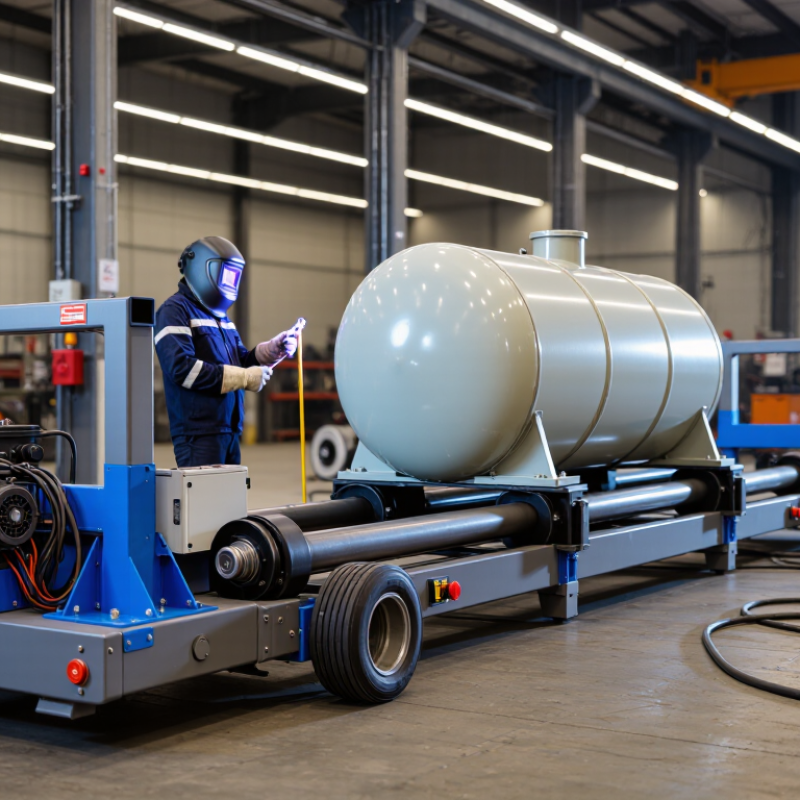
Define Weld Roller Carriages: Types and 1–1,000 t Capacity Classes
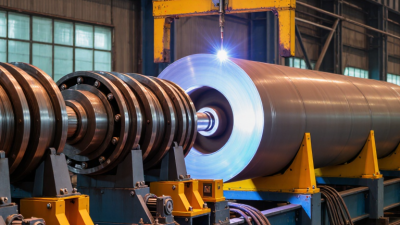
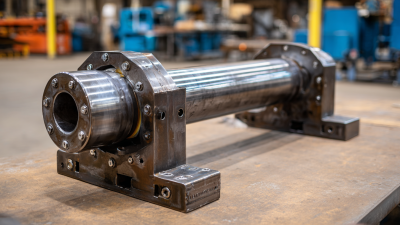
Weld roller carriages, often called turning rolls, support cylindrical workpieces and rotate them during welding or inspection. Common types include conventional units, where operators adjust the spacing between powered and idle rollers, and self-aligning units, which accommodate a wider range of vessel diameters. Fit-up matters. A shell that sits unevenly can drift, creating extra adjustment and interrupting a steady weld.
Capacity may range from about 1 tonne to 1,000 tonnes, but these figures describe equipment options, not universal industry classes. Smaller units suit compact pipes and light vessels; mid-range systems handle many shop-floor tanks and pressure vessels. Heavy-duty carriages support large fabrication assemblies and require careful foundation and load planning. Check the rated load against the complete workpiece, including end fittings and fixtures. Also verify roller diameter, speed range, alignment tolerance, and whether the stated capacity applies per set or per carriage. That detail is easy to overlook.
Tips: Measure the smallest and largest shell diameters before choosing a model. Confirm load distribution with the supplier, especially for short or uneven workpieces. Keep rollers clean and inspect contact surfaces regularly. A seemingly minor mismatch can still cause tracking problems.
Compare Rated Load, Workpiece Diameter, and Typical 0.1–1.0 rpm Rotation
Choosing the best weld roller carriage starts with rated load, not speed. Compare the carriage’s total capacity with the workpiece’s actual mass, including attached fixtures. Then check whether that rating applies across the stated diameter range. A large vessel may fit the rollers yet overload them when its weight concentrates unevenly. Leave room for imperfect loading; real shop setups are rarely perfectly balanced.
For rotation, 0.1–1.0 rpm equals about 0.010–0.105 radians per second. That slow range helps control the weld pool and maintain a steady travel position. The AWS Welding Handbook discusses work positioning as part of consistent welding practice, while ISO 17662:2016 covers calibration and verification of welding equipment. Neither source sets a universal carriage capacity or ideal speed, so treat them as technical references, not product ratings. Check the drive’s rated torque and confirm that its speed remains stable under load.
A practical comparison uses the heaviest workpiece, its outside diameter, and the required rotation speed. For example, a thin-walled cylinder may need gentler acceleration than a compact, solid part. Watch for roller slip, uneven contact, and speed fluctuation during a trial rotation. Small details matter. One limitation: published load ratings may assume centered, evenly supported workpieces, conditions that a shop floor does not always provide.
What Is the Best Weld Roller Carriage in 2026? — Compare Rated Load, Workpiece Diameter, and Typical 0.1–1.0 rpm Rotation
There is no single best carriage for every job. The right choice depends on the workpiece’s loaded weight, diameter, balance, and required welding speed. The ranges below are representative capacity classes, not specifications for a particular product; actual limits vary by design and must be confirmed from the equipment manufacturer.
| Typical capacity class |
Rated load per set |
Typical workpiece diameter range |
Typical rotation speed |
Common application |
Best suited to |
| Light-duty |
Up to about 1 tonne |
About 50–800 mm |
Often variable within 0.1–1.0 rpm |
Small tanks, pipe sections, and light fabrications |
Shops handling compact workpieces and frequent setup changes |
| General-purpose |
About 2–5 tonnes |
About 250–4,500 mm |
Often variable within 0.1–1.0 rpm |
Pressure-vessel sections, larger pipes, and cylindrical fabrications |
Mixed production where a broad diameter range matters |
| Heavy-duty |
About 10 tonnes |
About 500–5,000 mm |
Often variable within 0.1–1.0 rpm |
Large vessels, structural shells, and heavy pipe assemblies |
Regular rotation of heavy workpieces with verified load distribution |
| Extra-heavy-duty |
About 20 tonnes or more |
About 500–6,000 mm or more, depending on configuration |
Often variable within 0.1–1.0 rpm; confirm under rated load |
Very large vessels and heavy industrial fabrications |
Dedicated heavy fabrication with application-specific engineering review |
How to compare options
- Rated load: Check whether the rating applies to the complete set or to each unit. Include the workpiece, attachments, and any supported fixtures, and follow the manufacturer’s loading instructions.
- Workpiece diameter: Confirm both the minimum and maximum diameter, roller spacing adjustment, and whether the stated range assumes standard or optional wheels.
- Rotation speed: A variable 0.1–1.0 rpm range can suit many circumferential welding tasks, but verify the available range at the intended load and the ability to make smooth starts and stops.
- Workpiece stability: Diameter alone does not establish suitability. Shape, center of gravity, shell stiffness, and load distribution also affect safe operation.
Selection note: Treat these figures as broad comparison ranges, not guaranteed ratings or a buying recommendation. Before operation, confirm the exact load rating, diameter limits, speed under load, and safety requirements in the equipment documentation.
Match Roller Material, Drive Type, and Alignment to the Welding Task
The best weld roller carriage in 2026 depends on the workpiece, not a feature list. Start with its weight, diameter, and surface condition. Steel rollers suit heavy components and tolerate demanding shop conditions. Rubber or polyurethane rollers can protect finished surfaces and improve grip, but heat and sharp edges may shorten their service life. Check the rated load for the complete assembly, not just one roller.
Drive type shapes control. A powered drive with adjustable speed helps maintain steady rotation during long circumferential welds. An idler carriage can work well when another unit provides the drive or when the task needs only support. Match the speed range to the welding process, and check whether the controls allow smooth starts. Sudden movement can disrupt a torch path or leave an uneven bead.
Alignment deserves equal attention. Set the rollers parallel, center the workpiece, and verify that it tracks without drifting. Small detail. It matters. A tapered shell or uneven load may need adjustment during a test rotation. That sounds neat on paper; real workpieces are rarely perfect. Watch for wobble, roller slip, and changing contact as the part turns, then correct the setup before welding.
Assess Safety Controls Using ISO 12100 and ISO 13849-1
What Is the Best Weld Roller Carriage in 2026?
Assess Safety Controls Using ISO 12100 and ISO 13849-1
A suitable weld roller carriage should turn heavy workpieces steadily without exposing operators to pinch points or unexpected movement. ISO 12100 offers a structured way to identify hazards, estimate risk, and reduce it through design, guarding, and clear instructions. Walk around the actual installation: note the gap between rollers, nearby walkways, and where cables may snag. A tidy machine can still create a risky work area.
ISO 13849-1 helps guide the design of safety-related control systems. Ask how emergency stops, interlocks, and restart controls behave after a power interruption. Their required performance level depends on the risk assessment; it is not a universal rating to guess. Check that stopping the rollers does not leave the workpiece unstable, and test controls under realistic loading. A written assessment helps, but it may miss awkward tasks performed only once a week.
Tips: Watch a full rotation with a representative workpiece. Verify that guards prevent access to trapping zones, and that operators can reach the stop control without leaning across moving rollers. Confirm safe restart behavior after a fault. Record findings, including anything uncertain, and have a qualified safety professional review control-system design before purchase or modification.
Choose a 2026 Carriage by Duty Cycle, Speed Control, and Service Support
What Is the Best Weld Roller Carriage in 2026?
The best weld roller carriage depends on the work, not a feature list. For long production runs, check the rated duty cycle and compare it with your actual shift pattern. A carriage that pauses often can slow a line and leave operators waiting. Heat adds up. For shorter jobs, a lower duty rating may be adequate, provided the machine can handle the workpiece safely.
Tips: Match the carriage’s speed range to your welding process, then test it with a representative workpiece. Look for smooth adjustment at low speeds, clear controls, and stable rotation. Small speed changes matter when maintaining a consistent bead. Check that the stated capacity covers the workpiece, including its shape and load distribution.
Service support deserves equal attention. Ask about spare-part availability, troubleshooting help, and typical repair turnaround before buying. A detailed manual and accessible service team can reduce downtime when a control or drive component fails. Compare the warranty terms in writing. One honest caveat: published specifications do not show how a carriage behaves on your floor, so arrange a practical test when possible.
What Is the Best Weld Roller Carriage in 2026?
Compare duty cycle, speed control, and service support against your workload—not just the headline load rating.
How to use this chart: The 0.1–1.0 rpm band is a representative low-speed turning-roll range, not a universal specification. Confirm the exact speed range and control method for your work. For long production runs, check the stated duty cycle; also confirm that service and replacement parts are available when needed.