Shandong Popweld Automatic Equipment Co., Ltd.

Leave Your Message
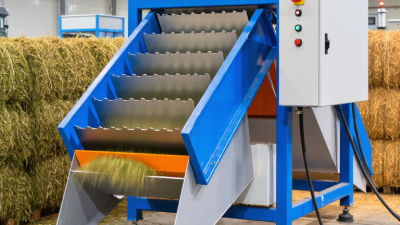
A Chaff Cutter Machine is a practical farm tool designed to cut hay, straw, grass, and other forage into smaller pieces. By reducing stalk length, it can make feed easier for livestock to chew, mix, and consume. The machine is widely used on dairy farms, livestock operations, and small agricultural holdings.
Its working process is straightforward. An operator places prepared forage into the feeding inlet. A rotating shaft carries sharp blades that cut the material against a fixed cutting surface. The chopped forage then leaves through an outlet or collection area. Depending on the model, an electric motor, diesel engine, or tractor power take-off drives the cutting system.
The details matter.
Cutting length depends on blade design, drum speed, feed rate, and material moisture. Dry straw may create dust, while wet grass can clog the chamber. In practical use, evenly feeding the machine usually produces more consistent results. However, no machine performs perfectly under every condition. Some manufacturers provide optimistic capacity figures, so actual output should be checked with local forage and working habits.
Safe operation requires guards, stable installation, routine blade inspection, and proper maintenance. Hands and loose clothing must remain away from the feeding opening. Experienced users also stop the power source before clearing blockages. These habits may seem basic, yet they prevent avoidable injuries and equipment damage. Understanding how a Chaff Cutter Machine works helps farmers choose suitable equipment, control operating costs, and produce feed more efficiently.
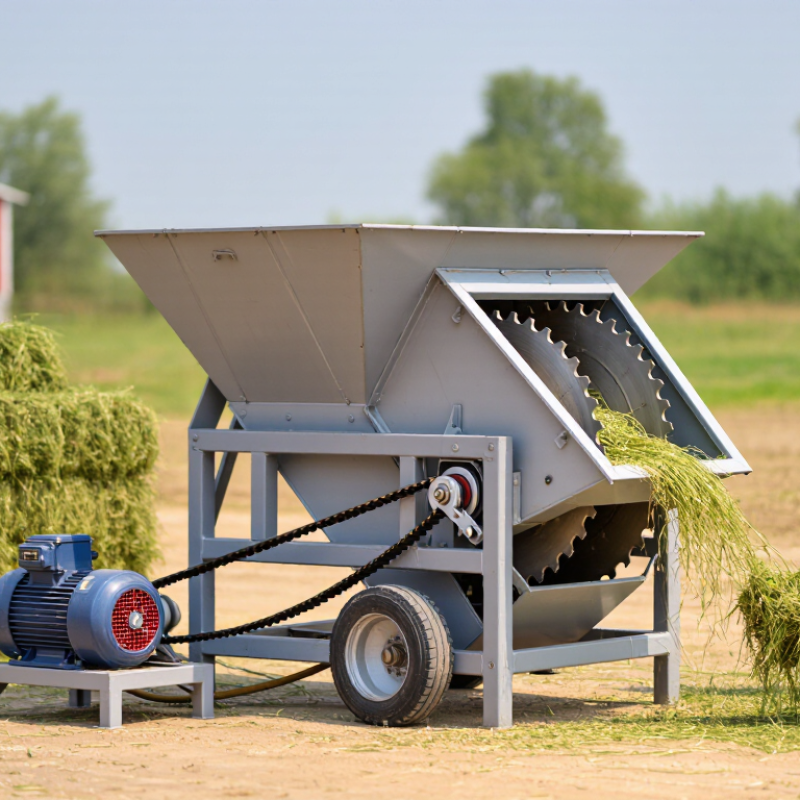
A chaff cutter machine is agricultural equipment that cuts fresh grass, hay, straw, and crop residues into smaller pieces. Farmers use it to prepare more manageable feed for cattle, goats, sheep, and other livestock. Shorter material is easier to mix, carry, and distribute in feeding areas. It can also reduce selective eating, although feeding results depend on crop quality and animal needs. The FAO 2023 Statistical Yearbook reported 361 million tonnes of global meat production in 2022, highlighting the growing importance of efficient feed preparation.
The machine works through a simple cutting system. Operators place forage into a feed hopper. A rotating shaft or flywheel drives sharp knives inside the cutting chamber. As the material moves forward, the knives slice it repeatedly. An adjustable outlet controls the final length. Some models use screens to improve size consistency. Power may come from an electric motor, diesel engine, or tractor connection. In practice, output is not always uniform. Wet grass, worn blades, and uneven feeding can create long strands or blockages. That weakness deserves attention.
Tips: Feed material steadily, not in thick bundles. Check blade sharpness before operation. Keep hands away from the hopper. Measure moisture when possible, because overly wet forage can stick inside. The desired cut length should match the animal and ration. A shorter cut is not automatically better. Follow the machine’s operating instructions and inspect guards before each use.
| Data Dimension | Typical Information | How It Relates to Operation |
|---|---|---|
| Machine Definition | A mechanical agricultural machine used to cut forage, straw, hay, and other fibrous plant materials into shorter pieces. | Shortened material is easier for livestock to eat, mix with other feed, transport, and store. |
| Common Feed Materials | Fresh grass, hay, maize stalks, sorghum stalks, wheat straw, rice straw, and similar crop residues. | Material type and moisture level affect cutting performance, power demand, and blade wear. |
| Main Working Principle | Rotating knives or blades cut material that is drawn into the cutting chamber through an inlet. | The operator feeds the crop into the machine, where the rotating cutting assembly reduces its length. |
| Material Feeding Method | Manual feeding through a feed chute or continuous feeding through a powered conveyor, depending on machine design. | A steady feed rate helps maintain uniform output and reduces the risk of blockages. |
| Cutting Length | Common adjustable ranges are approximately 10–30 mm for fine chaff and 30–100 mm for longer chopped forage. | A shorter setting produces finer material, while a longer setting can improve throughput and reduce energy use. |
| Cutting Mechanism | Usually consists of a rotating blade or knife assembly, a stationary counter-edge, and a protective cutting chamber. | The interaction between moving and stationary cutting surfaces creates a shearing action. |
| Drive Options | Electric motor, gasoline engine, diesel engine, or tractor power take-off system. | The available power source determines where the machine can be used and how much material it can process. |
| Typical Motor Power | Small electric units commonly use approximately 2.2–7.5 kW motors; larger systems may require more power. | Higher power is generally needed for tougher, wetter, denser, or more heavily fed materials. |
| Processing Capacity | Small machines may process roughly 300–1,000 kg per hour, while larger machines can exceed 1,000 kg per hour. | Actual capacity depends on material type, moisture, cut length, feeding method, and operator technique. |
| Moisture Considerations | Dry and moderately moist forage is generally easier to cut than excessively wet or sticky material. | High moisture can cause material to cling to internal surfaces, reduce output, and increase blockage risk. |
| Output Uniformity | Uniformity depends on blade sharpness, blade arrangement, feed consistency, and adjustment of the cutting gap. | Consistent particle size supports more even feed mixing and predictable livestock consumption. |
| Key Components | Feed chute, cutting chamber, rotating shaft, blades, screen or discharge outlet, drive system, frame, and safety guard. | Each component contributes to feeding, cutting, power transmission, discharge, or operator protection. |
| Discharge Method | Cut material may fall through a lower outlet or be directed through a discharge chute. | The discharge design affects collection, bagging, storage, and integration with a feed-mixing process. |
| Energy Consumption | Energy use varies with motor size, operating time, material density, moisture, and selected cutting length. | Efficient feeding and sharp blades can reduce unnecessary power consumption. |
| Routine Maintenance | Clean the chamber, inspect fasteners, lubricate specified parts, check belts, and sharpen or replace worn blades. | Regular maintenance helps preserve cutting quality, reduce downtime, and extend service life. |
| Essential Safety Measures | Keep guards installed, disconnect power before servicing, avoid reaching into the feed chute, and wear suitable protective equipment. | Rotating blades and moving drive components can cause serious injury if safety procedures are ignored. |
Note: Performance figures are typical operating ranges for general chaff-cutting equipment. Actual results vary according to machine design, crop condition, operator practice, and maintenance.