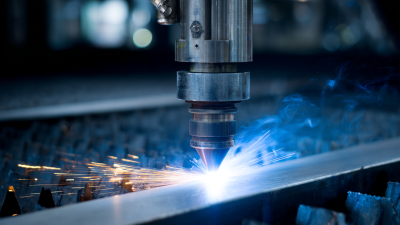
China Top 10 Welding Intelligence Suppliers for Global Buyers?
Choosing the right welding technology partner can influence production speed, joint quality, and long-term operating costs. This guide examines China’s top 10 welding intelligence suppliers for global buyers. It focuses on practical capability, not impressive slogans.
The review considers robotic welding systems, intelligent control software, machine vision, laser tracking, and after-sales support. It also examines factory experience in automotive, steel structures, pressure equipment, shipbuilding, and general manufacturing. A reliable supplier should explain cycle times, welding tolerances, consumable requirements, and maintenance intervals clearly. Real evidence matters. Buyers should request sample welds, factory references, inspection records, and performance data from comparable projects.
Welding Inteligence is developing quickly, but automation alone does not guarantee better results. A robotic cell may still fail when fixtures shift, materials vary, or operators lack training. That detail is often underestimated. Supplier evaluation should therefore include installation support, operator education, software updates, spare-part access, and remote troubleshooting. Regional service coverage can matter as much as the equipment itself.
This introduction also considers certifications, engineering depth, customization ability, and export experience. However, rankings are never perfectly universal. A supplier suitable for a high-volume automotive line may not fit a small structural workshop. Pricing can also hide important differences in integration quality and support response. Global buyers should verify every claim independently and compare total ownership costs before signing a contract. The strongest choice is not always the largest supplier. It is the partner that delivers stable welds, measurable productivity, and dependable support after installation.
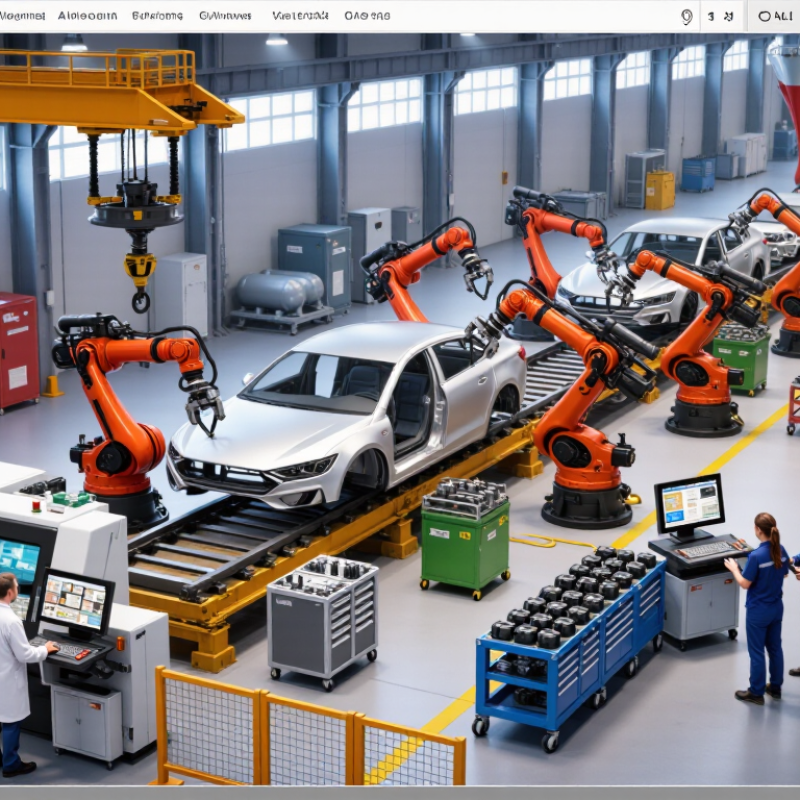
What Is Welding Intelligence and Why Does It Matter?
What Is Welding Intelligence and Why Does It Matter?
Welding intelligence combines sensors, software, process data, and skilled human judgment. It helps a welding system observe conditions instead of following fixed instructions blindly. A camera can detect joint position, while sensors monitor arc voltage, current, temperature, and wire speed. When the joint shifts slightly, adaptive controls can adjust the torch path or welding parameters. This matters because real workshops rarely provide perfectly clean, identical parts.
For global buyers comparing Chinese welding suppliers, practical evidence matters more than impressive demonstrations. Ask for sample welds, inspection records, calibration procedures, and production traceability. A reliable supplier should explain how its system handles gaps, surface variation, and unexpected interruptions. Data dashboards are useful, but only when operators understand the information. A bright screen cannot repair poor training.
In a shop trial, inspect penetration, bead shape, spatter, and heat distortion. Test repeated welds, not one attractive sample. Intelligence can reduce rework, improve consistency, and support safer decision-making. It does not remove every risk. Some systems still struggle with reflective surfaces, unusual joint angles, or unstable material preparation. That limitation deserves honest discussion.
The human role remains essential. Skilled technicians validate alarms, review process trends, and decide when production should pause. Buyers should also examine software updates, spare-part access, cybersecurity controls, and local technical support. These details often determine whether advanced equipment performs well after installation, not merely during a sales demonstration.
How to Evaluate China’s Welding Intelligence Suppliers
How to Evaluate China’s Welding Intelligence Suppliers
Choosing among China’s top welding intelligence suppliers requires more than comparing prices. Examine their experience with your materials, joint designs, and production volumes. Ask for documented case studies, process videos, and sample welds made under similar conditions. A polished showroom proves little.
Evaluate the supplier’s technical depth. Check whether its engineers understand arc control, robotic motion, seam tracking, sensor calibration, and data collection. Request a live demonstration using your actual workpiece. Measure penetration, bead consistency, cycle time, and rework rates. Inspect the control interface, alarm records, and maintenance access. Small details often expose large weaknesses.
Reliability needs evidence. Review quality certificates, inspection procedures, software update policies, spare-parts availability, and response times for service requests. Clarify who owns production data and how it is protected. Speak with recent customers, not only reference accounts selected by the supplier. A factory visit can reveal training standards, testing discipline, and assembly quality. Yet one visit is not enough. Conditions may be unusually perfect. Require a pilot run, acceptance criteria, and written performance commitments before scaling. Also compare total operating costs, including consumables, downtime, operator training, and integration work. The cheapest quotation can become expensive after installation. Ask uncomfortable questions early.
China Top 10 Welding Intelligence Suppliers for Global Buyers? – How to Evaluate China’s Welding Intelligence Suppliers
The following anonymized benchmark compares supplier capability profiles commonly available in China’s intelligent welding equipment market. Company names and brands are intentionally omitted. Scores should be verified through technical documents, factory audits, sample testing, reference projects, and after-sales records.
| Rank |
Anonymized Supplier Profile |
Primary Intelligent Welding Focus |
Typical Automation Level |
Machine-Vision Readiness |
Data Connectivity |
Customization Capability |
Export Documentation |
After-Sales Coverage |
Indicative Evaluation Score |
Best-Fit Buyer |
| 1 |
Profile A – Integrated Robotic Cell Specialist |
Multi-axis robotic arc welding, positioners, safety systems, and turnkey cells |
High |
Advanced |
MES/PLC/API-ready |
High |
Complete |
Regional service partners |
92/100 |
Automotive components, machinery, and high-volume fabrication |
| 2 |
Profile B – Laser Welding Automation Builder |
Laser welding, seam tracking, automated feeding, and precision fixtures |
High |
Advanced |
PLC/remote diagnostics |
High |
Complete |
Factory-led support |
90/100 |
Battery parts, stainless assemblies, medical and precision components |
| 3 |
Profile C – Modular Welding Workstation Supplier |
Standard robotic workstations with modular fixtures and optional peripherals |
Medium–High |
Intermediate |
PLC and production counters |
Medium–High |
Usually available |
Remote technical support |
87/100 |
General metal fabrication and medium-volume production |
| 4 |
Profile D – Heavy-Fabrication Automation Specialist |
Large-part welding, long-seam systems, column-and-boom equipment, and positioners |
Medium–High |
Intermediate |
PLC/SCADA options |
High |
Usually available |
Project-based support |
85/100 |
Construction machinery, pressure equipment, steel structures, and energy projects |
| 5 |
Profile E – Collaborative Welding Robot Integrator |
Collaborative robots, quick-change fixtures, and flexible small-batch welding |
Medium |
Intermediate |
Basic-to-intermediate |
Medium |
Usually available |
Remote support and training |
82/100 |
Small and medium manufacturers with changing product mixes |
| 6 |
Profile F – Automated Seam-Tracking Specialist |
Arc welding with laser or touch sensing, adaptive parameters, and defect reduction |
Medium–High |
Advanced |
PLC and traceability options |
Medium–High |
Usually available |
Application-engineering support |
80/100 |
Parts with variable joint position, distortion, or inconsistent fit-up |
| 7 |
Profile G – Intelligent Welding Power-System Supplier |
Digitally controlled welding power sources, parameter libraries, and quality monitoring |
Medium |
Basic–Intermediate |
Digital interfaces available |
Medium |
Usually available |
Distributor-dependent |
78/100 |
Buyers upgrading existing manual or semi-automatic welding lines |
| 8 |
Profile H – Welding Fixture and Positioning Automation Supplier |
Servo positioners, turntables, clamping systems, and synchronized motion equipment |
Medium |
Basic |
PLC integration |
High |
Usually available |
Project-based support |
76/100 |
Manufacturers requiring repeatable positioning and improved operator ergonomics |
| 9 |
Profile I – Welding Quality and Traceability Integrator |
Weld monitoring, parameter logging, barcode control, and production traceability |
Medium |
Advanced |
Strong data layer |
Medium |
Usually available |
Software-focused support |
74/100 |
Regulated production requiring weld records, process alarms, and audit trails |
| 10 |
Profile J – Cost-Effective Standard Automation Supplier |
Standard robotic welding packages, basic fixtures, and entry-level automation |
Basic–Medium |
Basic |
Basic PLC connectivity |
Medium |
Usually available |
Distributor-dependent |
70/100 |
Price-sensitive buyers starting their first robotic welding project |
Recommended Evaluation Criteria:
process feasibility testing, welding procedure documentation, robot and controller compatibility, vision or seam-tracking performance, production-data access, safety compliance, spare-parts availability, installation responsibility, operator training, warranty terms, and measurable acceptance criteria.
Scoring method: intelligent automation and connectivity 30%; welding-process capability 25%; customization and integration 15%; export readiness 10%; service and spare parts 10%; quality and traceability 10%. Scores are benchmark values for supplier screening and are not certified company ratings.
Profiles of China’s Top 10 Welding Intelligence Suppliers
China’s leading welding intelligence suppliers serve different production realities. One profile centers on robotic arc welding cells for automotive frames. Another focuses on laser welding equipment for thin stainless steel parts. A third develops collaborative robots for smaller workshops. Its systems need less floor space. A fourth supplies automated seam tracking for irregular joints. A fifth combines welding power sources with production data platforms. A sixth designs heavy-duty systems for structural steel and machinery. A seventh specializes in battery component welding, where heat control is critical. An eighth provides vision inspection for weld appearance and position. A ninth builds customized lines for pressure equipment manufacturers. The tenth supports retrofit projects, connecting older machines with modern monitoring tools.
Reliable suppliers show more than attractive equipment photos. They explain duty cycles, welding materials, software compatibility, and maintenance access. Factory visits can reveal cable routing, enclosure quality, and operator protection. Trial welding also matters. Buyers should request sample results using their own metal, joint design, and production speed. Independent checks of certifications and test records remain necessary.
Practical experience often separates a useful system from an expensive experiment. Strong suppliers provide training, spare-part planning, remote diagnostics, and clear response times. Some smaller providers may offer faster customization, but their overseas service networks can be limited. Large integrators may provide stronger documentation, yet their projects can cost more and move slowly. Published accuracy figures deserve careful review. Real factory dust, vibration, and changing operators can reduce performance. A balanced supplier profile should include strengths, limitations, reference projects, and measurable after-sales support.
Comparison of Technologies, Products, and Industry Applications
China’s top ten welding intelligence suppliers should be compared by technology, product depth, and application results.
Many offer robotic MIG/MAG cells, laser welding systems, resistance equipment, and collaborative robots. Their intelligent features often include vision cameras, seam tracking, automatic parameter adjustment, and production data monitoring. These tools can reduce rework on automotive frames, steel furniture, construction machinery, and pressure equipment.
Product comparison needs more than catalog specifications.
Check welding current stability, robot positioning accuracy, software compatibility, and changeover time. A strong supplier should provide sample testing, process documentation, operator training, and responsive maintenance support. In my experience, factory demonstrations reveal practical weaknesses, such as slow calibration or poor performance on reflective metal. Some suppliers also provide modular workstations, fume extraction, safety enclosures, and remote diagnostics. However, “smart” does not always mean suitable.
Tips: Ask suppliers to weld your actual materials and joint designs. Request traceable test records, energy data, and failure analysis. Confirm local service coverage and spare-parts availability before signing. Small details matter.
Industry application changes the buying decision.
Automotive production
may prioritize cycle time and repeatability.
Heavy machinery
needs strong penetration and flexible torch access.
Electronics manufacturing
often requires precise heat control and clean weld appearance.
Food equipment
demands hygienic surfaces and consistent finishing.
A supplier can appear technically impressive, yet lack experience with your production volume. Buyers should compare total ownership costs, not only the initial quotation. My judgment may still be imperfect, because factory conditions change after installation.
What Global Buyers Should Check Before Choosing a Supplier
China Top 10 Welding Intelligence Suppliers for Global Buyers
What Global Buyers Should Check Before Choosing a Supplier
Choosing among China’s top welding intelligence suppliers requires more than comparing prices or watching a polished factory demo. Ask for real production evidence, including weld samples, cycle times, defect rates, and equipment uptime. A reliable supplier should explain how its robots, sensors, software, and power sources work together.
Request a live test using your actual materials, joint designs, and welding positions. Check whether the system handles surface variation, heat distortion, and changing batch sizes. Review operator training, spare-parts access, remote support, and response times across different time zones. These details often decide whether automation performs well after installation.
Inspect quality controls before signing a contract. Verify calibration records, traceability procedures, cybersecurity practices, and compliance documents for your target markets. Ask to visit a working customer site, not only a showroom. Speak with production staff there. Their comments may reveal maintenance problems that sales documents hide.
A low quotation can become expensive. Integration delays, weak documentation, and limited programming support create hidden costs. I have seen buyers focus heavily on robot specifications while overlooking fixture accuracy and local service capacity. That mistake is easy to repeat. Also, suppliers may present impressive artificial intelligence claims without measurable accuracy data. Request acceptance criteria in writing, including weld penetration, repeatability, takt time, and corrective-action procedures. A careful supplier will welcome difficult questions.
China Top 10 Welding Intelligence Suppliers for Global Buyers
What Global Buyers Should Check Before Choosing a Supplier
This chart presents a transparent, non-brand-specific due-diligence weighting model for comparing welding equipment suppliers. Buyers should verify each item through certificates, sample weld tests, factory audits, production records, export documents, spare-parts commitments, and cybersecurity controls. The percentages are evaluation weights, not supplier rankings or market-share data.