What is Trackless Weld Lathe and How Does It Benefit You?
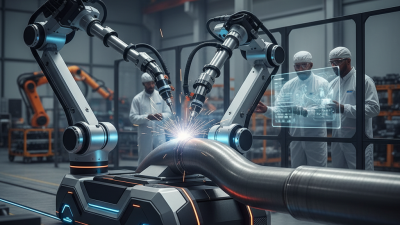
In the ever-evolving world of manufacturing, the "Trackless Weld Lathe" has emerged as a groundbreaking innovation. This advanced piece of equipment eliminates the need for traditional rails, allowing for greater flexibility and efficiency in production processes. According to a report by the American Welding Society, companies adopting this technology have seen productivity increases of up to 30%.
Expert John Davis, a renowned figure in welding automation, states, "The Trackless Weld Lathe redefines how we approach welding tasks." His insights underline the effectiveness of this technology in reducing downtime and enhancing precision. Users benefit from its ability to accommodate various sizes and shapes during production.
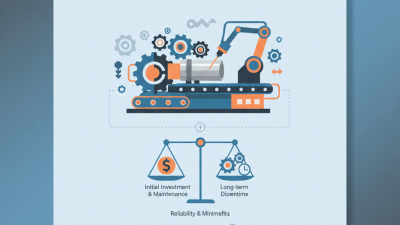
However, some challenges remain. Initial investment costs can be significant, and training personnel to operate trackless systems requires effort. As manufacturers consider these factors, the potential of the Trackless Weld Lathe offers promising solutions, pushing optimization in the welding industry further.
What is a Trackless Weld Lathe?
A Trackless Weld Lathe is an advanced machine designed for metal fabrication. Unlike traditional lathes, it operates without a fixed track. This flexibility allows for easier maneuverability and the potential for various automated welding tasks. The setup streamlines workflow, making it suitable for diverse projects.
One notable feature is its ability to weld complex shapes. Operators can quickly adapt to different materials and specifications. This versatility significantly enhances productivity, but it comes with a learning curve. Mastering the controls requires practice. Not every operator finds it intuitive at first.
Moreover, a Trackless Weld Lathe reduces space requirements in a workshop. Its compact design means you can optimize workshop layout. However, there can be limitations in terms of load capacity. Careful consideration of project needs is essential. Balancing efficiency and capability leads to the best results.
What is Trackless Weld Lathe and How Does It Benefit You?
| Feature |
Description |
Benefits |
| Mobility |
Operates without tracks or fixed guides, allowing for flexible placement. |
Increased versatility and adaptability to different work environments. |
| Precision |
Advanced technology ensures accurate welds and minimizes errors. |
Higher quality welds lead to improved product durability. |
| Ease of Use |
User-friendly interface and controls for operators. |
Reduced training time and enhanced productivity. |
| Cost-Efficiency |
Reduced operational costs due to less maintenance and downtime. |
Long-term savings for manufacturing processes. |
| Versatility |
Can be used for various welding applications across different materials. |
Flexibility to adapt to diverse projects and requirements. |
Key Components of a Trackless Weld Lathe
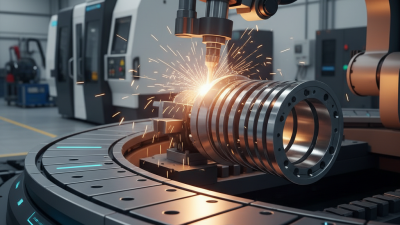
Trackless weld lathes are modern machines transforming the welding industry. They consist of several key components that enhance efficiency and precision. One crucial element is the advanced control system, enabling real-time monitoring of welding parameters. This feature ensures optimal weld quality and minimizes defects.
Another important component is the trackless carriage. Unlike traditional lathes, this technology allows for greater flexibility in positioning and movement during the welding process. Reports indicate that this can increase productivity by up to 25%. The integrated sensors provide data on heat distribution and material integrity, helping operators make informed adjustments.
Despite these advancements, challenges remain. Operators may struggle with initial setup and calibration. Training becomes essential for maximizing the potential of these machines. A study highlighted that proper operator training improves efficiency rates significantly. As the industry evolves, understanding the nuances of trackless weld lathes will be crucial for achieving optimal performance.
Advantages of Using a Trackless Weld Lathe
The trackless weld lathe, a significant advancement in welding technology, offers numerous advantages. With this system, there are no tracks to constrain the movement of the machine. This flexibility enables greater access to complex workpieces, leading to improved productivity. According to industry reports, companies integrating trackless technology have experienced a 20% increase in operational efficiency. By eliminating traditional tracks, manufacturers can adapt to varied workspace layouts.
Another key benefit is the reduction in setup time. Traditional weld lathes often require extensive calibration and positioning. With the trackless mechanism, setups are significantly shortened. A survey by the Welding Institute indicated a reduction in setup time by 30% with the use of trackless lathes. This leads to quicker project turnaround and enhanced project pipeline throughput. However, the transition to trackless systems does require a shift in operational mindset. Training staff on these innovative technologies might present initial challenges.
Moreover, the precision in welding operations increases with a trackless weld lathe. Many users report a notable improvement in welded joint quality. Despite the benefits, it's essential to consider maintenance practices. Unlike conventional systems, trackless lathes may require unique care and troubleshooting methods. This could lead to gaps in knowledge that teams must address to fully utilize the technology. Adopting this advanced welding method can represent a learning curve, but the potential gains make it a worthwhile endeavor.
Advantages of Using a Trackless Weld Lathe
Applications of Trackless Weld Lathes in Various Industries
Trackless weld lathes are revolutionizing various industries by bringing efficiency and precision to the welding process. In the automotive sector, manufacturers have reported a significant reduction in production times. For instance, a study by the International Journal of Advanced Manufacturing Technology reveals that implementing trackless weld lathes can improve operational efficiency by up to 30%. This advancement allows for rapid assembly of intricate components, directly impacting output rates.
In construction and shipbuilding, the versatility of trackless weld lathes offers unique advantages. These machines can easily adapt to complex shapes, which is crucial for large structures. A report from the American Welding Society indicates that industries are increasingly adopting these technologies to enhance their fabrication processes. The ability to maneuver seamlessly around large parts reduces the risk of misalignment and material waste, promoting better quality control.
Despite these benefits, some challenges exist. One potential drawback is the initial investment cost, which can deter small manufacturers. In addition, operators require specialized training to maximize efficiency. This learning curve can lead to temporary productivity dips during transition periods. Nevertheless, the long-term gains in quality and workflow efficiency often justify these initial hurdles.
Comparative Analysis: Trackless Weld Lathe vs. Traditional Welding Methods
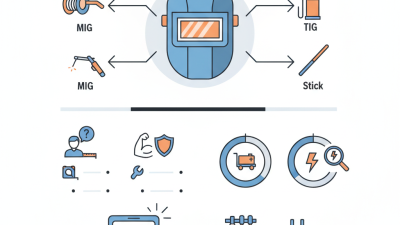
Trackless weld lathes are transforming welding processes. They provide high efficiency and flexibility. Unlike traditional welding, which requires tracks, these machines operate without any physical guides. This design allows for more freedom in movement and positioning. Operators can work in tighter spaces, which is often a limitation for traditional setups.
When comparing trackless weld lathes to traditional methods, a few key differences emerge. Traditional welding can be rigid and cumbersome. It usually involves a lot of setup and downtime when adjusting tracks. In contrast, trackless weld lathes save time. They’re easier to set up and offer quicker adjustments. However, not all operators may feel comfortable with this newer technology. Training is necessary for effective use.
Durability is another factor in this analysis. Older methods might seem robust due to their established nature. However, trackless lathes offer a modern approach to resilience. There can be a learning curve, which poses challenges for some. As with any new technology, understanding and adapting takes time and effort. This transition may lead to temporary inefficiencies, but the long-term benefits often outweigh initial struggles.