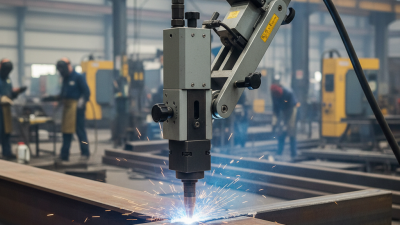
China Best Swing Weld Carriage for Sale
A Swing Weld Carriage can make long seams steadier, especially on tanks, ship sections, and structural steel. Buyers searching for “China Best Swing Weld Carriage for Sale” should compare more than price. Check swing range, travel speed, torch adjustment, rail compatibility, and performance on the intended joint. A useful carriage should track smoothly across the actual workpiece, not only during a short showroom demonstration.
Automation data provides context, but not a direct sales forecast for welding carriages. The International Federation of Robotics reported 541,302 industrial robot installations worldwide in 2023, with an operational stock of about 4.28 million. Its World Robotics 2024 report reflects wider factory automation, not carriage-specific demand. The U.S. Bureau of Labor Statistics projects 2% employment growth for welders, cutters, solderers, and brazers from 2023 to 2033, with about 45,800 annual openings, mostly replacement openings. That is U.S. labor data, not a prediction for China. Still, it highlights why repeatable weld movement can matter when skilled operators are stretched. Small details count. Ask suppliers for material specifications, load limits, control functions, and test records. Request a trial using your joint geometry and welding process. A carriage may reduce manual torch movement, but it cannot correct poor fit-up or inconsistent preparation. That distinction is easy to overlook. Compare documented performance, service support, and spare-part availability before choosing a model.
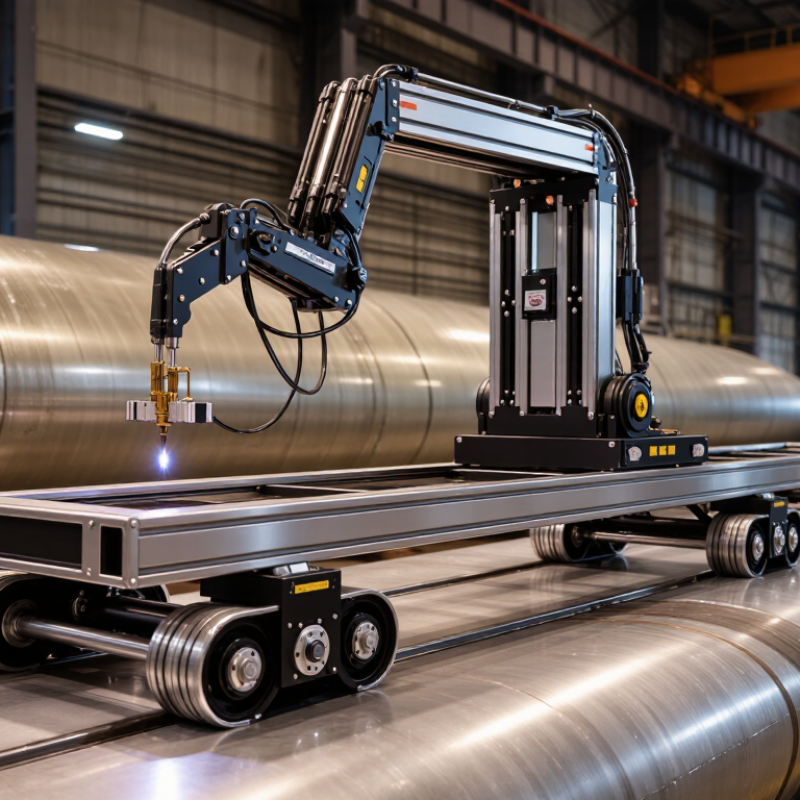
What Is a Swing Weld Carriage?
China Best Swing Weld Carriage for Sale
What Is a Swing Weld Carriage?
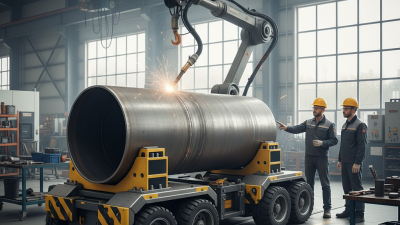
A swing weld carriage is a mechanized tool that moves a welding torch along a joint while adding a controlled side-to-side motion. This motion, often called weaving, helps cover a wider seam than a straight torch path. The carriage may travel on a track or a prepared work surface, depending on its design. Operators use it for repeatable welds on suitable plate, pipe, or fabricated assemblies. It does not replace sound joint preparation or skilled setup.
In shop practice, the torch angle, travel speed, swing width, and dwell time all affect the bead. A narrow swing may leave the joint edges uncovered; too wide a swing can create uneven heat. The word “swing” can be confusing: it usually describes torch movement, not the carriage turning freely. Check the equipment specifications to confirm its travel method and adjustment range. Even a well-built carriage can produce inconsistent results if the workpiece is poorly aligned.
Tips: Clean the joint and test settings on scrap of similar thickness. Watch the bead edges, not just the carriage movement. Small adjustments matter. If the surface is uneven, pause and reassess the setup rather than assuming the machine will compensate.
What Is a Swing Weld Carriage?
A swing weld carriage moves a welding torch along a joint while oscillating it from side to side. This illustrative motion profile shows a 10 mm swing amplitude over a 4-second cycle; actual settings vary by application.
How Does a Swing Weld Carriage Work?
China Best Swing Weld Carriage for Sale
How Does a Swing Weld Carriage Work?
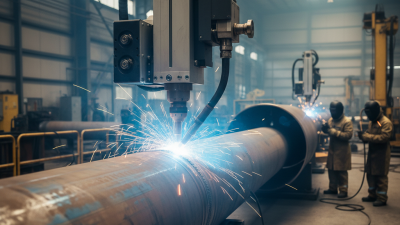
A swing weld carriage moves a welding torch along a seam while adding controlled side-to-side motion. Its drive wheels follow a rail, track, or prepared surface, depending on the design. The operator sets travel speed, swing width, frequency, and sometimes dwell time at each edge. As the carriage advances, the torch lays overlapping passes across the joint. The exact controls vary. Torch angle, stick-out, and joint fit-up still matter. A carriage cannot correct a poor joint.
Tips: Secure the track and check wheel movement before striking an arc. Make a short test run on similar material. Watch whether the swing reaches both joint edges without wandering. Small adjustments to speed or width can change the bead noticeably.
Before production, inspect the first bead for uneven edges, excessive buildup, or gaps. Adjust one setting at a time, then test again. It is tempting to trust a smooth-looking motion, but appearance alone does not prove sound fusion. That assumption deserves a second look. Follow the carriage maker’s operating instructions, and match settings to the material, joint, and welding process.
What Components Define Its Performance?
China Best Swing Weld Carriage for Sale: What Components Define Its Performance?
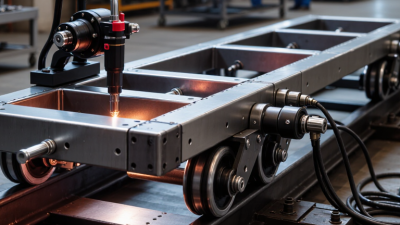
A swing weld carriage depends on several parts working together, not just its travel speed. The drive motor and wheel assembly set movement consistency along the joint. Smooth starts matter. Uneven motion can leave irregular bead spacing, especially on long seams. A speed controller helps operators match travel to the welding procedure and material thickness. The swing mechanism also matters. Its adjustable width, frequency, and center position determine how the torch moves across the joint. Controls should be easy to set and read, even when gloves are on.
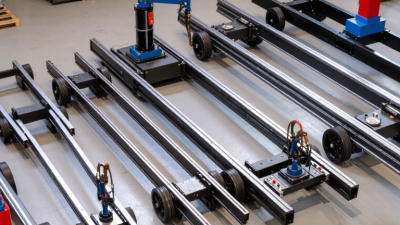
Torch mounting affects alignment and repeatability. A rigid holder helps keep the torch angle steady, while practical adjustment makes setup easier on different joint shapes. Cable routing deserves attention too; a cable that catches or pulls can disturb carriage movement. Track systems or magnetic wheels may suit particular work surfaces, but compatibility should be checked rather than assumed. The frame needs to resist vibration and tolerate heat, dust, and routine handling. These details are easy to overlook. In practice, even a well-built carriage cannot correct poor joint preparation or careless setup, so trial runs on representative material are worth the time.
How to Choose a Swing Weld Carriage for Sale in China
China Best Swing Weld Carriage for Sale
How to Choose a Swing Weld Carriage for Sale in China
Choosing a swing weld carriage in China starts with the weld, not the catalogue. Check the required travel speed, oscillation width, torch angle, and workpiece shape. A carriage used on a long, straight seam may need different controls from one working around a tank shell. Confirm rail or track compatibility, torch-holder adjustment, and rated payload before requesting a quotation. Ask for a sample run on material and joint geometry similar to yours.
Automation is expanding, but broad industry figures do not guarantee a carriage will suit your process. The International Federation of Robotics reported 541,302 industrial robot installations worldwide in 2023 in World Robotics 2024. That figure is useful context, not a weld-carriage performance measure. Request measurable details: speed range, oscillation settings, duty cycle, power input, and service-part availability. Also ask how the supplier verifies repeatability. A polished demonstration can hide awkward setup time.
Tips: Bring a seam drawing and target weld parameters to the factory test. Watch the arc across starts, stops, and corners. Check whether adjustments can be made with gloves on. One detail is easy to overlook: a carriage that tracks well on a clean test plate may behave differently on a curved, imperfect surface. Document any limits before purchase.