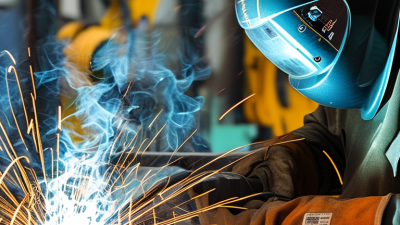
What Is the Best Welding Intelligence in China? This question deserves more than a ranking or a polished product brochure. Welding Inteligence is developing across Chinese factories, research institutes, and equipment manufacturers. Its strongest applications connect welding machines, sensors, operators, and production data. A practical system can monitor arc stability, current, voltage, wire speed, shielding gas, and heat input. It can also identify unusual changes before a visible weld defect appears. That matters on a production line where one unstable arc may affect hundreds of components.
Dr. John C. Lippold, a respected welding metallurgist and professor emeritus at The Ohio State University, wrote, “Welding metallurgy is the science and technology of joining materials by welding.” His statement remains important in an intelligent factory. Software cannot replace metallurgical judgment. It must interpret material grades, joint design, preheating, cooling behavior, and qualification records. In China, the most credible Welding Inteligence solutions should therefore combine artificial intelligence with certified procedures and experienced engineers. Data needs traceability. Results need independent validation. Operators need clear alarms, not mysterious dashboards.
Real factories are less perfect. Sensors become dirty. Network signals fail. A model may misread a changing surface or unusual joint fit-up. That weakness should be admitted, not hidden. The best system learns from these interruptions and records them honestly. It should reduce rework, improve consistency, and support safer decisions without promising impossible certainty. This article examines the leading capabilities, practical limitations, and evidence behind China’s most promising welding intelligence technologies. The answer may be less dramatic than expected. That is probably healthier.
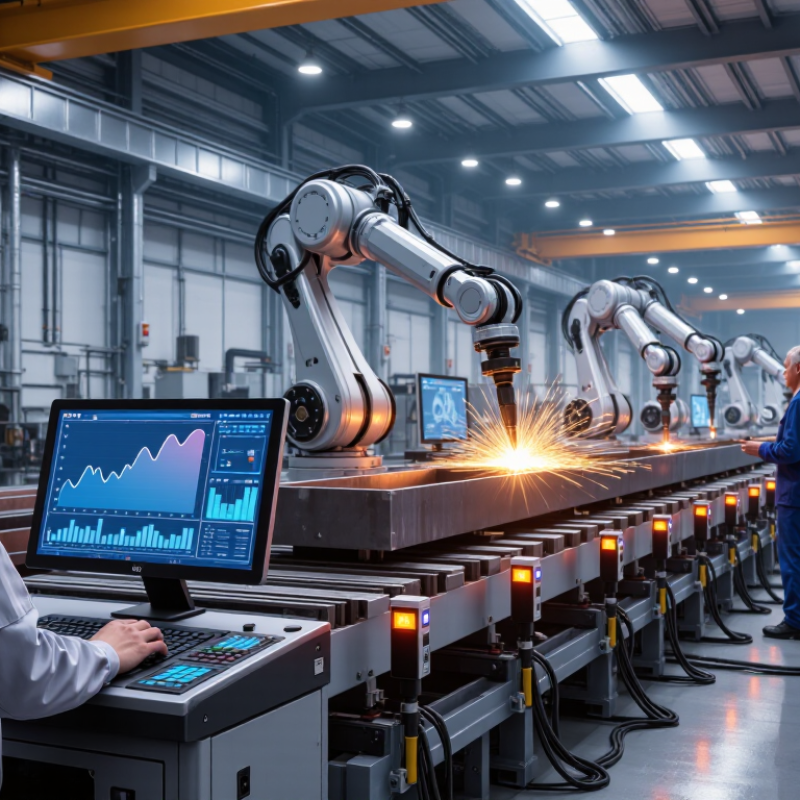
Welding intelligence is more than robotic movement. It combines sensors, process data, skilled judgment, and controlled action. In modern Chinese factories, a system may track welding current, voltage, wire speed, travel speed, and torch angle. These signals reveal heat changes before a visible defect appears. That matters on busy production lines.
The best solution is not always the most advanced one. It should match the material, joint design, production volume, and operator skill. A reliable system supports qualified welding procedures and creates clear records for every weld. Engineers can review a sudden voltage drop, check shielding conditions, and link the event to a specific component. This traceability improves inspection and reduces repeated failures.
Human experience still matters. During practical trials, operators may notice spatter patterns that software misses. Cameras can struggle with glare, smoke, dirty lenses, or unusual joint shapes. Data can also be incomplete. These weaknesses require honest testing, regular calibration, and human approval for critical decisions. A useful intelligence platform should explain its warnings, not simply produce a score. It should help technicians adjust parameters while preserving safe working practices. Small improvements, such as steadier wire feeding or fewer restarts, can produce measurable gains across thousands of welds.
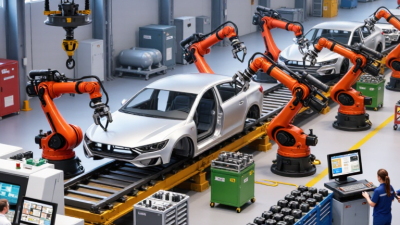
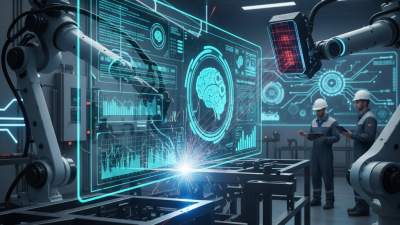
The strongest welding intelligence is not a single robot. It is a connected production system. In practice, engineers combine machine vision, laser seam tracking, force sensing, and real-time process control. A camera finds joint variation. A laser sensor follows the groove. The controller adjusts travel speed, wire feed, and current. This matters on thick steel, where heat input can change penetration within seconds.
China’s scale creates a useful test environment. The International Federation of Robotics’ World Robotics 2024 report recorded 276,288 industrial robot installations in China during 2023.
It also reported robot density of 470 units per 10,000 manufacturing employees. These figures do not measure welding intelligence directly. They show a large automation base for collecting process data.
Edge computing can filter arc signals locally. Digital twins can compare bead geometry, cycle time, and defect patterns.
The difficult part is trustworthy data. Poorly calibrated cameras can teach an AI system the wrong lesson. Data quality matters. Traceability should connect every weld to parameters, operator intervention, material batch, and inspection results.
Cybersecurity and functional safety require disciplined engineering, including risk assessment aligned with ISO 10218.
The best system may not be the most autonomous. It may be the one that explains a defect clearly and helps a technician correct it. That standard is still evolving.
What Is the Best Welding Intelligence in China?
Across Chinese industrial sectors, welding intelligence is becoming a practical production tool. In automotive factories, vision systems inspect bead width, torch position, and surface defects in real time. Shipyards use robotic welding for long seams, while operators manage complex joints and changing plate thickness. Construction machinery plants apply sensor-based control to thick steel frames, buckets, and structural components.
The strongest systems connect welding data with production records. They monitor current, voltage, travel speed, shielding gas flow, and heat input. Engineers can then trace a weak joint to a specific process change. In energy equipment and pressure-related manufacturing, this evidence supports consistent inspection and quality documentation. Yet no intelligent system is perfect. Dust, glare, vibration, and unusual joint shapes can confuse sensors. Human judgment still matters, especially during setup and repair work. This is where many factories need more training.
Tips: Calibrate sensors at every shift change. Keep weld samples for comparison. Review abnormal data before adjusting parameters. Start with one production line, then expand after measurable results.
A reliable approach combines skilled welders, validated procedures, and carefully tested software. It should reduce rework without hiding uncertainty. Sometimes, a slower inspection prevents a larger failure.
| Industrial Sector | Typical Welded Components | Common Welding Processes | Core Intelligent Applications | Key Data Captured | Quality and Business Value | Deployment Maturity |
|---|---|---|---|---|---|---|
| Automotive Manufacturing | Body-in-white assemblies, chassis parts, battery trays, exhaust components and structural joints | Resistance spot welding, laser welding, laser-brazing, arc welding and hybrid laser-arc welding | Robot-cell coordination, real-time seam tracking, adaptive current control, weld-point verification, vision inspection and production-line digital twins | Weld current, voltage, force, electrode displacement, cycle time, laser power, seam position and inspection images | High repeatability, reduced rework, faster model changeovers, improved body dimensional consistency and complete weld-point traceability | Advanced |
| Shipbuilding and Offshore Engineering | Hull blocks, decks, stiffeners, pipelines, offshore modules and large structural assemblies | Submerged arc welding, gas-shielded arc welding, narrow-gap welding and robotic fillet welding | 3D hull measurement, automatic weld-path planning, seam recognition, multi-robot coordination, distortion prediction and remote production monitoring | Joint geometry, welding position, heat input, arc stability, interpass temperature, distortion measurements and non-destructive testing results | Lower dependence on manual layout, better control of distortion, improved worker safety and more consistent quality on large structures | High |
| Steel Structures and Construction | Columns, beams, bridge sections, prefabricated building modules and connection assemblies | Gas-shielded arc welding, submerged arc welding, robotic fillet welding and stud welding | Digital work-order management, automatic joint identification, robotic welding, weld-sequence optimization, visual defect recognition and cloud-based quality records | Material identification, joint type, weld size, welding parameters, operator or robot ID, inspection status and repair history | Improved compliance documentation, reduced missed welds, better project traceability and more predictable fabrication schedules | High |
| Rail Transit Equipment | Carbody panels, bogie frames, underframes, suspension parts and aluminum or stainless-steel assemblies | Metal inert gas welding, tungsten inert gas welding, laser welding and friction-stir welding | Seam tracking, automated parameter adjustment, weld-pore and surface-defect detection, dimensional inspection and lifecycle quality traceability | Joint gap, weld penetration indicators, current, voltage, shielding-gas flow, travel speed, temperature and ultrasonic or radiographic results | Reliable control of safety-critical joints, lower porosity risk, improved dimensional accuracy and stronger production traceability | Advanced |
| Wind Power and New-Energy Equipment | Wind-turbine towers, nacelle frames, foundation sections, battery enclosures and energy-storage structures | Submerged arc welding, gas-shielded arc welding, narrow-gap welding and laser welding | Large-diameter seam tracking, adaptive heat-input control, automated ultrasonic inspection, weld-defect classification and predictive maintenance of welding equipment | Plate thickness, groove geometry, heat input, interpass temperature, arc signals, ultrasonic data, weld location and repair records | Better control of thick-plate welds, fewer repeated repairs, improved fatigue performance documentation and higher equipment utilization | High |
| Pressure Vessels and Petrochemical Equipment | Storage tanks, heat exchangers, reactor vessels, pressure pipes and high-integrity process equipment | Tungsten inert gas welding, submerged arc welding, narrow-gap welding, electroslag welding and automated cladding | Welding-procedure control, automatic parameter locking, interpass-temperature alerts, weld-map management, non-destructive testing integration and risk-based quality analytics | Material heat number, joint identity, filler-metal batch, current, voltage, travel speed, temperature, welder qualification and inspection results | Strong compliance evidence, reduced risk of process deviation, improved documentation for safety-critical welds and easier audit preparation | High |
| Construction Machinery and Heavy Equipment | Excavator booms, loader frames, crane structures, mining equipment and heavy-duty chassis | Gas-shielded arc welding, tandem arc welding, submerged arc welding and robotic welding | Part recognition, robotic path generation, adaptive seam tracking, weld-spatter monitoring, fatigue-risk analysis and predictive maintenance | Plate geometry, joint gap, current, voltage, wire-feed speed, robot position, cycle time, defect images and repair frequency | Higher productivity for medium-volume production, lower material waste, more stable weld quality and improved control of labor-intensive operations | Developing to High |
| Oil and Gas Pipeline Construction | Long-distance pipeline girth welds, station piping, valves and prefabricated pipeline modules | Automatic gas-shielded arc welding, narrow-gap welding, mechanized pipeline welding and tungsten inert gas root welding | Automatic root-pass monitoring, joint tracking, parameter interlocking, weld-sequence control, radiographic or ultrasonic data integration and defect trend analysis | Pipe diameter, wall thickness, joint number, current, voltage, travel speed, gas flow, ambient conditions and non-destructive testing results | Consistent weld procedures, faster inspection decisions, improved traceability across long projects and earlier identification of recurring defects | High |
What Is the Best Welding Intelligence in China?
The best solution is not the one with the most sensors. It is the one that improves weld quality, productivity, and traceability on a real factory floor. The International Federation of Robotics reported 276,288 industrial robots installed in China during 2023. China represented 51% of global installations. This scale shows strong automation demand, but it does not prove welding intelligence works well.
Evaluate measurable results, not impressive screens. Request data on defect rates, rework hours, arc-on time, and changeover losses before and after deployment. Check whether the system identifies porosity, undercut, spatter, and torch deviation consistently. Ask for test records from similar materials, joint types, and production volumes. Data ownership matters too. Can engineers export raw records and audit every welding parameter? A smart system should support existing equipment, not force unnecessary replacement. Integration is often harder than expected.
Tips: Run a paid pilot on one difficult work cell. Set a fixed baseline for three to six weeks. Compare results across shifts, operators, and material batches. Review false alarms carefully. A system that flags everything may look safe, yet slow production. Also inspect cybersecurity, operator training, maintenance response, and local technical support. The IFR report measures robotics, not welding intelligence specifically. That limitation deserves attention. Good evaluation accepts imperfect evidence and tests claims under pressure.
The chart presents a practical, brand-neutral evaluation framework. Process data quality, weld monitoring, traceability, integration, usability, and scalability are weighted according to their impact on production quality, compliance, and long-term deployment.
China’s welding intelligence industry is moving from isolated automation toward connected production. The International Federation of Robotics reported 276,288 industrial robot installations in China during 2023, representing more than half of global installations. This scale creates a strong foundation for robotic welding, adaptive control, and factory-wide data collection. Yet robot numbers alone do not prove intelligent manufacturing. A welding cell must also recognize joint gaps, adjust parameters, and record every critical result.
Future development will focus on machine vision, digital twins, and artificial intelligence trained with real welding data. Reports from the China Welding Association indicate continuing demand for automated welding in construction machinery, energy equipment, shipbuilding, and transportation manufacturing.
The next step is practical: sensors should detect arc stability, wire feeding, temperature, and deformation in real time. Production software can then link these signals with ISO 3834 quality requirements and local process standards. Small workshops may adopt cloud-based monitoring first, rather than purchasing complete smart factories.
The path is not smooth. Poor data labeling remains a problem. Skilled welders may also distrust automatic recommendations. Human judgment still matters, especially when materials, fit-up, and site conditions change. China’s strongest systems will combine operator experience with reliable algorithms, not replace people with dashboards. That balance is difficult. It is also where real welding intelligence will be tested.