Best SAW Welding Machine Manufacturers in China
Choosing a reliable Saw Welding Machine manufacturer in China requires more than comparing prices. Buyers need to assess welding performance, production capacity, technical support, and the supplier’s ability to meet project requirements. A machine built for thick plate fabrication may not suit every workshop. Details such as wire-feed stability, flux handling, control accuracy, and access to replacement parts can shape daily results.
This guide introduces manufacturers that serve different industrial needs, from standard production lines to customized welding systems. It considers practical factors, including product range, manufacturing experience, quality controls, and after-sales service. Ask for clear specifications, test records, and references where available. A polished brochure is useful, but it cannot confirm how a machine will perform on your materials.
There is no perfect shortlist for every buyer. Some information may be difficult to verify independently, and supplier claims deserve careful review. Still, a structured comparison can help narrow the field. The right partner should explain technical limits plainly, respond with relevant evidence, and support the equipment after delivery.
What Submerged Arc Welding Machines Are and How They Work
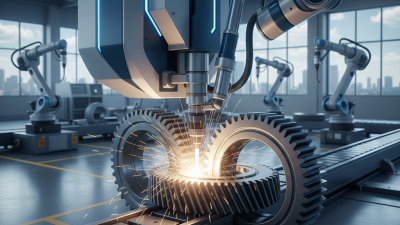
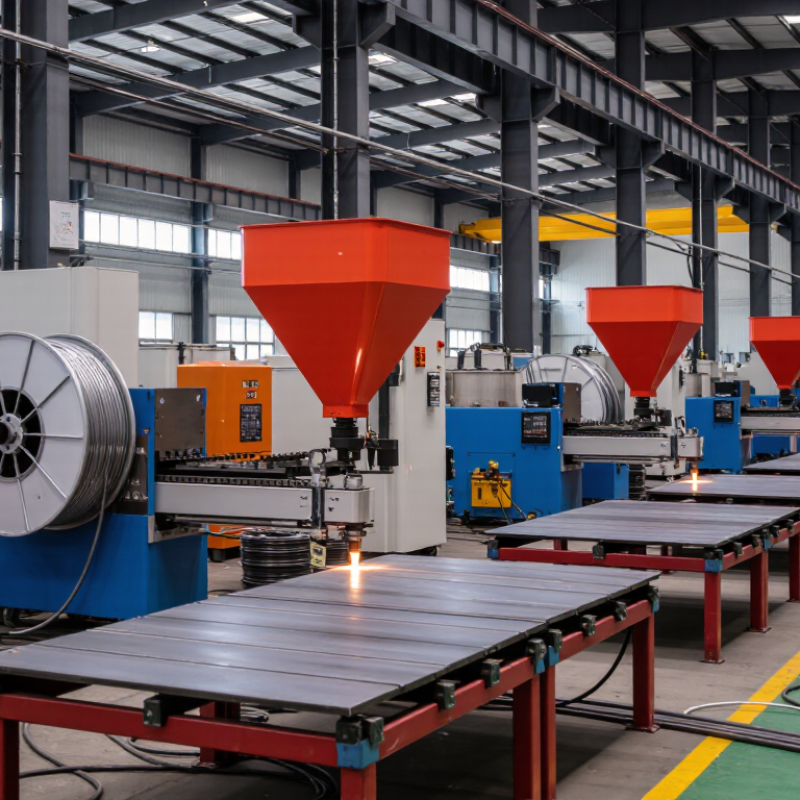
Submerged arc welding (SAW) machines join steel using a continuously fed wire beneath a blanket of granular flux. The arc melts the wire and joint edges, forming a weld pool protected by flux and molten slag. The arc stays hidden. A typical system includes a power source, wire feeder, flux hopper, and mechanized travel carriage. Picture a welding head moving along a thick steel plate, leaving a solidifying bead beneath removable slag.
TWI’s published heat-input guidance assigns SAW a thermal-efficiency factor of 1.0, compared with 0.8 for MIG/MAG welding. These calculation factors describe heat transferred to the workpiece, rather than electrical efficiency at the wall socket. Following that calculation, 600 amps at 30 volts and 600 millimeters per minute produces approximately 1.8 kilojoules per millimeter. Settings still need verification. Plate thickness, joint preparation, and the qualified welding procedure determine whether that heat input suits the application.
When evaluating Chinese manufacturers, examine how consistently their machines control wire feeding, travel speed, and flux delivery. Request a demonstration using your actual plate thickness and joint geometry. Inspect slag removal, bead shape, and the resulting inspection records. A smooth surface alone cannot establish internal weld quality. SAW suits long seams in pressure vessels, beams, and pipe fabrication, particularly in flat welding positions. Its productivity can be attractive, although flux handling and limited positional flexibility deserve closer consideration before purchase.
Key Criteria for Evaluating Chinese SAW Welding Machine Manufacturers
Best SAW Welding Machine Manufacturers in China
Key Criteria for Evaluating Chinese SAW Welding Machine Manufacturers
Choosing a Chinese SAW welding machine manufacturer requires more than comparing prices. Check whether the machine’s output range, travel speed, and wire-feed system match your workpiece thickness and production volume. Ask for test records using similar materials and joint designs. A clean weld bead in a brochure proves little; inspect sample welds for penetration, consistency, and spatter. Small details matter.
Evaluate the control system, available process settings, and ease of replacing common wear parts. Request clear documentation for installation, maintenance, and troubleshooting. Ask how technical support handles a real fault, such as unstable wire feeding during a long weld. Response time matters. So does the quality of the answer. Factory visits or live equipment demonstrations can help verify assembly standards, but one visit cannot reveal every production issue.
Tips: Provide your actual welding parameters and sample joint drawings when requesting a quotation. Compare the proposed configuration, not just the machine’s headline capacity. Check references from users with similar operating conditions, and confirm what training and spare parts are included. Leave room for doubt: even a well-built system may need adjustment to suit your wire, flux, and workshop layout.
Leading SAW Welding Machine Manufacturers in China
Leading SAW welding machine manufacturers in China deserve attention for practical engineering, stable output, and application support. Submerged arc welding suits long seams in pressure vessels, structural beams, and large steel pipes. However, a polished showroom tells buyers little about production consistency. Look beyond brochures. Ask suppliers to demonstrate welds using your plate thickness, joint geometry, and intended welding position. A useful demonstration should show current, voltage, travel speed, and flux conditions throughout the run.
Strong manufacturers explain how their power sources, wire feeders, and travel systems work together under sustained loads. For example, a tractor welding a long beam needs steady travel and reliable seam tracking. Flux recovery equipment should collect unused flux without introducing excessive dust or contamination. Request documented duty cycles, calibration records, and a clear list of replaceable wear parts. Details matter. Applicable welding procedures and inspection requirements should guide acceptance, rather than appearance alone.
Choosing among leading Chinese manufacturers also means examining commissioning support, spare parts availability, and operator training. A lower purchase price may become less attractive when a failed feeder stops an entire shift. Remote troubleshooting helps, but it cannot resolve every mechanical problem. Even a clean demonstration weld leaves questions about performance across different operators and material batches. Buyers should agree on acceptance criteria and record unresolved issues before shipment.
Comparing Manufacturer Capabilities, Product Ranges, and Applications
Best SAW Welding Machine Manufacturers in China
Comparing manufacturers requires looking beyond rated current. A submerged arc welding (SAW) line may run smoothly on thick plate but struggle with narrow seams, changing joint gaps, or frequent repositioning. Compare power-source duty cycle, wire-feeding stability, flux recovery, tractor travel accuracy, and the availability of tandem-wire configurations. Ask for recorded test results on your own material thickness and joint design. A clean workshop demonstration is useful, but it does not reproduce a dusty production floor or a long shift.
Product range matters because applications differ. Pressure-vessel shells need consistent, deep penetration; ship panels may require high travel speed and flexible positioning; structural beams often reward straightforward setup and reliable repeatability. The International Federation of Robotics reported 541,302 industrial robot installations worldwide in 2023, with China accounting for 276,288. This is not a welding-machine sales figure, but it signals the scale of automation in the Chinese manufacturing market. For buyers, the practical question is whether a supplier can integrate SAW equipment with fixtures, manipulators, controls, and operator training.
Request sample welds, inspection records, consumable recommendations, and service-response details before comparing quotations. Check whether stated output assumes a particular wire diameter, flux, and travel speed; those conditions can change the result. I would also leave room for uncertainty: a strong specification sheet cannot predict every site-specific problem. Test the machine on representative joints, then verify bead shape and penetration through an agreed inspection method. Источник: IFR, World Robotics 2024.
Comparing SAW Welding Machine Capabilities in China: Wire Diameter Compatibility
Wire diameter compatibility is a practical specification to compare when evaluating submerged arc welding (SAW) machines. The chart shows the calculated cross-sectional areas of five commonly available nominal solid SAW wire diameters. These values provide a factual comparison of wire geometry without ranking individual manufacturers or brands.
Larger wire diameters have greater cross-sectional areas, which affects wire feed requirements. For example, 4.0 mm solid wire has four times the cross-sectional area of 2.0 mm wire. At the same linear feed speed and material density, it therefore delivers four times the wire mass. Actual deposition rate, penetration, and application suitability also depend on current, voltage, travel speed, flux, and the welding procedure.
Data basis: nominal circular solid-wire geometry, calculated using A = πd² / 4 and rounded to two decimal places. Diameter values represent commonly available SAW consumable sizes; they do not imply that every machine supports every size. When comparing suppliers for plate fabrication, structural steel, or pressure-vessel applications, verify the specified wire range, compatible feed components, rated output, and duty cycle.
How to Verify a SAW Welding Machine Supplier in China
Best SAW Welding Machine Manufacturers in China
How to Verify a SAW Welding Machine Supplier in China
A polished catalog tells you little about a submerged arc welding (SAW) supplier’s production capability. Request its Chinese business license and check the registered name against the quotation and payment beneficiary. Ask whether it manufactures the equipment or sources it from another factory. Verify the factory address. During a live video inspection, request views of machine assembly, wiring cabinets, nameplates, and testing stations. Recorded footage alone leaves gaps.
Technical verification should match your actual welding job. Send the supplier your plate thickness, joint design, wire diameter, power supply, and required welding position. Request a documented trial using comparable materials and an agreed welding procedure. Check the evidence. Useful records include current, voltage, travel speed, weld photographs, and inspection results tied to the sample. A smooth-looking bead can still hide internal defects. Where your application requires it, specify suitable nondestructive testing and acceptance criteria before the trial. One successful demonstration offers limited evidence of repeatability; this deserves closer scrutiny.
Tips: Put the promised configuration into the purchase agreement, including the power source, wire feeder, tractor, and flux recovery equipment. Ask for a spare-parts list, warranty exclusions, installation requirements, and response times for technical support. If certification is claimed, verify its issuer, validity, and scope. A quality management certificate alone does not establish the performance of a particular machine.